
Amid debate about U.S. history, Harlem Hellfighters receive Congressional Gold Medal

The Harlem Hellfighters of the New York National Guard’s 369th Infantry Regiment were posthumously honored this week with a Congressional Gold Medal. They received the highest civilian honor given by Congress, decades after their service during World War I was largely ignored by top military brass — and amid broader efforts to revisit how American history is remembered.
“It’s never too late to do the right thing,” said Rep. Tom Suozzi, D-N.Y., at the Wednesday ceremony celebrating the troops and their families.
“Today we honor the legacy of your fathers, your grandfathers and your great-grandfathers who served our nation under extreme circumstances and despite intense discrimination. We are all better for their service,” Suozzi said.
The lawmaker first introduced a bill to honor the soldiers of the majority-Black 369th Infantry in 2021, but the award was not officially unveiled until this week.
During the ceremony, House Speaker Mike Johnson, R-La., echoed Suozzi’s sentiments:
“We know that generations of African-American soldiers have answered that call to fight for freedom, whether on battlefields at home or abroad. Their nation asked them to fight, and they did again and again, even while being denied the full measure of those freedoms here on American soil.”
Debra Willett, a granddaughter of Harlem Hellfighter Sgt. Leander Willett, accepted the award on the soldiers’ behalf.
“I know that my grandfather and the other brave men that fought alongside him never thought that their courage and their exploits would be celebrated in such a revered setting,” she said.
“They sacrificed, and they thought they were making a difference. And today proves that they did.”
The medal will be given to the Smithsonian Institution, “where it will be displayed as appropriate and made available for research,” according to the bill put forth by Suozzi.
The regiment that came to be known as the Harlem Hellfighters served in the trenches of World War I for 191 days, growing legendary for their fighting abilities.
But their journey to the battle lines was checkered by racism in the still-segregated armed forces.
“The 369th experienced a number of harrowing experiences during their training in the United States, including a near race riot in Spartanburg, South Carolina, where they were initially stationed, and another near race riot when they were hastily sent back to New Jersey for training,” said Chad Williams, a professor of history and African American and Black diaspora studies at Boston University.
“The reason they were shipped to France when they were was because the United States Army wanted to get them off of American soil as quickly as possible to avoid any potential racial catastrophes,” Williams told NPR.
White soldiers were reluctant to serve alongside the largely Black battalion, so the Harlem Hellfighters fought alongside the Allied French, fighting off enemy soldiers and becoming the first unit to reach the Rhine River.
At the time, the soldiers called themselves the Black Rattlers. But their ferocity on the battlefield eventually earned them the name Hellfighters.
“They are devils,” a captured Prussian officer recalled to his captors. “They smile while they kill and they won’t be taken alive.”
Despite their renown on the battlefield, their stories went largely untold for decades — and the recognition comes at a time when the Trump administration is reviewing how American history is remembered.
The Smithsonian Institution, which will house the Congressional Medal, has been at the center of that effort.
Last month, the White House sent a letter to Lonnie Bunch III, secretary of the Smithsonian Institution, stating that the Trump administration’s review of certain museums is to “ensure alignment with the President’s directive to celebrate American exceptionalism, remove divisive or partisan narratives, and restore confidence in our shared cultural institutions.”
Williams said the Hellfighters’ recognition represents the complicated nature of how history is often told.
“On the one hand, it’s long overdue recognition, but it is certainly ironic, considering the times that we’re in,” Williams said. “It speaks to the very complicated and oftentimes very hypocritical ways in which this country has chosen to address its racial history.”
The move, Williams said, spoke to the “cynical” nature of the Trump administration.
“It was a very inspiring, very patriotic, very well-deserved recognition of the historical significance and sacrifices of the 369th,” Williams said. “On the other hand, it was a very cynical display of selective racial memory.”
U.S.-Israeli strikes in Iran continue into 2nd day, as the region faces turmoil
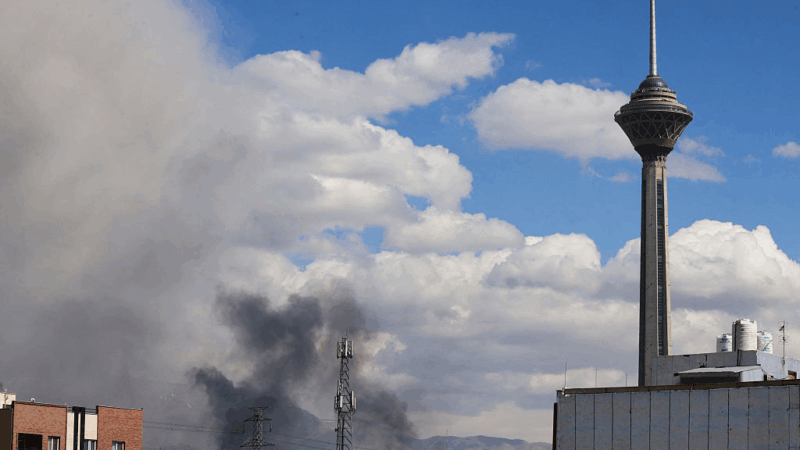
Israel said on Sunday it had launched more attacks on Iran, while the Iranian government continued strikes on Israel and on U.S. targets in Gulf states, Iraq and Jordan.
Trump warns Iran not to retaliate after Ayatollah Ali Khamenei is killed
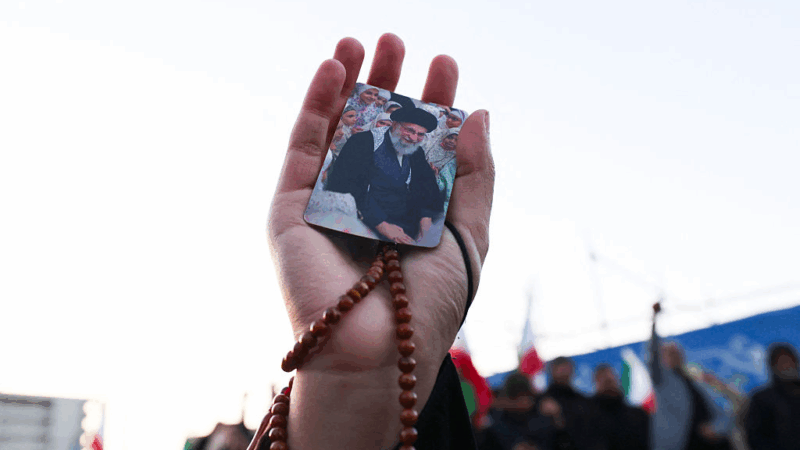
The Iranian government has announced 40 days of mourning. The country's supreme leader was killed following an attack launched by the U.S. and Israel on Saturday against Iran.

Iran fires missiles at Israel and Gulf states after U.S.-Israeli strike kills Khamenei
Iran fired missiles at targets in Israel and Gulf Arab states Sunday after vowing massive retaliation for the killing of Supreme Leader Ayatollah Ali Khamenei by the United States and Israel.
House Dem. Leader Jeffries responds to air strikes on Iran by U.S. and Israel
NPR's Emily Kwong speaks to House Minority Leader Hakeem Jeffries (D-NY), who is still calling for a vote on a war powers resolution following a wave of U.S.- and Israel-led airstrikes on Iran.
Iran’s Ayatollah Ali Khamenei is killed in Israeli strike, ending 36-year iron rule
Khamenei, the Islamic Republic's second supreme leader, has been killed. He had held power since 1989, guiding Iran through difficult times — and overseeing the violent suppression of dissent.
Found: The 19th century silent film that first captured a robot attack
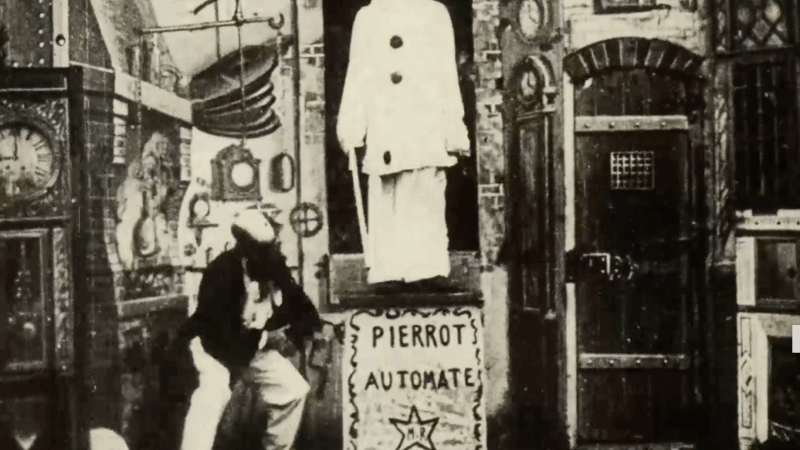
A newly rediscovered 1897 short by famed French filmmaker Georges Méliès is being hailed as the first-ever depiction of a robot in cinema.
