
4 people and 5 months in space, NASA’s Crew-10 mission safely returns to Earth
A crew of four wrapped up a nearly five-month stay on the International Space Station, splashing down in the Pacific Ocean off the coast of California under a canopy of parachutes Saturday in the same SpaceX capsule that launched NASA’s Crew-10 mission to the station back in March.
It took the capsule about 17 hours to make the trip home, experiencing re-entry temperatures of around 3,000 degrees Fahrenheit as it punched through the atmosphere following Friday’s undocking with the ISS.
The crew of NASA astronauts Anne McClain and Nichole Ayers, Japan Aerospace Exploration Agency (JAXA) astronaut Takuya Onishi, and Russia’s Roscosmos cosmonaut Kirill Peskov spent their time on the station conducting more than 200 science experiments that helped prepare humans for exploration beyond low-Earth orbit that included material studies and experiments to better understand physiological and psychological changes to the human body.
“We got to accomplish a lot of really amazing operational things. We got to see some amazing views, and we have had some really big belly laughs and a wonderful time together,” said NASA Nichole Ayers, the mission’s pilot.
It was the first space mission for Ayers and fellow crewmate Peskov. It was the second trip to the station for McClain and Onishi.
Their replacements, Crew-11, arrived at the station a week ago. NASA astronauts Zena Cardman and Mike Fincke, along with JAXA astronaut Kimiya Yui and Russian cosmonaut Oleg Platonov, will spend roughly six months on the orbiting lab conducting science experiments and maintenance.
That mission marked the 12th time SpaceX launched NASA astronauts to the ISS. In 2020, the private company began ferrying astronauts to the station as part of the agency’s Commercial Crew Program, ending a reliance on Russia for rides to the station after the retirement of the Space Shuttle program in 2011.
There has been a continual human presence on the space station since Oct. 31, 2000, but NASA and its international partners plan to retire the ISS around the end of the decade. NASA is hoping commercial companies will launch new space stations for the agency’s astronauts in the coming decade.
“All of us are keenly aware that we may never get to do this again,” said McClain, Crew-10 commander, before her departure. “We’ve been very pensive over the last days of understanding what we have all got to be a part of.”

Trump’s Board of Peace has several invited leaders trying to figure out how it’ll work
It's unclear how many leaders have been asked to join the board, and the large number of invitations being sent out, including to countries that don't get along, has raised questions about the board's mandate and decision-making processes.
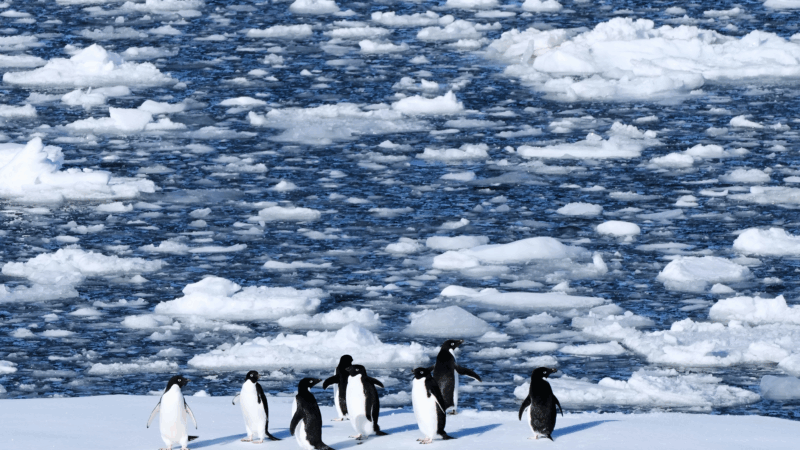
Researchers find Antarctic penguin breeding is heating up sooner
Warming temperatures are forcing Antarctic penguins to breed earlier and that's a big problem for two of the cute tuxedoed species that face extinction by the end of the century, a study said.

As Trump dismantles the existing world order, his version is still taking shape
In his second term, the president is embracing a foreign policy that breaks sharply from U.S. tradition. Both supporters and critics say he's upending a global system in place for 80 years.
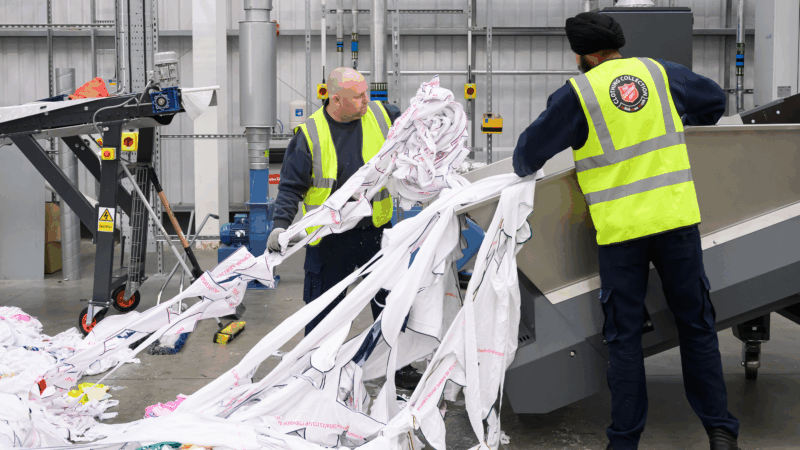
Polyester clothing has been causing a stir online. But how valid are the concerns?
There has been a lot of conversation on social media about the downsides of polyester. But are those downsides as bad as they're believed to be? Are there upsides?

New Orleans brings back the house call, sending nurses to visit newborns and moms
Louisiana has long struggled with maternal and infant mortality. In New Orleans, free home visits by nurses help spot medical problems early. It's a reproductive health policy with bipartisan support.

Trump promised to cut energy bills in half. One year later, has he delivered?
Cheap gasoline, yes. Drill, baby, drill? Not so much. And electricity bills are going up, not down.
