
3 things to know about Trump’s plan to send troops to Portland and Memphis
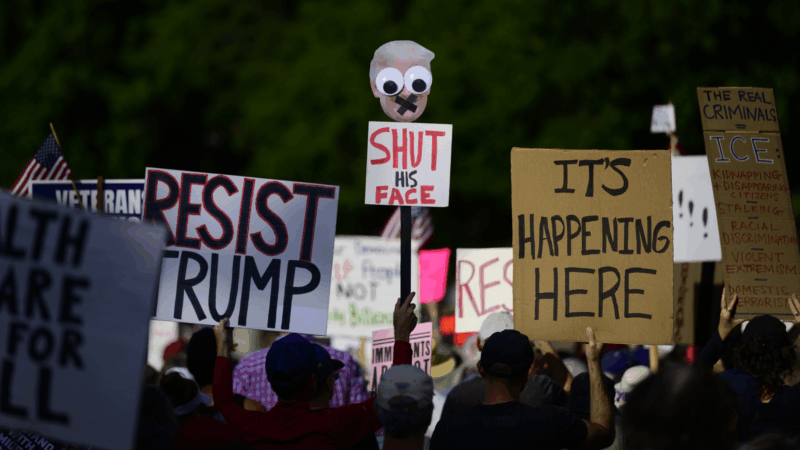
President Trump says he has ordered the deployment of troops to Portland, Ore., and that he’s authorized them to use “full force” to curb protests outside of U.S. Immigration and Customs Enforcement facilities.
It’s the latest instance of Trump deploying the military to various cities that he says are plagued with crime, with federal troops also expected to arrive in Memphis, Tenn., this week.
We break down what’s going on, how officials in Portland and Memphis are responding, and how this fits into a larger picture.
1. Expect another legal fight
Like many of Trump’s announcements, the Portland push started with a post on Saturday on his social media platform, Truth Social. He called Portland “war ravaged” — which is not the case on the ground there — and said he had authorized the Pentagon to provide troops.
“I am directing Secretary of War, Pete Hegseth, to provide all necessary Troops to protect War ravaged Portland, and any of our ICE Facilities under siege from attack by Antifa, and other domestic terrorists,” Trump wrote in the post. “I am also authorizing Full Force, if necessary.”
It was unclear from that post what troops he meant. NPR reached out to the Pentagon for clarity on Saturday, and a U.S. official who was not authorized to speak publicly said the Pentagon had not issued a deployment order for Portland and that it only learned of Trump’s request from the media. That official also said it would be likely that National Guard troops would be used.
All of this comes after there were reports of a ramp-up of federal officers at an ICE facility in Portland on Friday, which Mayor Keith Wilson called a show of force and told residents to remain calm and not react.

By Sunday, Oregon Public Broadcasting (OPB) reported that the Trump administration called 200 members of the Oregon National Guard into federal service for a 60-day deployment, according to a memo from the Department of Defense to Governor Tina Kotek. And hundreds of protestors gathered outside Portland’s ICE facility late into Sunday night.
Both the governor of Oregon and the mayor of Portland dispute Trump’s claims that the city is unsafe or in need of troops, and have been urging residents to remain peaceful. OPB reported Sunday that Oregon’s top officials and the city of Portland were filing a federal lawsuit arguing the administration had overreached and acted unlawfully. In a press conference Saturday, Mayor Keith Wilson said the necessary troops needed for the city is zero.
“This is an American city. We do not need any intervention. This is not a military target,” he said.
2. Trump has been making these kinds of threats for months
In D.C., where Trump has federal control, more than 2,000 National Guard troops from a variety of states have been deployed for more than a month in what Trump has said is an effort to crack down on crime.
Back in June, Trump also federalized California’s National Guard against Governor Gavin Newsom’s wishes and deployed them along with the Marines to Los Angeles to quell protests against ICE deportations there. That sounds similar to what could happen in Portland.

And then there are a handful of cities that Trump has threatened — about a dozen at this point, all Democratically-led. Places like Chicago, where he also used the war metaphor but has yet to actually send troops.
Earlier this month, Trump posted online that Chicago was “about to find out why it’s called the Department of WAR,” referencing his call to rename the Defense Department.
And then there is Memphis. Trump has authorized the use of the National Guard there as part of a similar crackdown, along with other federal agents who are all expected to start arriving as early as this week.
The Trump administration has described Memphis as “suffering from tremendous levels of violent crime that have overwhelmed its local government’s ability to respond effectively.”
Memphis, which is the second biggest city in Tennessee, is run by a Democratic mayor. Meanwhile, Republican Tennessee Governor Bill Lee has said he not only welcomed federal assistance, but that he has been in “constant communication” with the Trump administration for months about a plan to curb crime in Memphis using federal and state resources.
3. A larger picture is becoming clear
The National Guard is not trained for community policing or to make arrests, and that’s not how they’re generally used. In D.C., they’ve mainly been patrolling federal property and beautifying city parks.

Yet Trump says these National Guard deployments are to deal with crime. And he also has been conflating the work of troops with wider immigration and deportation efforts. We’ve seen that in D.C., for example, where ICE agents moved in along with the National Guard deployment and started detaining people at high rates.
Legal experts have also said that another part of this that has them worried is the normalization of troops — sometimes armed — on U.S. streets.
The U.S. has a long history of limiting the role of the military domestically, and experts say these kinds of continued threats and deployments challenge laws that are centuries old and central to the ideas that the U.S. was founded on.
We have unpacked more about what experts tell us in this piece, and you can find more of our coverage on this wider issue here:
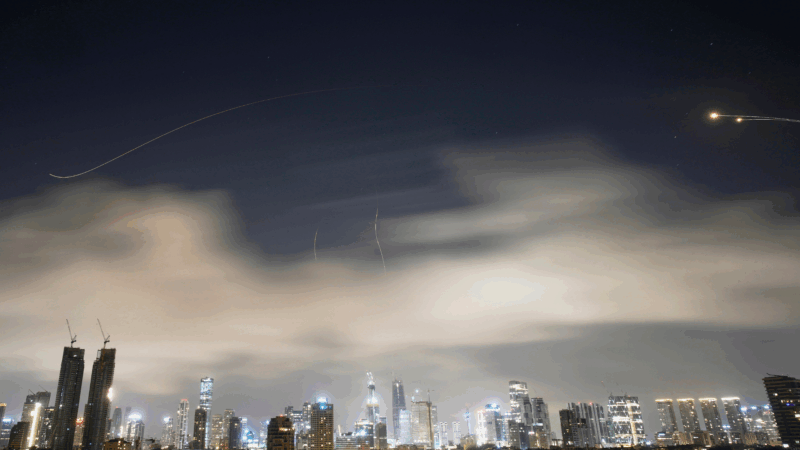
U.S. military names six killed in plane crash as Iran war enters third week
The conflict in the Middle East has entered a third week, with Israel announcing a barrage of new strikes on western Iran on Sunday, while the U.S. defense department released the names of six service members who died when their military refueling aircraft crashed.
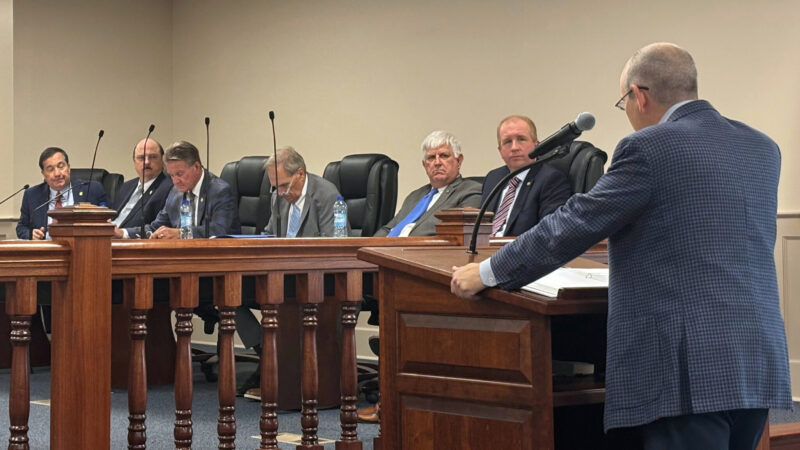
Alabama poised to drastically overhaul utility regulation. Will it lower electric bills?
The Alabama Senate unanimously voted to expand the public service commission, and create a Secretary of Energy to address rising electricity prices. A bill in the House would go even further, requiring rate case hearings and limiting utility profits.
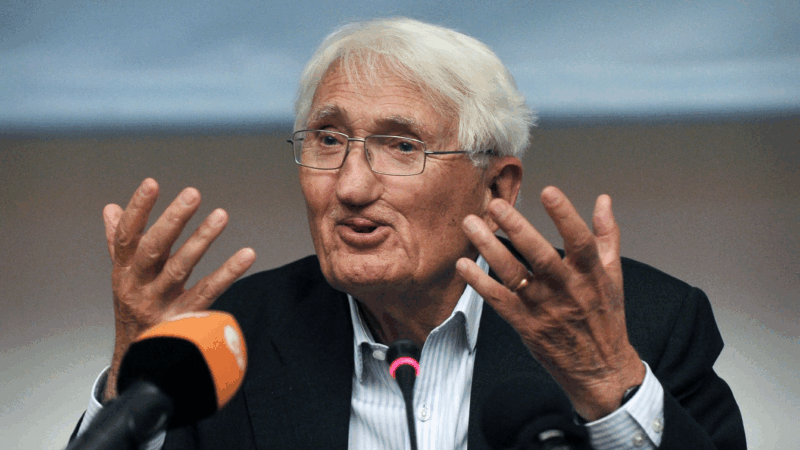
Acclaimed 20th century philosopher Jürgen Habermas dies at 96
Associated with the Frankfurt School, Habermas was a world-renowned thinker on modernity and democracy who helped shape German post-war and post-reunification political discourse.
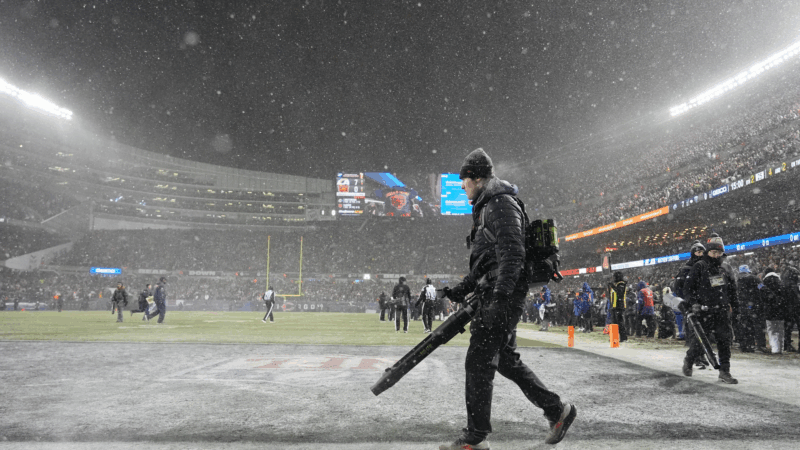
Why the Chicago Bears could be moving to Indiana
While Illinois is trying to keep the team in Chicago's suburbs, Indiana lawmakers are offering a plan to finance a new stadium
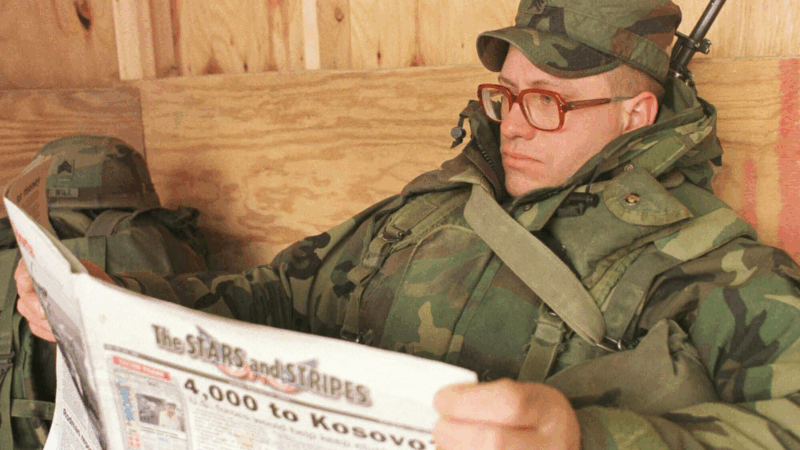
Pentagon tightens controls over Stars and Stripes after calling it “woke”
The new rules for the independent military newspaper are the Defense Department's latest effort to put extraordinary restrictions on journalists covering the agency.

‘War of the Worlds’ remake sinks to the bottom at this year’s Razzie Awards
The surveillance industry version of HG Wells' 1898 classic sci-fi novel stars Ice Cube, and won accolades for worst picture, actor, director and more.
