
Expert: Active Shooter Situations Can Easily Confuse Police
Active shooter incidents can be difficult for police officers. Events unfold in seconds and often end tragically. In Hoover on Thanksgiving night at the Riverchase Galleria, police shot and killed 21-year-old Emantic “EJ” Bradford Jr. Initially, they said he was the gunman in a shooting that left two wounded. They then backtracked and said the real gunman is still at large. State University of New York at Oswego criminal justice professor Jaclyn Schildkraut studies active shooter situations. She spoke with WBHM’s Andrew Yeager.
Interview Highlights
How police are trained to deal with active shooters:
“There’s a lot of confusion. There’s obviously a lot of people. People running every different direction or you could have people hiding all over the place. At that point what they’re going to be listening out for is the sounds of the gunfire in determining where in the building it’s coming from so that they can get to the perpetrator as quickly as possible and neutralize whether that is killing the perpetrator, taking them into custody, either with or without wounding them, but essentially bringing the event to a close as quickly as possible.”
What’s different about the Hoover shooting:
“There sort of one three outcomes that usually happens in these cases. That is either the perpetrator’s going to commit suicide. They’re going to basically get into a shootout with the police officers and either get wounded or basically suicide by cop. Or they’re just going to give themselves up, obviously, which is the least common. So to have a situation where the shooter is unknown and has a escaped the scene is very, very rare.”
How the “good guy with a gun” factor affects active shooter incidents:
“It puts those individuals actually at danger. There’s research that shows that when a person pulls a gun in a crime scene or there is a gun present in a crime situation that the likelihood of somebody getting injured increases fourfold … When police officers are arriving on a scene, they don’t know that that individual is a good guy with a gun. All they see is a person with a gun. And so [that] increases the risk of accidental shootings in terms of that good samaritan being injured by police because in that high-stakes, high-stress situation you’re trying to shoot to kill if somebody puts up a gun at you.”
Photo by kcdsTM 
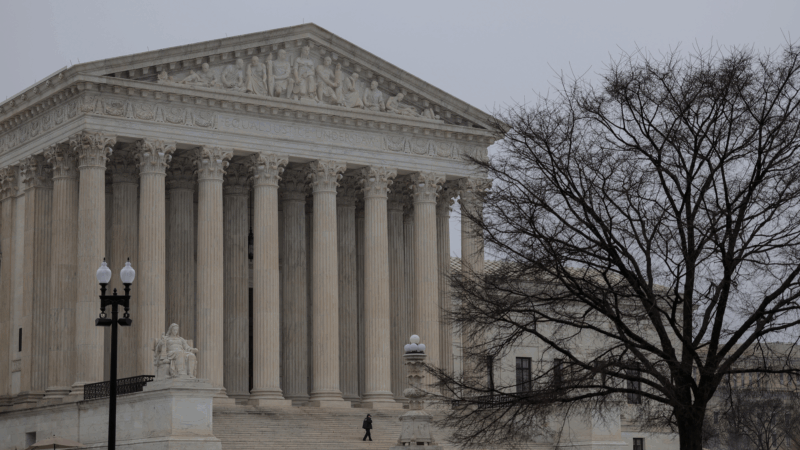
Supreme Court appears split in tax foreclosure case
At issue is whether a county can seize homeowners' residence for unpaid property taxes and sell the house at auction for less than the homeowners would get if they put their home on the market themselves.
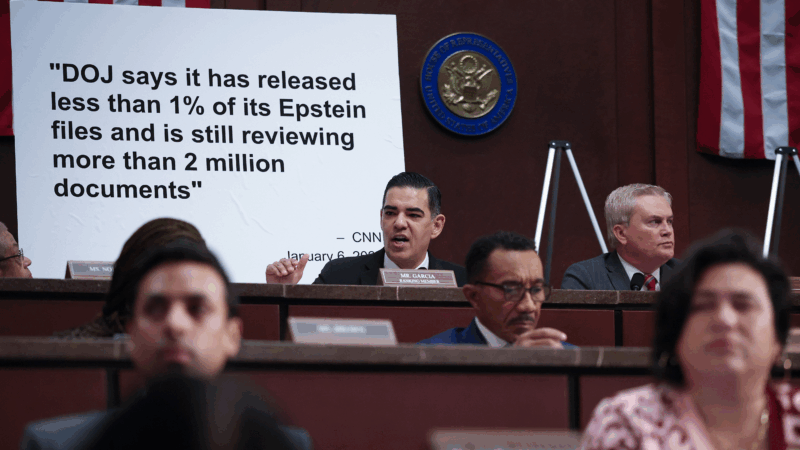
Top House Dem wants Justice Department to explain missing Trump-related Epstein files
After NPR reporting revealed dozens of pages of Epstein files related to President Trump appear to be missing from the public record, a top House Democrat wants to know why.
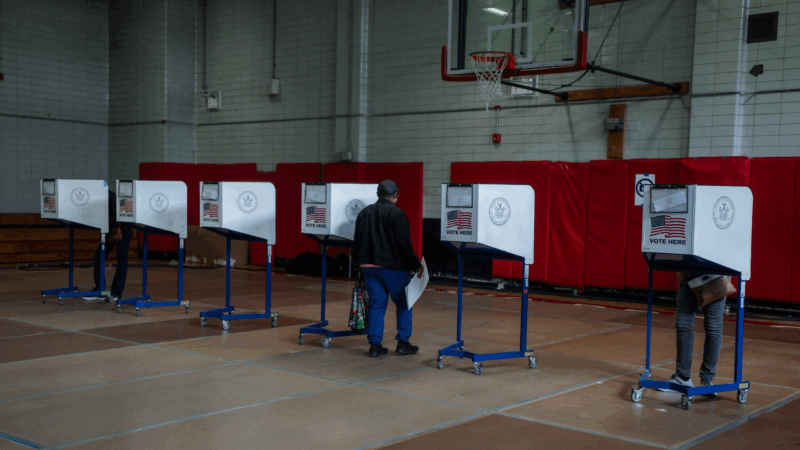
ICE won’t be at polling places this year, a Trump DHS official promises
In a call with top state voting officials, a Department of Homeland Security official stated unequivocally that immigration agents would not be patrolling polling places during this year's midterms.
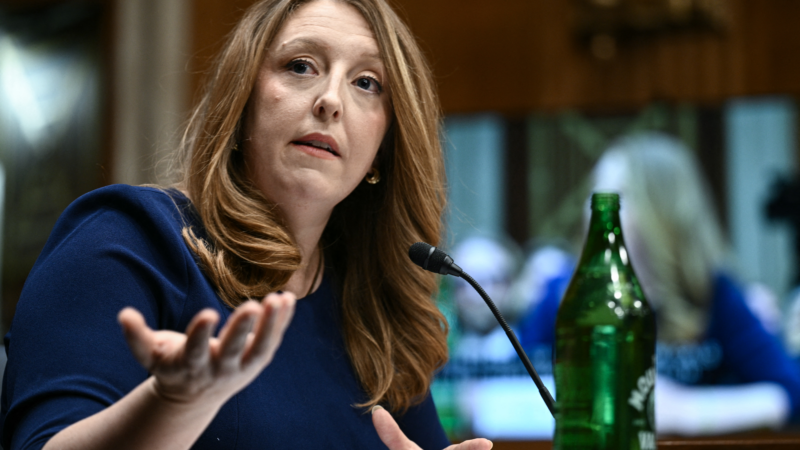
Surgeon general nominee Means questioned about vaccines, birth control and financial conflicts
During a confirmation hearing, senators asked Dr. Casey Means about her current positions and her past statements on a range of public health issues.
Rock & Roll Hall of Fame 2026 shortlist includes Lauryn Hill, Shakira and Wu-Tang Clan
The shortlist also includes a 1990s pop diva, heavy metal pioneers and a legendary R&B singer and producer.

This novel about family drama is so good you may want to re-read it immediately
Allegra Goodman's new novel is called This Is Not About Us, but critic Maureen Corrigan says that title is coy: Readers are bound to see aspects of themselves and their families in these pages.
