Turnaround Schools: Alabama’s George Hall, Pt. 2
 Birmingham– Sometimes, poorly run disadvantaged schools defy the statistics and turn themselves around. Sometimes, they even achieve at a level so high they become national models for education in any neighborhood. In the conclusion of our series on “Turnaround Schools,” Southern Education Desk reporter Dan Carsen picks up the story of an elementary school that did just that. How did it happen? It wasn’t easy, but persistence, teamwork, and a belief in the students won out:
Before the Mobile County school system reconstituted George Hall in 2004, less than half its students
were on grade level. Discipline problems spilled out into the neighborhood. Its reputation had
plummeted to the level of its test scores.
But as state Superintendent Dr. Tommy Bice puts it, “It’s remarkable to think where they were eight years ago and where they are today. The
demographics of the students have not changed at all, but their academic achievement has soared.”
The students at George Hall are 99 percent black and poor. And principal Terri Tomlinson points out, “The white children that are here are the children of our teachers, which really validates the work that we do in our building.”

Dr. Bice says George Hall is an example of what schools can do “if you get the right people with the right mindset and the right support, and the right vision in
place …. All those things that typically people use to say ‘students can’t do,’ they’re able to do.”
It wasn’t easy. When the school system cleared out the staff, the Alabama Education Association
contested many of the mandatory transfers. And the neighborhood resented the new mainly white
faculty. There were threats. People rubbed fish and shrimp guts on the school. But principal Terri
Tomlinson and her staff would not be deterred.
“I think that’s the key,” she says. “No matter what happened, we came back every day.”
That persistence helped bring the community around. Now, people lie about where their kids live so
they can enroll them at George Hall. In the neighborhood, including the
sprawling R.V. Taylor housing project, I couldn’t find one person who’d criticize the school. I did find Lisa
Ward, who went to Hall as a child. She’s now a pre-k grandmother.
“I’m very excited about the school. As a matter of fact,” she says with pride, “I was the one [who] encouraged my
daughter to place him here. The curriculum that they have for the smaller kids … they just seem to be
excelling. And I actually went over to meet the principal and congratulate her firsthand and ask her to
pass it on to the teachers.”
Barbara Halloway, who also went to George Hall, recently moved back to the area. She has a daughter in
third grade and has been hearing good things. She says her uncle’s neighbor told her Hall was a great school, and she thinks its terrific reputation is deserved:
“I made a good choice. I love
this school,” she says.
These reactions speak to the tenacity that helped turn George Hall into a school that wins awards,
attracts observers from other districts, and consistently keeps at least 95 percent of its students at or
above grade level.
Tomlinson and her teachers work long hours. But passion and dedication without precision wouldn’t
cut it. State Superintendent Bice says, “They leave nothing about teaching and learning to chance. They’re very strategic. They know
where every child is. They have a plan ensure that they move from point A to point B. If they’re not
moving along that trajectory, they have a plan to intervene.”
Teachers assess students very frequently,
and principal Tomlinson analyzes the data every day. Faculty planning time is protected, and
instructional time is guarded like treasure. Tomlinson says you practically need a letter from the Pope to
get on the intercom, and teachers recently voted to lengthen the school day by 50 minutes.

Teachers use common lesson plans, and group planning sessions often span grade levels. Collaboration is key. Speaking of which, the whole staff is involved: custodians and cafeteria workers know to quiz the kids on the current school-wide reading or math themes. And then there are the Career Days, which are also open to parents and guardians.
And speaking of community outreach, staffers walk students home in massive lines. That keeps kids out of trouble
and lets people who live along the route get to know them, not to mention the teachers who’re literally
going the extra mile.

There’s a high-tech media center, which Tomlinson describes as “the heart of the school,” and she says 12,000 books circulated through the school library in the first quarter.
In classes, the kids are charged up and engaged but not out of control. Staff and students walk with their heads up. It’s an all-day team effort, and Principal Tomlinson thinks it can be repeated elsewhere:
“It’s just very … believable that transformation can take place — no school, no community
should ever settle for their child getting a less-than-quality education.”
The success of George Hall brings up a question: Do you need to fix poverty before you can fix a school,
or is it at least partly the other way around? Neither is easy. But clearly, George Hall proves fixing a
school can be done.


Tributes, not politics, play center stage as Trump hosts the Kennedy Center Honors
President Trump said he was closely involved with picking the honorees, and on Sunday he became the first president to host the Kennedy Center awards ceremony.

Thailand launches airstrikes along border with Cambodia as tensions reignite
Both sides accused the other of breaking a ceasefire that halted fighting earlier this year. Longstanding border disputes erupted into five days of combat in July that killed dozens.
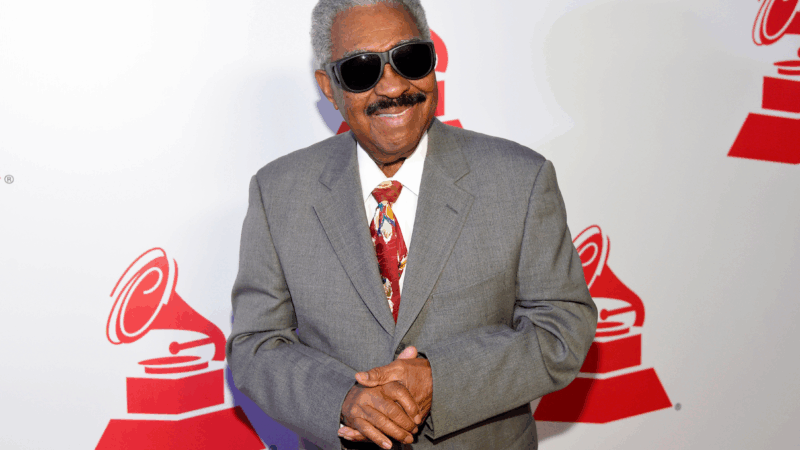
Rafael Ithier, a legend of salsa music, dies at 99
The pianist, composer and arranger spent more than six decades turning El Gran Combo into one of the premier salsa institutions of Latin America and beyond.

Light from satellites will ruin majority of some space telescope images, study says
Astronomers have long been concerned about reflections from satellites showing up in images taken by telescopes and other scientific instruments.

Defense Department is reviewing boat strike video for possible release, Hegseth says
In a speech on Saturday, Defense Secretary Pete Hegseth defended the strikes, saying: "President Trump can and will take decisive military action as he sees fit to defend our nation's interests."

Bama, Miami in, Notre Dame out and Indiana No. 1 in College Football Playoff rankings
Nobody paying attention for the past 24 months would be surprised to see Indiana – yes, Indiana – leading the way into this year's College Football Playoff.