
Ivey, Ledbetter go to court to try and allow voucher students to participate in athletics
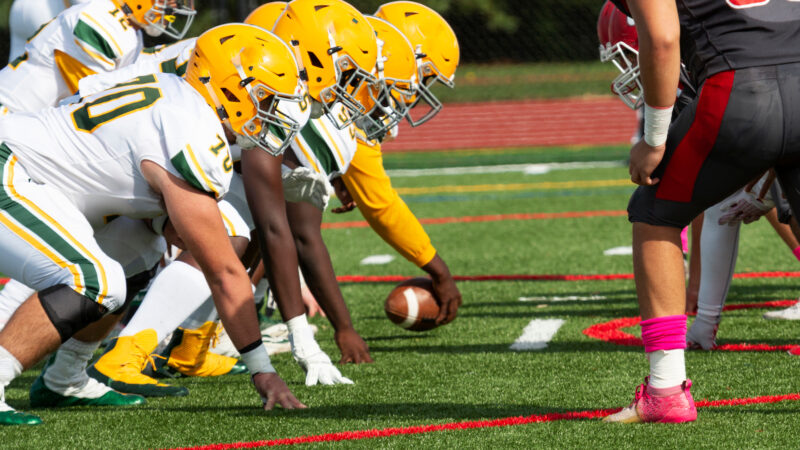
MONTGOMERY, Ala. (AP) — Alabama Gov. Kay Ivey on Thursday asked a court to overturn a decision by a high school athletics association that blocks students on the state’s new school voucher program from participating in athletics their first year in a new school.
Ivey and House Speaker Nathaniel Ledbetter filed the complaint in Montgomery Circuit Court against the Alabama High School Athletic Association. They are asking a judge to block the association’s ruling on eligibility and pave the way for the students to participate in athletics this year.
The CHOOSE Act, which went into effect this school year, allows eligible families to tap up to $7,000 in state funding to help pay for private school or to transfer to a public school, and up to $2,000 for homeschooling expenses.
The association ruled that the act provides a type of financial aid. The organization said it has a longstanding rule that any student who transfers to a new school and receives financial aid “is ineligible for athletic participation for one year.”
“This policy, established by our member schools, promotes competitive equity and deters recruitment,” the organization wrote in a statement Thursday.
Ivey and Ledbetter said the CHOOSE Act was designed to have no such restriction on athletic participation. The two Republicans filed the court action shortly after the board refused to reverse its decision.
“We wrote and passed the CHOOSE Act to give every child a true choice in their education, and that very much includes participation in athletics,” Ivey said in a statement.
Ledbetter said he expects lawmakers “will take a hard look at how the AHSAA operates in the upcoming session.”
“For the AHSAA’s leadership to take such drastic action just as football season begins tells me they are not concerned with the best interests of all student-athletes,” Ledbetter said.
Alabama is among a number of states using vouchers, tax credits or scholarships to parents to help families pay for private school or education costs outside of the public school setting.
This school year, 23,429 students are participating in the CHOOSE Act program. More than half of them, or 14,587, are attending private schools, according to numbers from the Alabama Department of Revenue. A little more than 7,000 are being homeschooled and 1,442 students are in public schools.
The majority of families participating in the program were already enrolled in private school or were being homeschooled last year.
Eligibility is initially limited to families earning up to 300% of the federal poverty level, which is about $77,460 for a family of three. The income cap will go away in 2027, but lower-income families and families with students with disabilities will have priority for funds.
Top Arizona lawmaker says he’s complied with a subpoena for 2020 election records
Arizona's state Senate president says he has complied with a subpoena he received last week seeking records from a flawed, Republican-led review of the 2020 election in Maricopa County.

Colors fly as Hoover celebrates Holi
Colored powder filled the air at Veterans Park in Hoover on Saturday. Crowds gathered to celebrate Holi, the Hindu festival of Spring, usually identified by the throwing of colors.
Americana’s newcomer Jobi Riccio faces the pressure on her new record
The country and bluegrass songwriter talks about her sophomore album, Face the Feeling, out May 15.
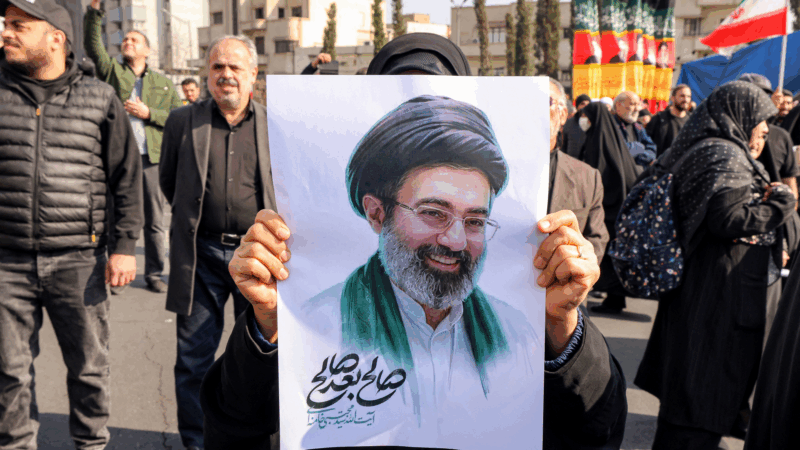
What to know about Mojtaba Khamenei, Iran’s new supreme leader
The second son of the late supreme leader keeps a low profile. But he's long been viewed as wielding his power behind the scenes, from crushing dissent to influencing presidential elections.
Anthropic sues the Trump administration over ‘supply chain risk’ label
The Pentagon told suppliers they can't use Anthropic's artificial intelligence tools after the company said it would not let its tech be used for autonomous weapons and mass domestic surveillance.
This historian dug up the hidden history of ‘amateur’ blackface in America
In her new book, Darkology, historian Rhae Lynn Barnes writes about how blackface and minstrel shows became one of the most popular forms of entertainment in 19th- and 20th-century America.
