
Judges block appeal to redraw congressional district maps

Federal judges rejected an appeal by Alabama’s Secretary of State to its ruling that the state congressional district map violated the Voting Rights Act and the Fourteenth Amendment. The three-judge panel unanimously, and for the second time, found that the state drew a map that unfairly discriminated against Black Alabamians. The state must continue to use a federally drawn map until 2030 which gives Alabama two districts where’s Black voters have the opportunity to elect a representative of their choice.
Secretary of State Wes Allen filed an appeal in June asking the U.S. Supreme Court to review the case and the panel’s rejection of congressional maps drawn by the state legislature in 2021 and 2023 that offered only one majority-Black district.
In its order, the panel said Alabama must use the map drawn for it, also known as Special Master Remedial Plan 3, until the legislature enacts a new congressional districting plan based on newly gathered census data in 2030.
Allen said he cannot comment on ongoing litigation in which he is named as a defendant.
The case was first brought forward in November 2021 by members of the NAACP, the ACLU and other voting rights advocates. Judges sided with the plaintiffs ruling the Alabama legislature intentionally discriminated against Black voters and required the state to redraw a map with two districts where Black voters can elect candidates of their choice or something similar. After Alabama’s legislature redrew a map that courts again found violated voters rights, the panel ordered that a third map be created.
Two district judges overseeing the case, Anna Maria Manasco and Terry F. Moorer, are President Trump appointees. The third, Circuit Judge Stanley Marcus, was nominated first by President Reagan and later by President Clinton.
The Special Master Remedial Plan 3 map was used in the 2024 election and Alabama elected two Black Congressional representatives for the first time: Democrats Terri Sewell and Shomari Figures.
In their August 7 decision, the panel did not determine whether Alabama will be brought under the preclearance requirement of the Voting Rights Act, as requested by the plaintiffs. The requirement would prevent any map drawn by the Alabama legislature in 2030 from going into effect until federal authorities review and approve it first.
While the state argues this request is “perverse,” the plaintiffs say it is necessary to prevent lawmakers from violating voters rights. After hearing arguments last month, the panel gave the state a 30-day window to draw up additional arguments.

Video appears to show U.S. cruise missile striking Iranian school compound
The seven-second video was released by Iranian state media and directly contradicts statements made by President Trump, who said Iran was responsible for the strike.
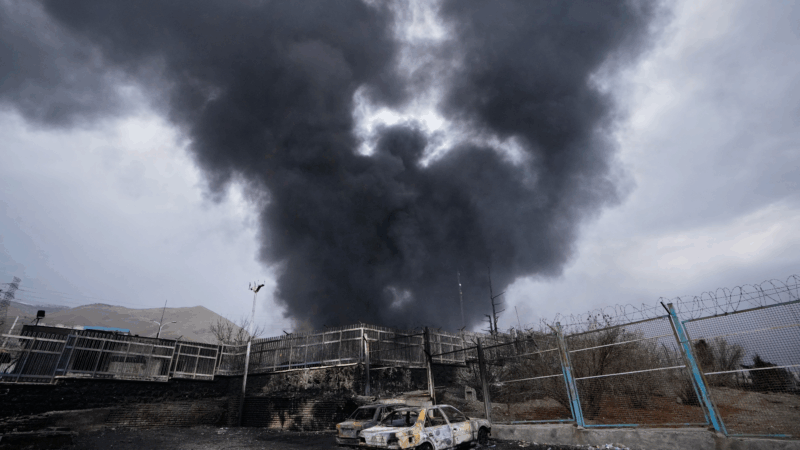
Crude oil rockets past $100 as markets lose hope for a quick resolution in Iran
Brent crude reached its highest price since Russia invaded Ukraine in 2022. Gasoline prices in the U.S. are expected to continue to rise.

Country Joe McDonald, anti-war singer who electrified Woodstock, dies at 84
Country Joe and the Fish's best-known song, "I-Feel-Like-I'm-Fixin'-to-Die Rag," captured the growing anti-war sentiment of the Vietnam era.

OpenAI robotics leader resigns over concerns about Pentagon AI deal
A senior member of OpenAI's robotics team said guardrails around certain AI uses were not sufficiently defined before OpenAI announced an agreement with the Pentagon.
Trump says he won’t sign bills until Congress overhauls voting
President Trump is pushing the Senate to abandon the filibuster and pass SAVE American Act, a bill top Democrat calls 'Jim Crow 2.0'

Photos: Scenes from Jesse Jackson’s homegoing services
Thousands showed up in Chicago over the weekend to pay respects to the civil rights leader, who died last month at the age of 84.
