Reflections after 43 years in an Alabama prison
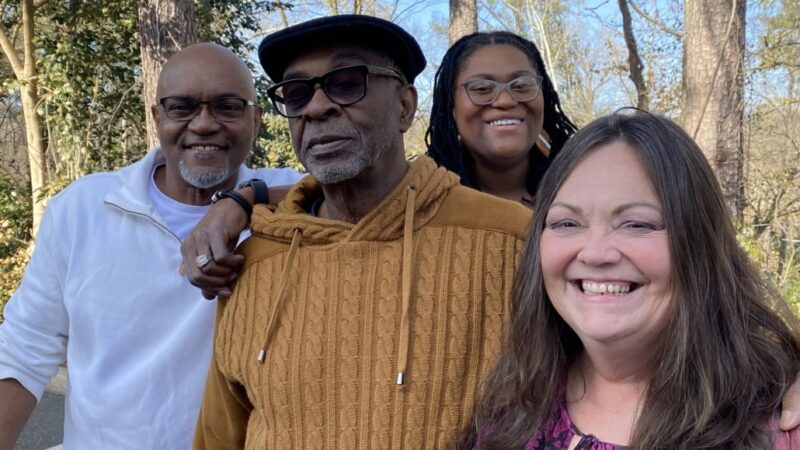
James Jones (center) stands with the Appleseed Center for Law and Justice team who helped him re-enter his community.
In 1981, James Jones of Birmingham robbed a shoe store and it changed the course of his life.
“Things went awry and we got busted,” Jones said.
He was in his 30s at the time and already had a criminal record. The robbery was his third strike under the Habitual Offenders Act. This made Jones one of thousands of men in Alabama prisons serving life without parole. He would spend the next 43 years of his life in the St. Clair Correctional Facility, a maximum security prison. Jones would not see freedom until December, 2024, at the age of 77.
“I’d been in for a while before it really dawned on me,” Jones said. “I said to myself, ‘Man, you’re going to die in here.’ But in my heart of hearts, I never accepted a life without parole. I just never did.”
Jones lived in close quarters with other prisoners in the dorms. He said there was no privacy at all.
“I would wake up every morning with 15 inches between me and another guy, waking up in another ugly guy’s face,” Jones said with a laugh.
For the most part, he said living in prison was just being told what to do, when to do it and how to do it.
“Being incarcerated has a way of working on a man’s psyche too,” Jones said. He added: “The food is terrible.”
Jones had to make a choice about how to navigate the often tense environment in prison. He decided to look for ways to connect with the people around him. In some cases, people he knew simply struggled to survive.
“The medical system is way outdated,” Jones said. “I know a lot of guys that, had they been in the streets, they would still be alive. They were neglected by the medical staff.”
Jones said an older man who was one of his neighbors complained to him one day of a pain in his left arm. Jones told him to go to the doctor and he visited the nurse twice.
“They told him it was just gas,” Jones said. “About an hour later he was dead. He had a massive heart attack.”
While life in prison wore on Jones, his family stuck by him and it made a huge difference. He empathized with people who didn’t have that support system.
“One of the most terrible things to happen to you during incarceration is to be abandoned by family,” Jones said. “If nobody will answer your phone calls and you get no mail, your life is right there. And that’s a killer.”
Jones eventually moved into an honor dorm, which is intended for incarcerated people who abstain from violence, smoking, drugs and the like. He became a support for people who didn’t have anything and a mentor for new inmates, finding their way.
“I used to tell some of the young guys, ‘You can’t wake up every morning hating these (correctional officers). It’s a job for them and their job is to keep us here. We don’t have to be enemies but they’re going to tell you what to do, how to do it and how long to do it. You’ve got to have discipline.”
Jones eventually earned an associates degree through Gadsden State Community College. He even taught classes.
“I’ve been with a lot of like minded guys who also wanted to get out,” Jones said. “We sat around and licked each other’s wounds. Sometimes it helps to whine and cry and have somebody know that I’m whining and crying.”
After decades of good behavior, he wrote to the Appleseed Center for Law and Justice, a collective of lawyers and advocates for those in the criminal justice system, asking for help with his case. Staff successfully petitioned judges and Jefferson County’s district attorney for resentencing. Jones’ family was there waiting for him when he first stepped into freedom after 43 years. Many people he was incarcerated with signed a poster board for him when he was released.
“A lot of them had water in their eyes when I left,” Jones said. “That made me want to cry. They said ‘Man, we’re going to miss you.’ And a part of me will always be there.”
Today, Jones is adapting to life outside. His children have grandchildren now. And although he grew up in Birmingham, Jones finds the city hard to navigate now because many landmarks have changed.
“I’m just lost like a snake in high weeds,” Jones said. “I guess eventually I’ll get it.”
Jones came away from his decades in the criminal justice system with empathy in equal parts for crime victims and incarcerated people, particularly people whose crimes did not involve violence.
“I know one guy named Kenny Gray,” Jones said. “He robbed a place of business and took a dollar and sixty cents and he was incarcerated for 30 years. Can you imagine that? He took a dollar sixty and you spent millions of dollars to keep him in prison.”
Jones argued that there is a way to respect victims and their families while also having mercy on incarcerated people and giving them a chance to prove they’ve changed. The key, he said, is to lead with empathy.
“There are some good guys in prison,” Jones said. “Some very good guys. They just want a chance. Some of them may not get it.”


Auburn tabs USF’s Alex Golesh as its next coach, replacing Hugh Freeze on the Plains
The 41-year-old Golesh, who was born in Russia and moved to the United State at age 7, is signing a six-year contract that averages more than $7 million annually to replace Hugh Freeze. Freeze was fired in early November after failing to fix Auburn’s offensive issues in three seasons on the Plains.
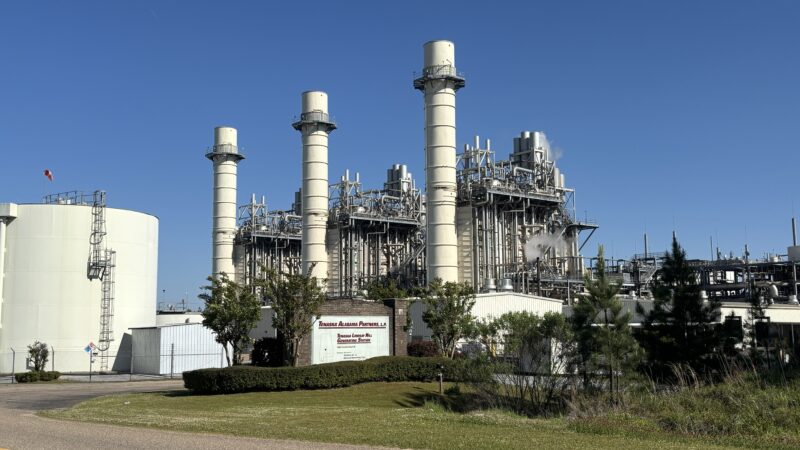
Alabama Power seeks to delay rate hike for new gas plant amid outcry
The state’s largest utility has proposed delaying the rate increase from its purchase of a $622 million natural gas plant until 2028.

Former U.S. Sen. Doug Jones announces run for Alabama governor
Jones announced his campaign Monday afternoon, hours after filing campaign paperwork with the Secretary of State's Office. His gubernatorial bid could set up a rematch with U.S. Sen. Tommy Tuberville, the Republican who defeated Jones in 2020 and is now running for governor.

Scorching Saturdays: The rising heat threat inside football stadiums
Excessive heat and more frequent medical incidents in Southern college football stadiums could be a warning sign for universities across the country.

The Gulf States Newsroom is hiring an Audio Editor
The Gulf States Newsroom is hiring an Audio Editor to join our award-winning team covering important regional stories across Mississippi, Alabama and Louisiana.

Judge orders new Alabama Senate map after ruling found racial gerrymandering
U.S. District Judge Anna Manasco, appointed by President Donald Trump during his first term, issued the ruling Monday putting a new court-selected map in place for the 2026 and 2030 elections.