
The Gulf South needs more sexual assault nurse examiners. Is teleSANE the answer?
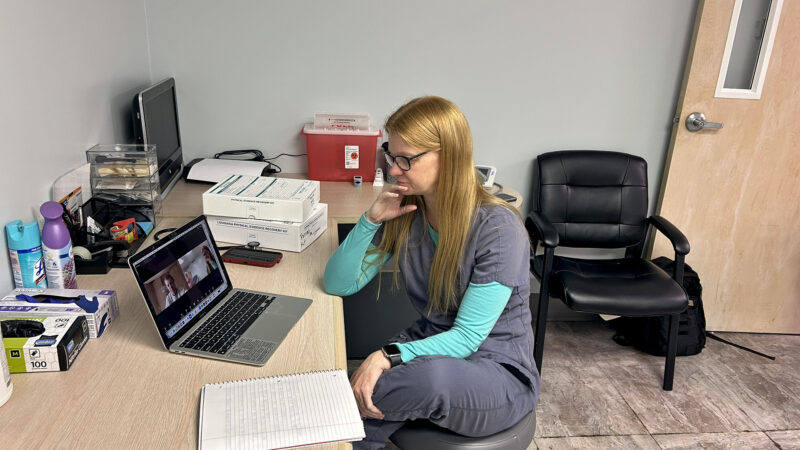
Nurse Rebecca Havlik talks to teleSANE Shalotta Sharp at Hearts of Hope, a sexual assault center in Lafayette, Louisiana, on December 4, 2024. Havlik wants there to be teleSANE programs in the region, but there currently aren’t any available.
From her office in Jackson, Mississippi, Sharlotta Sharp provides some U.S. hospitals with a vital resource — a teleSANE, or a sexual assault nurse examiner (SANE) able to conduct forensic exams virtually.
If a patient walks into an emergency room and says they’ve been sexually assaulted and they’re in states with teleSANE programs, like Pennsylvania or Arkansas, Sharp can dial in to assist
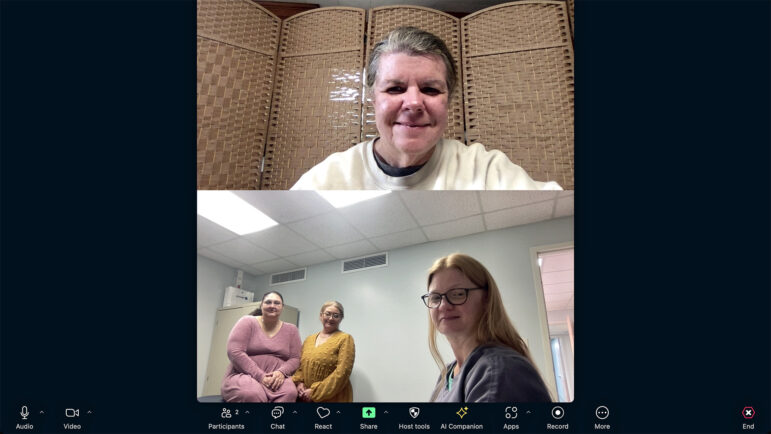
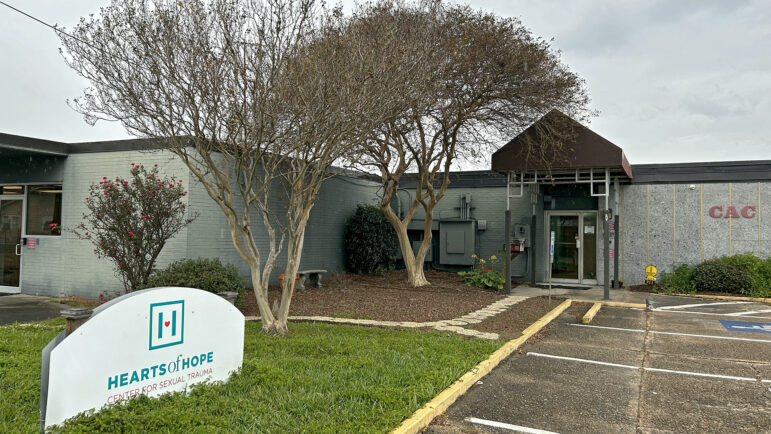
In an examination room at Hearts of Hope, a sexual trauma center in Lafayette, Louisiana, Sharp and another SANE, Rebecca Havlik, performed a test run for me to show what a teleSANE examination could look like.
Havlik runs through an initial exam of a “patient,” — played by Jencie Olivier, an advocate who works at the facility — checking their vitals and making sure they’re stable, She then asks the “patient” if they want to get a sexual assault forensic exam, sometimes called a “rape kit.”
The “patient” says they do.
Havlik then brings a computer into the room. On the screen is Sharp, who introduces herself, describes what her job is as a teleSANE and asks once more for consent to an exam.
Sharp then virtually guides Havlik through the exam: making sure to collect evidence correctly, that the patient consents to everything happening during the exam and that the patient is OK throughout.
SANEs play a critical role in sexual assault patient care. They’re trained to work with survivors and provide care that can address both physical and emotional needs — what’s called “trauma-informed care.” It’s an approach that recognizes the widespread impact of trauma and emphasizes creating an environment that prioritizes physical, emotional, and psychological safety.
“You’re dealing with trauma. You need someone in that room like Shalotta [Sharp] who is trauma-informed and knows how to handle trauma,” said Kimberly Young, the director of Hearts of Hope.
Most hospitals in the U.S. don’t have a SANE on staff, making teleSANEs, like Sharp, crucial to providing a needed service. But while Sharp lives in Alabama and works out of Mississippi, she can’t work as a teleSANE in the Gulf South.
That’s because no teleSANE programs exist in Louisiana, Mississippi, or Alabama. The Louisiana Hospital Association and representatives at Ochsner, one of the largest private health systems in the Gulf South with facilities in all three states, said they aren’t aware of any plans to implement teleSANE programs.
Some nurses and advocates are calling for programs in the region. There’s a huge shortage of SANEs affecting all three states: Alabama has 46 certified SANEs for the entire state, Louisiana has 42 and Mississippi only has 7 — for a population of almost 3 million.
Young said most emergency nurses aren’t able to provide the care sexual assault patients need. When someone is sexually assaulted and seeks help at a hospital that doesn’t have a SANE, they may be told they need to go to a facility that does if they want to get a forensic exam. Sometimes they have to drive themselves to the nearest hospital with a SANE, which could be hours away.
This can be a potential barrier for most patients.
“You might as well tell them to go to Mars,” Young said.
Because of this lack of access, Young said many survivors may not get a forensic exam, which is also critical for potential prosecution. If a sexual assault case goes to trial, the evidence collected by a SANE can play a huge role. SANEs can also be qualified as experts and testify on the witness stand.
TeleSANEs, Young said, could expand access in the Gulf South, making it easier for sexual assault survivors to get trauma-informed care and improve the evidentiary collection these nurses provide. She pointed to Arkansas’ teleSANE program, which has been in place since 2019, as a potential model.
Currently, Arkansas has teleSANEs available in 27 facilities in the state. Before the program was started, the state only had four certified SANEs. Sherrie Searcy-Lyle, a SANE who helped launch the program, said they were able to convince hospitals to buy into the program and use existing telemedicine technology and infrastructure that was already in place for other programs, like telestroke — which allows providers to remotely examine and treat patients who have had a stroke.
Searcy-Lyle said Arkansas’ teleSANE program has made a “huge impact on patient outcomes,” ensuring that the patient has informed consent and is offered standards of care, including medications that have prophylactic care, STIs or pregnancy and ensuring that they are offered forensic evidence collection.
“I know that we’ve made an impact on making things happen for patients that would not have happened without teleSANE,” Searcy-Lyle said.
But not all nurses believe that telemedicine is the answer to the shortage of SANEs, like Michelle Mahon of National Nurses United (NNU), the nation’s largest nursing union.
TeleSANEs can be seen as a quick fix that fails to tackle the root issue of a shortage of working nurses, Mahon said. They are appealing to hospitals because they cost less than training, hiring more SANEs or building the kind of “human network” needed to bring back nurses who have left the profession.
There are some free SANE trainings in the Gulf South. But nurses who want to attend may have to take time off work and pay for hotels and food — and other potential expenses like childcare arrangements — out of their own pockets.
“It’s easy to say, ‘let’s try this alternative approach,’” Mahon said. “The comparison is nothing or this. Nothing is unacceptable. But why are we not demanding what patients need?”
She also expressed concerns about replacing the in-person care that sexual assault survivors need. Some research from 2022 supports this perspective: a temporary teleSANE model implemented during COVID-19 revealed significant challenges. TeleSANEs reported difficulty interpreting patients’ nonverbal cues and body language, which complicated efforts to fully care for them.
One clinician emphasized the importance of touch in sexual assault care, emphasizing the impact of being able to put a gentle, reaffirming hand on someone’s arm in these situations. Another highlighted the limitations of telehealth in creating human connections, describing the extra emotional lift they had to manage for a teleSANE during the COVID-19 pandemic.
“I was the bridge, holding her, letting her cry on me,” the clinician said in the American Journal of Community Psychology report. “I know it was COVID-19 and we weren’t supposed to be close, but she was crying on my shoulder.”
While some nurses remain skeptical of teleSANE’s ability to replicate in-person care, others, like Rebecca Havlik, at Hearts of Hope would like to see a program in their region. She sees it as a crucial stopgap measure to reach patients who might otherwise go without care.
“I love telemedicine,” Havlik said. “It allows me to see a lot more patients and allows me to reach patients that otherwise would not be able to get to me. It is more convenient, meaning they will get the care that they need instead of delaying it because they can’t get to me.”
This story was produced by the Gulf States Newsroom, a collaboration between Mississippi Public Broadcasting, WBHM in Alabama, WWNO and WRKF in Louisiana and NPR. Support for health equity coverage comes from The Commonwealth Fund.
Mideast clashes breach Olympic truce as athletes gather for Winter Paralympic Games
Fighting intensified in the Middle East during the Olympic truce, in effect through March 15. Flights are being disrupted as athletes and families converge on Italy for the Winter Paralympics.
A U.S. scholarship thrills a teacher in India. Then came the soul-crushing questions
She was thrilled to become the first teacher from a government-sponsored school in India to get a Fulbright exchange award to learn from U.S. schools. People asked two questions that clouded her joy.

Sunday Puzzle: Sandwiched
NPR's Ayesha Rascoe plays the puzzle with WXXI listener Jonathan Black and Weekend Edition Puzzlemaster Will Shortz.
U.S.-Israeli strikes in Iran continue into 2nd day, as the region faces turmoil
Israel said on Sunday it had launched more attacks on Iran, while the Iranian government continued strikes on Israel and on U.S. targets in Gulf states, Iraq and Jordan.
Trump warns Iran not to retaliate after Ayatollah Ali Khamenei is killed
The Iranian government has announced 40 days of mourning. The country's supreme leader was killed following an attack launched by the U.S. and Israel on Saturday against Iran.
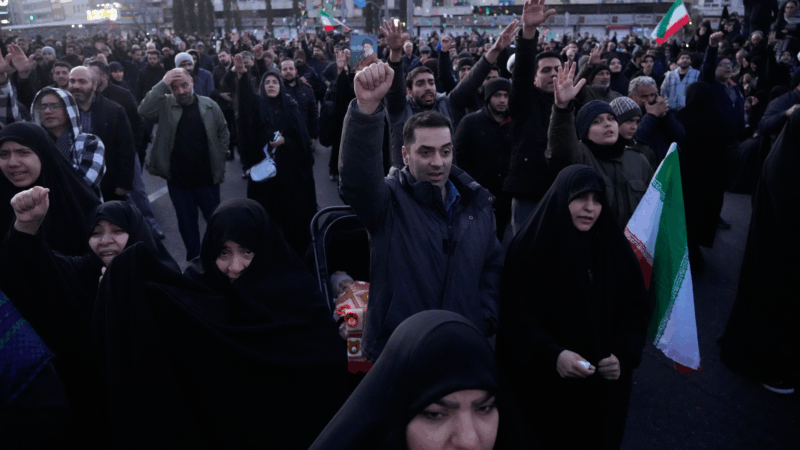
Iran fires missiles at Israel and Gulf states after U.S.-Israeli strike kills Khamenei
Iran fired missiles at targets in Israel and Gulf Arab states Sunday after vowing massive retaliation for the killing of Supreme Leader Ayatollah Ali Khamenei by the United States and Israel.
