
Judges weigh preclearance requirement for Alabama congressional plans
Federal judges on Tuesday sharply questioned lawyers on a request to make Alabama subject again to the preclearance requirement of the Voting Rights Act after courts ruled the state intentionally diluted the voting strength of Black residents.
Black voters and civil rights organizations, who brought a lawsuit that gave Alabama a new congressional map, are asking a three-judge panel to require any new congressional plans drawn in the next seven years go through federal review. The Alabama attorney general and the U.S. Department of Justice oppose the request.
The Voting Rights Act for decades required states with a history of discrimination — including many in the South — to get federal approval before changing the way they hold elections. But the requirement of preclearance effectively went away in 2013 when the U.S. Supreme Court ruled that the provision determining which states are covered was outdated and unconstitutional.
The request is seeking to trigger the “bail-in” provision of the Voting Rights Act. Alternatively, plaintiffs are asking the court to retain jurisdiction so any new plans can be addressed.
Deuel Ross, an attorney with the NAACP Legal Defense Fund, said Alabama demonstrated a pattern of resistance to drawing a congressional map that was fair to Black voters. He said the preclearance is needed to ensure Alabama doesn’t “backslide” the next time maps are drawn.
“There is no question what happened in this case extraordinary,” Ross told the panel.
He pointed to the history of the case, including that lawmakers in 2023 “intentionally defied” a court order to draw a second majority-Black district or something close to it. Judges stepped in to select a new map for the state that was used in the 2024 elections.
Alabama Solicitor General Edmund LaCour Jr. argued to the court that preclearance is an extraordinary remedy that is only appropriate after multiple violations.
“That test is not satisfied here,” LaCour told the panel.
During the hearing, the judges asked if there were less stringent remedies than preclearance.
However, U.S. District Judge Terry Moorer told LaCour said the best way to predict what someone will do is to “look at what they have been doing.” He asked if the state expected to be “divorced” from its history and noted the actions of state lawmakers
“Hasn’t the state shown us who they are?” Moorer told LaCour.
LaCour responded that the situation is different than when Congress created preclearance as part of the 1965 voting law.
“An attempt to persuade a court is far different than the attempt to evade a court that was happening in the 1950s and 1960s,” LaCour said.
The same three-judge panel in May permanently blocked Alabama from using the state-drawn map that they said flouted their directive to draw a plan that was fair to Black voters. The state is appealing that decision.
Alabama man, on death row since 1990, to get new trial
The U.S. Supreme Court on Monday declined to review the summer ruling from the 11th U.S. Circuit Court of Appeals. The decision paves the way for Michael Sockwell to receive a new trial.
Supreme Court blocks redrawing of New York congressional map, dealing a win for GOP
At issue is the mid-term redrawing of New York's 11th congressional district, including Staten Island and a small part of Brooklyn.
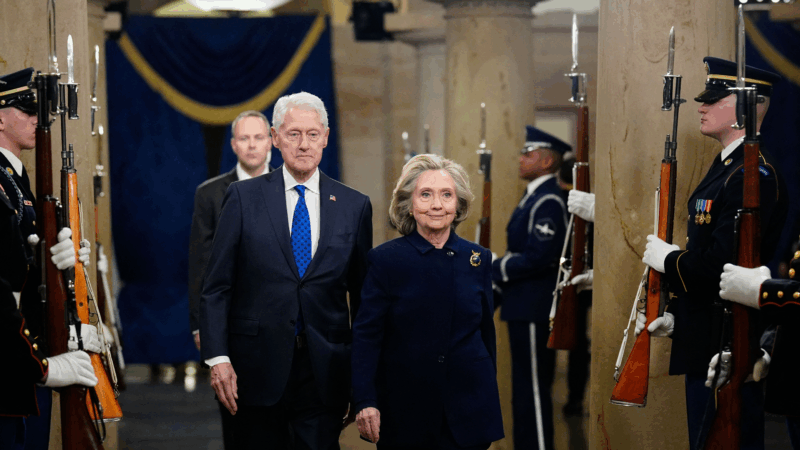
Video of Clinton depositions in Epstein investigation released by House Republicans
Over hours of testimony, the Clintons both denied knowledge of Epstein's crimes prior to his pleading guilty in 2008 to state charges in Florida for soliciting prostitution from an underage girl.
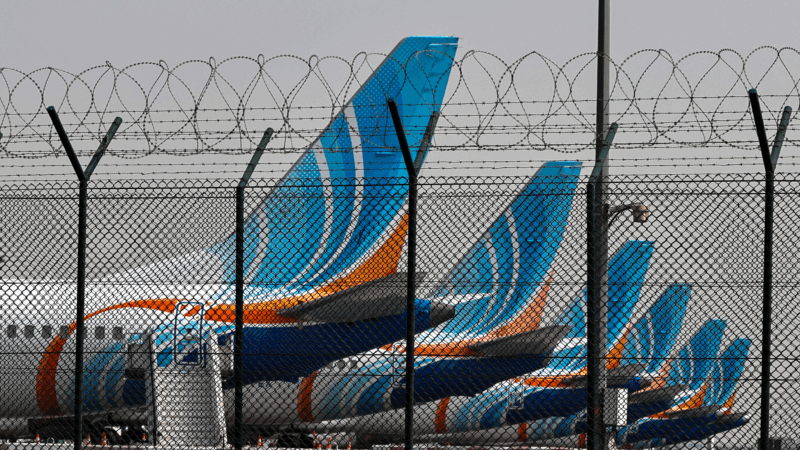
Some Middle East flights resume, but thousands of travelers are still stranded by war
Limited flights out of the Middle East resumed on Monday. But hundreds of thousands of travelers are still stranded in the region after attacks on Iran by the U.S. and Israel.

‘Hamnet’ star Jessie Buckley looks for the ‘shadowy bits’ of her characters
Buckley has been nominated for a best actress Oscar for her portrayal of William Shakespeare's wife in Hamnet. The film "brought me into this next chapter of my life as a mother," Buckley says.

How, who, and why: NPR flips its famous letters to defend the right to be curious
NPR is standing up for the public's right to ask hard questions in a national campaign dubbed "For your right to be curious." At NPR's headquarters, on billboards in New York City, Chicago, and Washington, D.C., and across social media, NPR's three iconic letters transform into "how," "who," and "why" — a bold declaration of its commitment to fight for Americans' right to ask questions both big and small.
