
Judges block appeal to redraw congressional district maps

Federal judges rejected an appeal by Alabama’s Secretary of State to its ruling that the state congressional district map violated the Voting Rights Act and the Fourteenth Amendment. The three-judge panel unanimously, and for the second time, found that the state drew a map that unfairly discriminated against Black Alabamians. The state must continue to use a federally drawn map until 2030 which gives Alabama two districts where’s Black voters have the opportunity to elect a representative of their choice.
Secretary of State Wes Allen filed an appeal in June asking the U.S. Supreme Court to review the case and the panel’s rejection of congressional maps drawn by the state legislature in 2021 and 2023 that offered only one majority-Black district.
In its order, the panel said Alabama must use the map drawn for it, also known as Special Master Remedial Plan 3, until the legislature enacts a new congressional districting plan based on newly gathered census data in 2030.
Allen said he cannot comment on ongoing litigation in which he is named as a defendant.
The case was first brought forward in November 2021 by members of the NAACP, the ACLU and other voting rights advocates. Judges sided with the plaintiffs ruling the Alabama legislature intentionally discriminated against Black voters and required the state to redraw a map with two districts where Black voters can elect candidates of their choice or something similar. After Alabama’s legislature redrew a map that courts again found violated voters rights, the panel ordered that a third map be created.
Two district judges overseeing the case, Anna Maria Manasco and Terry F. Moorer, are President Trump appointees. The third, Circuit Judge Stanley Marcus, was nominated first by President Reagan and later by President Clinton.
The Special Master Remedial Plan 3 map was used in the 2024 election and Alabama elected two Black Congressional representatives for the first time: Democrats Terri Sewell and Shomari Figures.
In their August 7 decision, the panel did not determine whether Alabama will be brought under the preclearance requirement of the Voting Rights Act, as requested by the plaintiffs. The requirement would prevent any map drawn by the Alabama legislature in 2030 from going into effect until federal authorities review and approve it first.
While the state argues this request is “perverse,” the plaintiffs say it is necessary to prevent lawmakers from violating voters rights. After hearing arguments last month, the panel gave the state a 30-day window to draw up additional arguments.
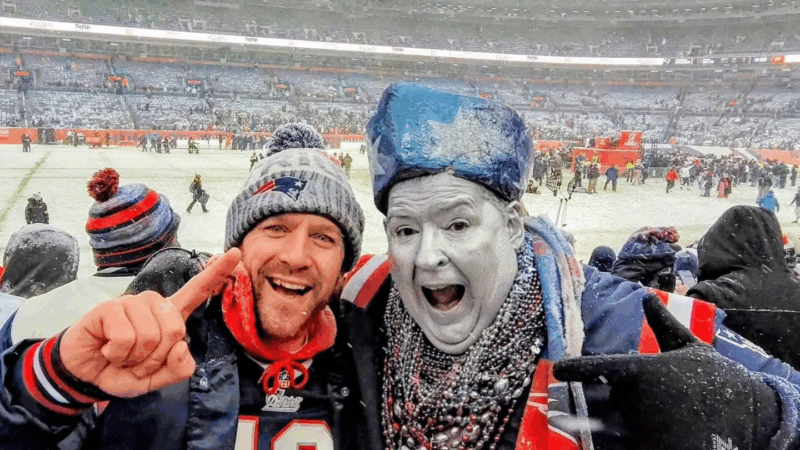
Hate them or not, Patriots fans want the glory back in Super Bowl LX
As Bostonians bemoan their long years of suffering without a Super Bowl win, rival fans gripe that Title Town has become Entitled Town.
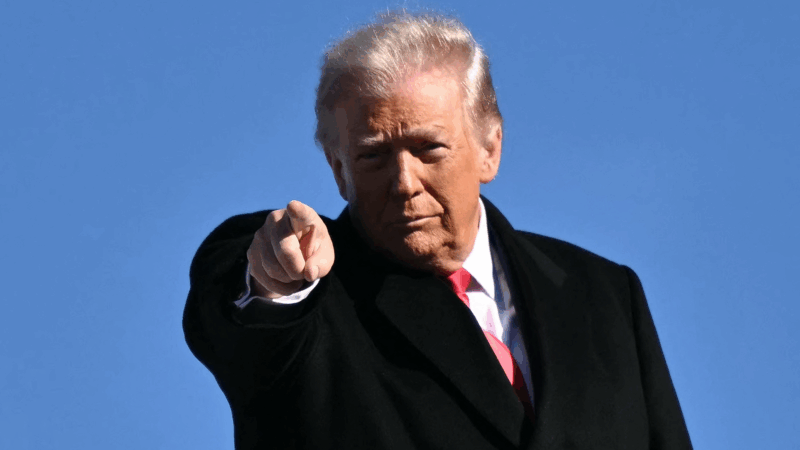
It’s about to get easier for Trump to fire federal workers
Since his first term, President Trump has wanted to be able to fire federal employees for any reason. A new rule vastly expands his authority to do that.

Behind the glitz in Milan, the Epstein scandal casts its shadow over the Olympic movement
The Epstein scandal has spread to the Olympic movement. The top organizer of the Los Angeles Summer Games faces calls to step down because of his past contacts with Epstein collaborator Ghislaine Maxwell.
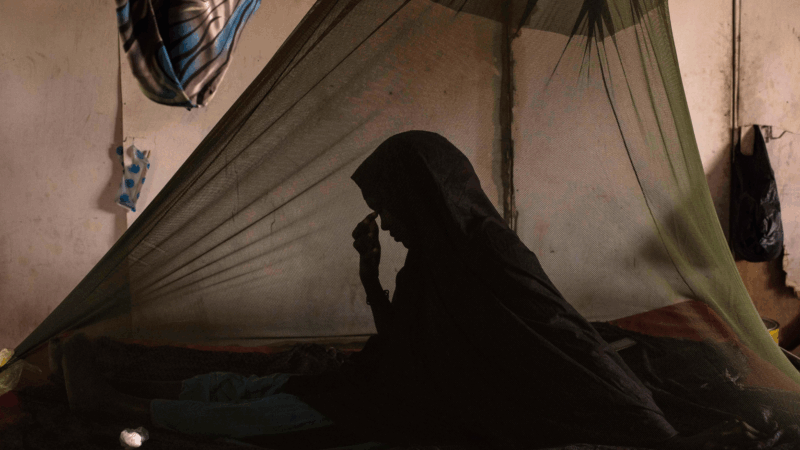
TB or not TB? That is the question
A new study in "Nature Medicine" estimates 2 million people are incorrectly told they have TB each year — and clinicians miss diagnosing TB in 1 million people. Why so many misdiagnoses?

From Jesus to Jurassic Park: This year’s Super Bowl ads are playing it safe
Early Super Bowl spots show advertisers want lots of buzz but not controversy.
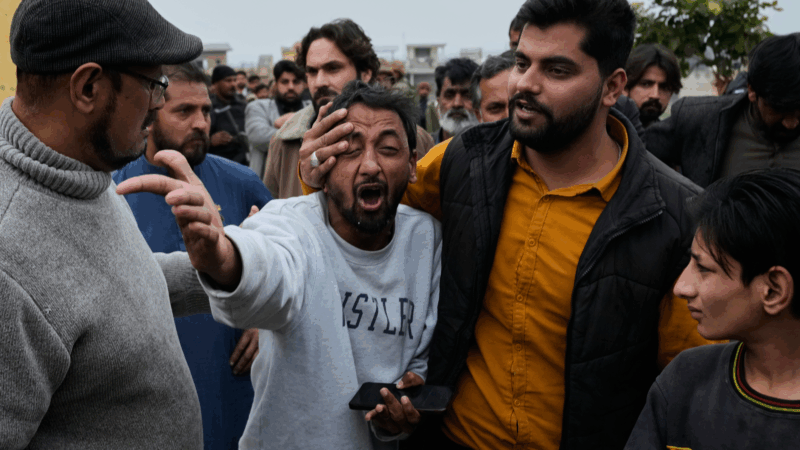
Suicide bombing at a Shiite mosque on Islamabad’s outskirts kills at least 31
It was a rare attack in the capital of Pakistan as its Western-allied government struggles to rein in a surge in militant attacks across the country.
