
Ivey appoints first Black Republican on Alabama Supreme Court
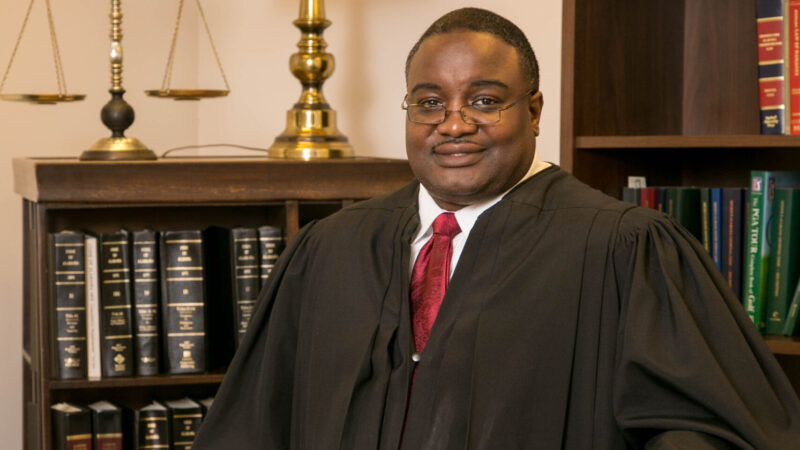
MONTGOMERY, Ala. (AP) — Alabama Gov. Kay Ivey on Tuesday appointed state appellate Judge Bill Lewis to the Alabama Supreme Court. He will be the first Black Republican to serve on the court.
Lewis replaces Justice Jay Mitchell, who resigned Monday. Lewis most recently served on the Alabama Court of Civil Appeals. Ivey appointed him to the position last year. He was previously the presiding circuit judge in the 19th Judicial Circuit in Elmore County.
“Judge Bill Lewis continues demonstrating justice and fairness under the law, as well as a willingness to serve the people of Alabama,” Ivey said in a statement. “His decades of experience will serve the Supreme Court of Alabama well, and I am confident he is the best choice.”
Lewis is the fourth Black justice to serve on the state’s highest court and the first Black Republican.
The three previous Black justices — Oscar Adams, Ralph Cook and John England — were all Democrats.
Alabama’s appellate judges run in statewide partisan elections, just like the governor, attorney general and other top officials. The court, like other statewide offices, has become dominated by Republicans. The state Supreme Court has been all-Republican for over a decade and has been comprised entirely of white justices since 2001.
A group of Black voters in 2016 filed a federal lawsuit that unsuccessfully challenged the state’s method of selecting judges, saying the statewide elections have resulted in all-white courts in a state where one in four residents is Black.
Ivey will appoint Lewis’ replacement to the Alabama Court of Civil Appeals.
In his resignation letter to Ivey, Mitchell, also a Republican, said he wants to play a more active role in politics and will make an announcement about his future in the coming days.
“President Trump is moving boldly to restore the United States Constitution — and we must ensure that his agenda takes root not only in Washington, but also in the states,” Mitchell wrote.
Mitchell is best known for writing an opinion regarding frozen embryos that said couples could sue for wrongful death of a minor child after their frozen embryos were accidentally destroyed. The ruling temporarily upended IVF services in the state as clinics became concerned about civil liability.
Here’s how world leaders are reacting to the US-Israel strikes on Iran
Several leaders voiced support for the operation – but most, including those who stopped short of condemning it, called for restraint moving forward.

How could the U.S. strikes in Iran affect the world’s oil supply?
Despite sanctions, Iran is one of the world's major oil producers, with much of its crude exported to China.

Why is the U.S. attacking Iran? Six things to know
The U.S. and Israel launched military strikes in Iran, targeting Khamenei and the Iranian president. "Operation Epic Fury" will be "massive and ongoing," President Trump said Saturday morning.
Sen. Tim Kaine calls on the Senate to vote on the war powers resolution
NPR's Scott Simon talks to Sen. Tim Kaine, D-Va., about the U.S. strikes on Iran.
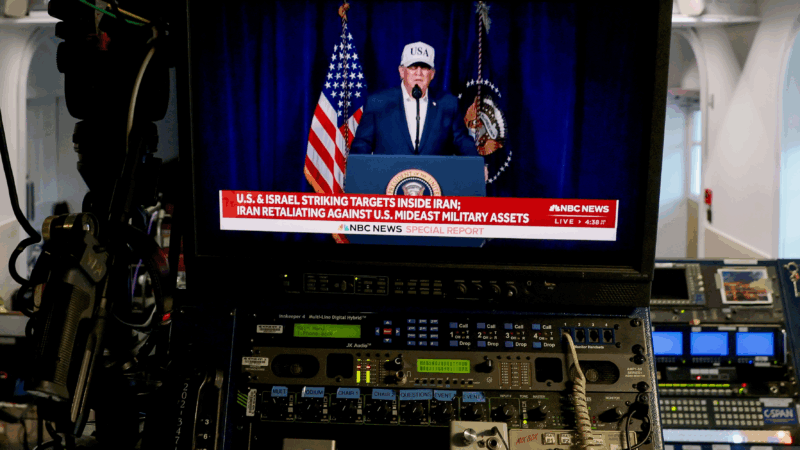
Iran strikes were launched without approval from Congress, deeply dividing lawmakers
Top lawmakers were notified about the operation shortly before it was launched, but the White House did not seek authorization from Congress to carry out the strikes.
Political science expert weighs in on Iran’s nuclear program in light of U.S. strikes
NPR's Scott Simon speaks to Ariane Tabatabai, the Public Service Fellow at Lawfare, about U.S. attacks on Iran and how President Trump's calls for regime change might be received there.
