
Could calligraphy help with anxiety? This study aims to find out
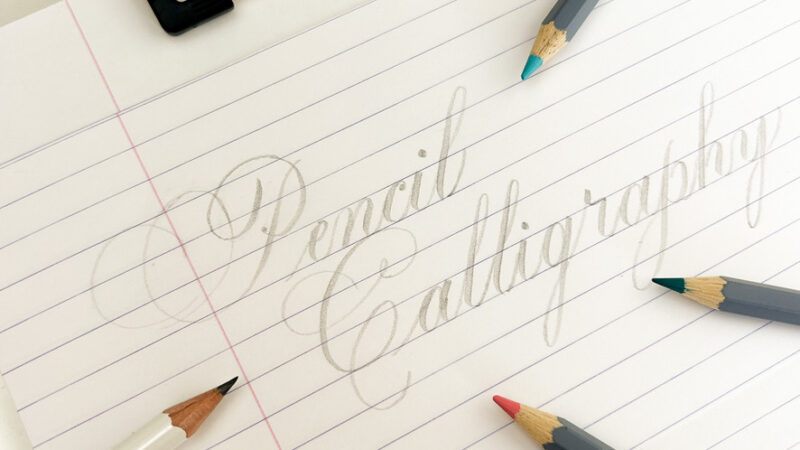
Fourth-year University of Alabama at Birmingham medical student Heather McKelvey laid out sheets of paper across a rubber mat. In broad, sweeping brush strokes, she wrote out the word “calligraphy” in ink. She carefully pulls the tail of the letter Y into an elegant swirl before precisely dotting the letter i.
People have a lot of strategies for dealing with anxiety – medication, therapy or exercise, for instance. But a new study overseen by McKelvey explored a different method – calligraphy.
When it comes to the intersection of calligraphy and anxiety, things get personal for McKelvey.
“As a non-traditional medical student with a business, with teenage children who are actually now adults, I have had a lot of anxiety,” McKelvey said. “Being able to have a tool like calligraphy that helps me to lower those anxiety levels and slow down and not be in such a hurry all the time has really been helpful for me.”
McKelvey is not alone in dealing with anxiety. A study by the National Institute of Mental Health found that 19% of adults experienced anxiety within the last year.
“That is a huge, huge proportion of our population,” McKelvey said.
This gave McKelvey the idea to conduct a study of what impact calligraphy may have on anxiety. Thirty-six participants were split into two groups.
One group did a four-week calligraphy training program with daily homework assignments, worksheets and online classes. The other group carried on with business as usual. At the end of the four week study, McKelvey will survey the participants to find out what difference calligraphy made.
McKelvey is certainly not the first person to study how art impacts mental health.
“Art is unique because it can be calming for both the artist and the viewer,” McKelvey said. “So it helps more than just the person doing it. But calligraphy, which means beautiful writing, is also speaking to us more concretely than other art forms.”
McKelvey uncovered several studies that already examined the benefits of Chinese brush calligraphy.
“It has shown in other cultures to lower anxiety levels, to improve cognitive function and quality of life in older adults,” McKelvey said. “It’s also shown to improve the positive symptoms of schizophrenia.”
None of the research she uncovered involved pencil and paper calligraphy.
“Instead of all of the usual pointed pen and ink and all these contraptions that people have to learn how to use, we’re doing this study with pencil and paper,” McKelvey said. “That is going to be something that’s widely available.”
Calligraphy combines physical movement with mental concentration.
“One thing about anxiety is that it seems to take people’s concentration away,” McKelvey said. “Calligraphy requires enough concentration that you’re not able to focus on those other things that are bothering you.”
McKelvey’s study is a pilot program, and she’s still examining the results. But she hopes to expand it to include thousands of participants.
In the meantime, McKelvey said one can experiment with free online resources along with the right pen, some water, ink, wipes, or even just a pencil and a sheet of paper.
‘One year of failure.’ The Lancet slams RFK Jr.’s first year as health chief
In a scathing review, the top US medical journal's editorial board warned that the "destruction that Kennedy has wrought in 1 in office might take generations to repair."
Here’s how world leaders are reacting to the US-Israel strikes on Iran
Several leaders voiced support for the operation – but most, including those who stopped short of condemning it, called for restraint moving forward.

How could the U.S. strikes in Iran affect the world’s oil supply?
Despite sanctions, Iran is one of the world's major oil producers, with much of its crude exported to China.
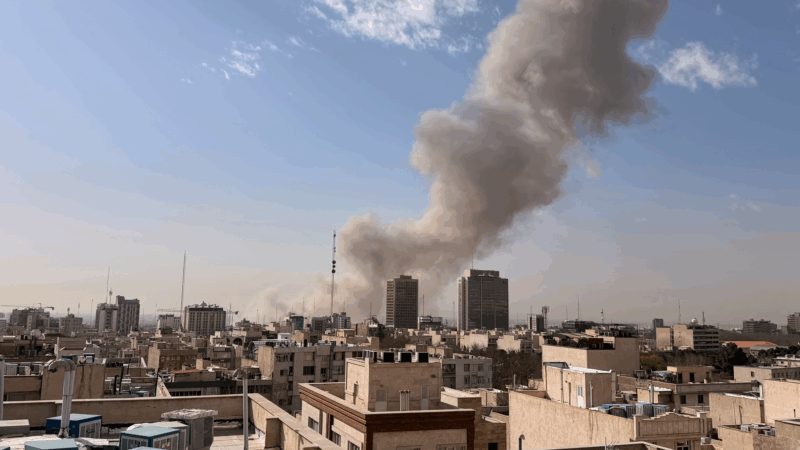
Why is the U.S. attacking Iran? Six things to know
The U.S. and Israel launched military strikes in Iran, targeting Khamenei and the Iranian president. "Operation Epic Fury" will be "massive and ongoing," President Trump said Saturday morning.
Sen. Tim Kaine calls on the Senate to vote on the war powers resolution
NPR's Scott Simon talks to Sen. Tim Kaine, D-Va., about the U.S. strikes on Iran.
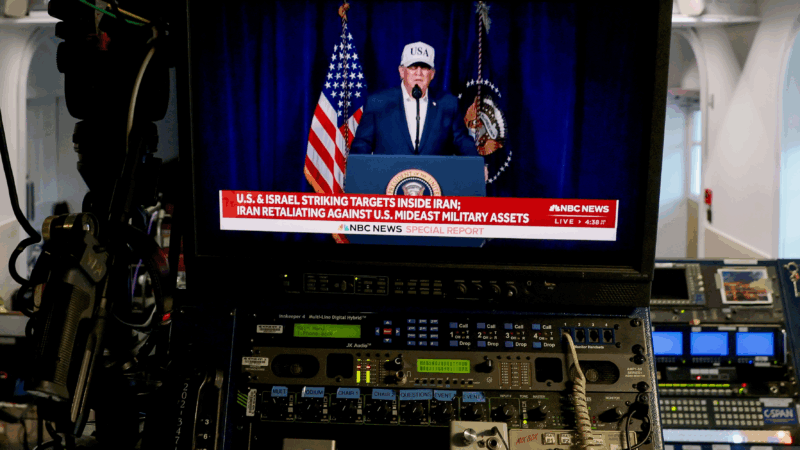
Iran strikes were launched without approval from Congress, deeply dividing lawmakers
Top lawmakers were notified about the operation shortly before it was launched, but the White House did not seek authorization from Congress to carry out the strikes.
