
Alabama ranks near bottom in latest Medicare scorecard; here’s why
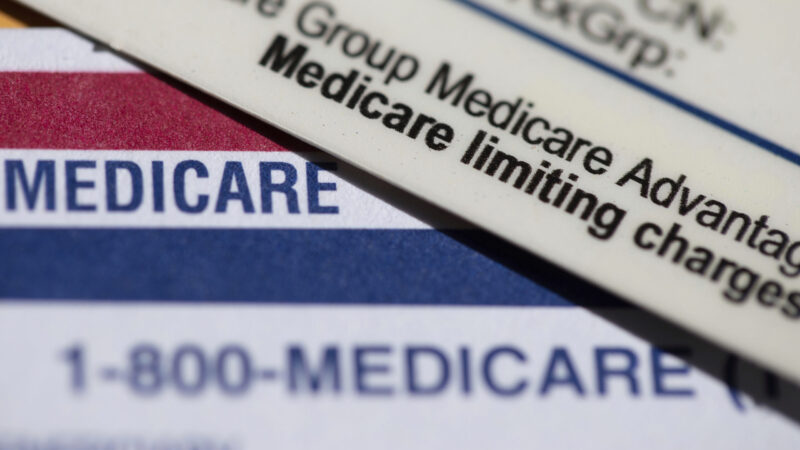
In this file photo, a Medicare Advantage PPO card rests on top of a Medicare card in Portland, Ore., June 10, 2024.
A new report from the Commonwealth Fund paints a stark picture of how Medicare is serving older adults and people with disabilities in the Gulf South.
Louisiana ranks dead last — 51st overall — in the “2025 State Medicare Scorecard,” with Mississippi close behind at 50th and Alabama at 44th.
The scorecard evaluates states across 31 indicators grouped into four categories: access to care, quality of care, costs and affordability and population health. The report draws on the most recent available data from federal sources — 2023 to 2025 for most indicators — including the Centers for Medicare and Medicaid Services (CMS) and national health surveys.
The Commonwealth Fund report highlights two major factors shaping health outcomes for Medicare beneficiaries across the country — the burden of chronic conditions and the growing prevalence of loneliness among older adults. Both issues are especially pronounced in lower-ranked states like Louisiana, Mississippi, and Alabama.
Nationwide, about two-thirds of people enrolled in traditional Medicare live with three or more chronic conditions, such as diabetes, heart disease, or arthritis. Managing these conditions requires consistent care coordination and access to health services — areas where the Gulf South continues to struggle.
Medicare plays a vital role in the nation’s health care system, providing coverage for more than 68 million Americans — nearly all adults aged 65 and older and some 7 million younger people with disabilities. But while the federally-administered program is designed to provide uniform benefits, the data shows that where a person lives still has a significant impact on their experience with Medicare.
“We generally think of Medicare as being a program for older adults,” David Radley, a senior scientist for health system tracking at The Commonwealth Fund and one of the report’s authors, said. “But the way that states think about health care really affects the way that Medicare ultimately sort of plays out in their state.”
Top-performing states — Vermont, Utah, and Minnesota — tend to have stronger health systems overall. These states often offer more generous Medicare Advantage and prescription drug plans, lower out-of-pocket costs and better access to providers.
In contrast, lower-ranked states, particularly in the Gulf South, face systemic challenges, including physician shortages, higher poverty rates and limited infrastructure to support older adults.
“In all three of those states — Alabama, Mississippi and Louisiana — all of them have a higher than average percent of beneficiaries that qualify for low-income subsidies.”
He noted that nearly 28% of Medicare beneficiaries in Louisiana and Mississippi receive such subsidies, compared to 20% nationally — a clear sign of economic vulnerability that can affect access to care.
“Even if you have insurance, it affects the way that you access health care,” he said. “You may be in a situation where you do have to make a choice between should I fill this prescription or should I buy food this month?”
Here’s a quick, state-by-state breakdown of the report’s findings for our region:
Louisiana
Louisiana had the highest rate in the nation of older adults reporting they went without medical care because of cost — 6%, compared to a low of 1.6% in Vermont.
Louisiana also ranked last in quality of care, with 31.5% of older adults receiving potentially inappropriate medications and 29.4% of short-stay nursing home residents readmitted within 30 days, which indicates someone had to go back to the hospital shortly after being discharged.
The state’s Medicare population is economically vulnerable, with a median household income of $47,263 for adults over 65, well below the national average.
Radley added that Louisiana’s performance is shaped by policy context as well. Louisiana is the only one of the three Gulf South states that expanded Medicaid, which could help improve health outcomes as more people age into Medicare eligibility.
“And that can influence how healthy they are when they become Medicare beneficiaries,” Radley said.
Mississippi
The Magnolia State has the lowest median household income for older adults in the country — $44,031, less than half the median income for seniors in Hawaii, the top-ranking state.
Mississippi also ranked last in population health, with 44.1% of older adults reporting difficulty with basic activities and 39% reporting loneliness or lack of emotional support.
The state had the highest rate of short-stay nursing home readmissions (29.4%) and the highest mortality rate (16.5%) among hospitalized Medicare beneficiaries for major conditions like heart attack and stroke.
Radley said those outcomes reflect long-standing health and economic inequities.
“If you’re uninsured before you turn 65 and you didn’t treat your medical problems when they arose, you come into Medicare with more chronic illness and poorly managed disease,” he said. “That’s going to affect your experience as a beneficiary.”
Alabama
While ranking slightly higher at 44th, Alabama still faces challenges in care quality and access.
The state had one of the highest rates of potentially inappropriate medication use (28.8%) and ambulatory care-sensitive hospital admissions (32.3 per 1,000 beneficiaries).
Despite these issues, Alabama performed better in some areas, such as routine checkups, where 98.2% of older adults had one in the past two years, ranking third nationally.
Radley said that high level of access was encouraging.
“Even in your three states, over 97% of older people had a routine visit with their health care provider in the last two years. That’s a good sign,” he said. “Maybe it means they’ve got a chronic disease they’re trying to manage, maybe it just means they’re getting access to care.”
However, affordability remains a concern, with 4.3% of older adults reporting they skipped care due to cost, and a median income of $50,483 for seniors, still below the national average.
For more, read the full report here.
This story was produced by the Gulf States Newsroom, a collaboration between Mississippi Public Broadcasting, WBHM in Alabama, WWNO and WRKF in Louisiana and NPR. Support for health equity coverage comes from The Commonwealth Fund.

Israeli soldiers fire on family car in occupied West Bank, killing 4
Israeli soldiers fired on a car carrying a family in the northern West Bank, killing four people including two children, the Palestinian Authority's Health Ministry said.

U.S. military names six killed in plane crash as Iran war enters third week
The conflict in the Middle East has entered a third week, with Israel announcing a barrage of new strikes on western Iran on Sunday, while the U.S. defense department released the names of six service members who died when their military refueling aircraft crashed.
Alabama poised to drastically overhaul utility regulation. Will it lower electric bills?
The Alabama Senate unanimously voted to expand the public service commission, and create a Secretary of Energy to address rising electricity prices. A bill in the House would go even further, requiring rate case hearings and limiting utility profits.

Acclaimed 20th century philosopher Jürgen Habermas dies at 96
Associated with the Frankfurt School, Habermas was a world-renowned thinker on modernity and democracy who helped shape German post-war and post-reunification political discourse.

Why the Chicago Bears could be moving to Indiana
While Illinois is trying to keep the team in Chicago's suburbs, Indiana lawmakers are offering a plan to finance a new stadium

Pentagon tightens controls over Stars and Stripes after calling it “woke”
The new rules for the independent military newspaper are the Defense Department's latest effort to put extraordinary restrictions on journalists covering the agency.
