
Judge refuses to dismiss Alabama lawsuit over solar panel fees
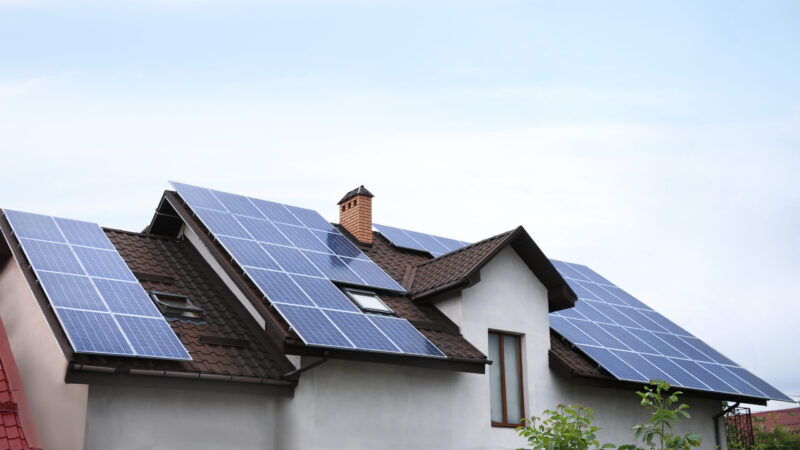
MONTGOMERY, Ala. (AP) — A federal judge has refused to dismiss a lawsuit against the Alabama Public Service Commission over fees it allows Alabama Power to charge customers who use solar panels to generate some of their own electricity.
U.S. District Judge Myron Thompson ruled Monday that a group of homeowners and the Greater-Birmingham Alliance to Stop Pollution can pursue a lawsuit challenging the fees as a violation of the Public Utility Regulatory Policies Act, a 1978 law that promotes renewable energy production.
The fees, $27 per month on a 5kW solar system, are charged to customers who are hooked up to the Alabama Power grid but also use solar panels to generate a portion of their electricity.
Alabama Power has maintained that the stand-by fees are needed to maintain infrastructure to provide backup power when the panels aren’t providing enough energy. Environmental groups argue that the fees improperly discourage the use of home solar power panels in the sun-rich state.
“We will continue our efforts to require the Commission to follow the law and not allow Alabama Power to unfairly charge customers who invest in solar,” Christina Tidwell, a senior attorney in the Southern Environmental Law Center’s Alabama office, said in a statement.
Tidwell said the “unjustified fee” erodes customers’ expected savings and makes it “impractical to invest in solar power.”
The Public Service Commission and Alabama Power had asked Thompson to dismiss the lawsuit. They argued the federal court did not have subject-matter jurisdiction.
A spokesperson for Alabama Power said the company, as a matter of practice, does not comment on pending legal matters. The Public Service Commission also declined to comment.
The Federal Energy Regulatory Commission in 2021 rejected the environmental groups’ request to take enforcement action against the Public Service Commission. However, two members of the five-member panel issued a separate statement expressing concern that Alabama regulators may be violating federal policies designed to encourage the development of cogeneration and small power production facilities and to reduce the demand for fossil fuels.
Iran’s Ayatollah Ali Khamenei is killed in Israeli strike, ending 36-year iron rule
Khamenei, the Islamic Republic's second supreme leader, has been killed. He had held power since 1989, guiding Iran through difficult times — and overseeing the violent suppression of dissent.

Found: The 19th century silent film that first captured a robot attack
A newly rediscovered 1897 short by famed French filmmaker Georges Méliès is being hailed as the first-ever depiction of a robot in cinema.
‘One year of failure.’ The Lancet slams RFK Jr.’s first year as health chief
In a scathing review, the top US medical journal's editorial board warned that the "destruction that Kennedy has wrought in 1 in office might take generations to repair."
Here’s how world leaders are reacting to the US-Israel strikes on Iran
Several leaders voiced support for the operation – but most, including those who stopped short of condemning it, called for restraint moving forward.

How could the U.S. strikes in Iran affect the world’s oil supply?
Despite sanctions, Iran is one of the world's major oil producers, with much of its crude exported to China.
Why is the U.S. attacking Iran? Six things to know
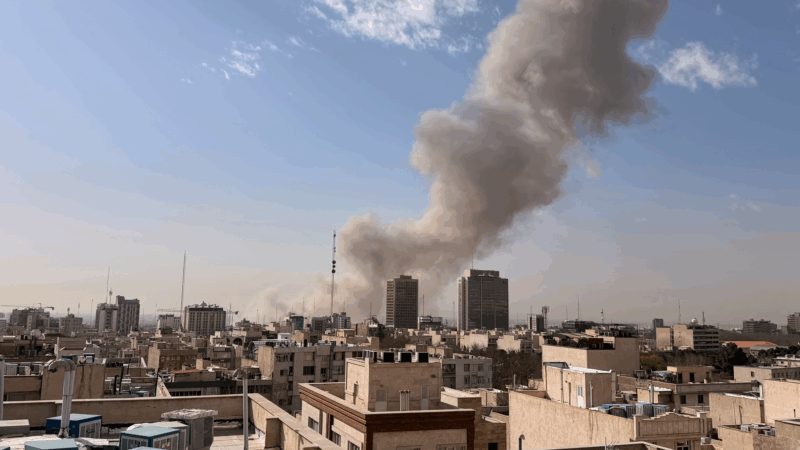
The U.S. and Israel launched military strikes in Iran, targeting Khamenei and the Iranian president. "Operation Epic Fury" will be "massive and ongoing," President Trump said Saturday morning.
