
Alabama lawmakers eye change to school funding formula

MONTGOMERY, Ala. (AP) — Alabama lawmakers are eyeing an overhaul to the state’s method of funding public schools and heard details Monday about possible new formulas for allocating money to schools.
Lawmakers have no plans to increase taxes but are looking to revamp the formula that divvies out state funds. A panel of lawmakers heard information about three possible funding models. The formulas would allocate a base per-student amount and then provide extra dollars based on student needs.
“We haven’t changed it in 30 years. Education has changed. Our state demographics have changed. Our systems have changed,” Rep. Danny Garrett, who chairs the education budget-writing committee in the House of Representatives, said of the need to change the funding formula.
Alabama is the latest state to consider a change to school funding formulas. Mississippi changed its formula earlier year. Tennessee changed its formula in 2022.
Garrett said his hope is to have a proposal ready for lawmakers to consider next year.
Bellwether, a nonpartisan research, and policy organization, presented information to lawmakers on three possible funding formulas. Each formula includes a base amount and weighted funding for six student groups: low-income students, students with disabilities, students learning English, gifted students, rural students and charter school students.
Garrett said the state can absorb the projected additional cost without raising taxes.
Sen. Arthur Orr, who chairs the Senate education budget writing committee, said the goal is to provide more funding to better meet the needs of students and to give school systems more flexibility in how they use their state dollars.
The state’s current school funding formula was adopted in the 1990s in response to a lawsuit over school funding. The current program, called the Foundation Program, provides schools money for teacher “units” based on student enrollment.
The legislative session begins Feb. 4.
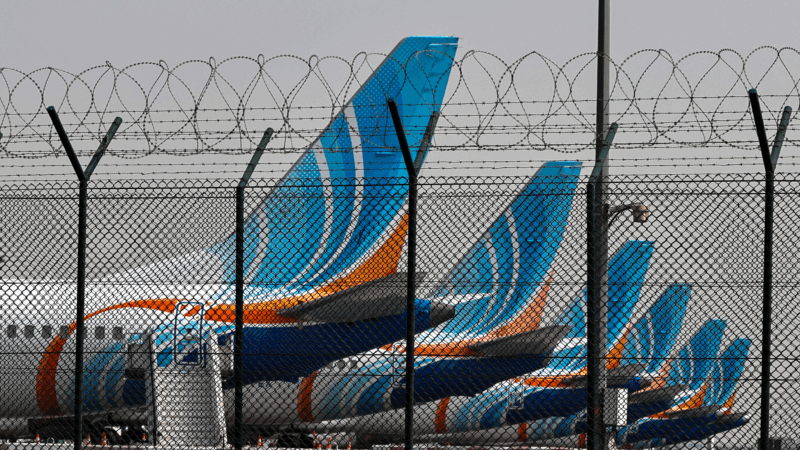
Some Middle East flights resume, but thousands of travelers are still stranded by war
Limited flights out of the Middle East resumed on Monday. But hundreds of thousands of travelers are still stranded in the region after attacks on Iran by the U.S. and Israel.

‘Hamnet’ star Jessie Buckley looks for the ‘shadowy bits’ of her characters
Buckley has been nominated for a best actress Oscar for her portrayal of William Shakespeare's wife in Hamnet. The film "brought me into this next chapter of my life as a mother," Buckley says.

How, who, and why: NPR flips its famous letters to defend the right to be curious
NPR is standing up for the public's right to ask hard questions in a national campaign dubbed "For your right to be curious." At NPR's headquarters, on billboards in New York City, Chicago, and Washington, D.C., and across social media, NPR's three iconic letters transform into "how," "who," and "why" — a bold declaration of its commitment to fight for Americans' right to ask questions both big and small.
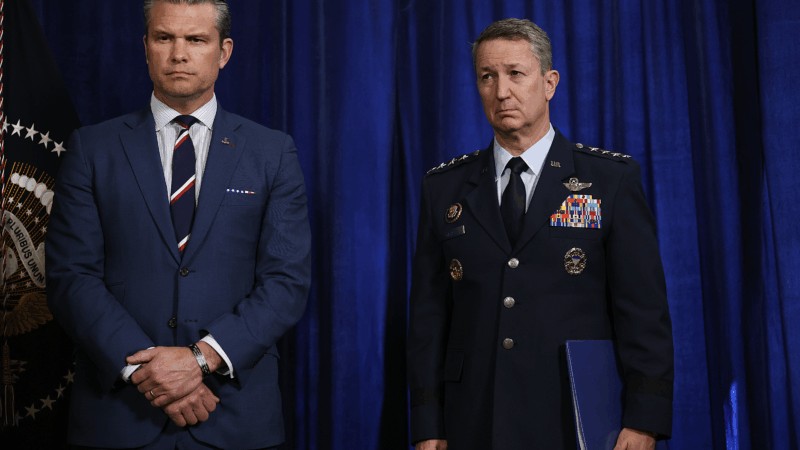
Hegseth: ‘We didn’t start this war but under President Trump we’re finishing it’
The remarks are the first to reporters since the U.S.-Israeli military operations against Iran began Saturday despite weeks of talks designed to stave off a conflict.

Ivermectin is making a post-pandemic comeback, among cancer patients
The anti-parasitic drug became a household name during the COVID-19 pandemic, and it is now being embraced as an alternative treatment for cancer. It is as politically polarizing as ever.
Rep. Adam Smith on the U.S. strikes on Iran and the debate over Trump’s war powers
NPR's Leila Fadel asks Democratic Rep. Adam Smith of Washington, the ranking member on the House Armed Services Committee, about President Trump's unilateral authorization to strike Iran.
