
Meet the tiny fish that only call Jefferson County home
By Claire Trammell, Reflect Alabama Fellow
This story is part of a monthly series called Outdoor Connections, which features stories that explore the biodiversity of Alabama and how we depend on it.
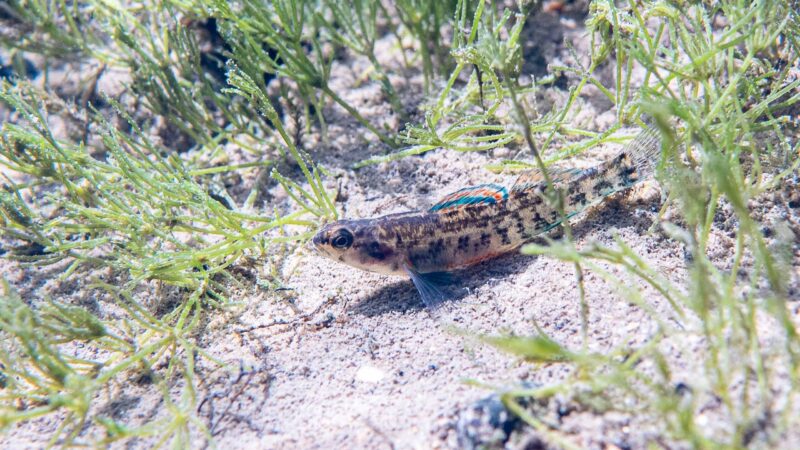
Though the creek water at Turkey Creek Nature Preserve in northeast Jefferson County is crystal clear, and thousands visit the preserve each year, it’s highly unlikely most will see three unique fish species that swim alongside them. They are the endangered watercress, rush and vermilion darters
“This is kind of like a ‘Where’s Waldo,’” said preserve manager Charles Yeager, wading through the center of Turkey Creek, looking for the darter.
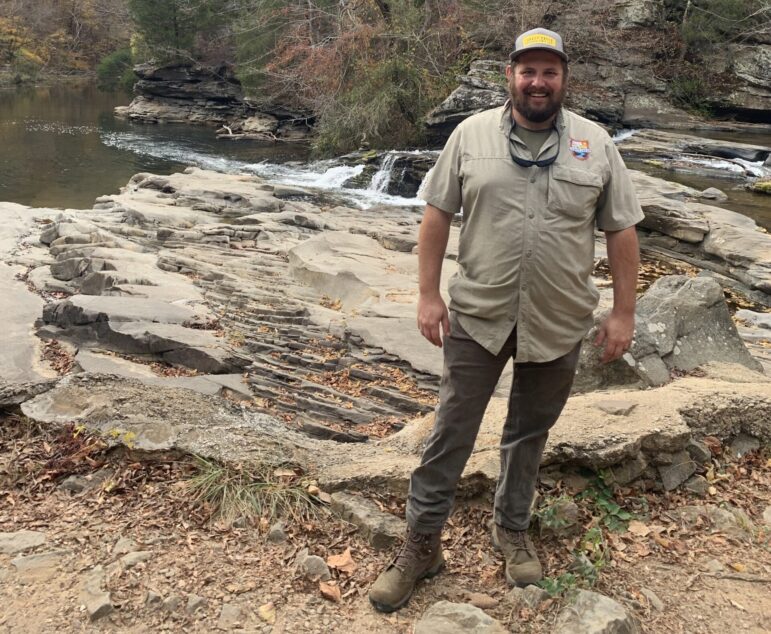
What makes the three species different among more than 200 types of darters is they are only found in Jefferson County, with the vermilion darter only found in the fourteen miles of Turkey Creek. The Turkey Creek preserve and other organizations have made conservation a priority to ensure the darters continue to live.
These fish grow up to two inches long and live in habitats with the clean and cool water and aquatic vegetation found in Turkey Creek. Watercress darters like the freshly filtered spring runs, while vermilion darters prefer the ripples of fast and shallow waters. Rush darters often swim to harsh places with less competition, such as ditches on the side of the road that fill up with water in the spring.
“They’re tough little fish,” Yeager said.
Despite being fish, they don’t really swim. True to their name, they dart from place to place, perching on their pectoral fins, usually camouflaged with their surroundings. The rush darter is most easily camouflaged, since it’s far less colorful than its red and blue-finned cousins.
Despite their toughness, these little fish struggle to survive. Their size makes them easy prey and habitat loss is a threat. As he walked down the side of the creek, Yeager explained how sedimentation and stormwater runoff affects the creek and the darters.
“This stuff gets exposed and there’s no longer anything to hold it in place. And so it tends to wash into the creek and it fills up the stream channel,” Yeager said.
Yeager said there is no way to remove this damage, so instead conservationists focus on prevention, such as working with land owners and companies.
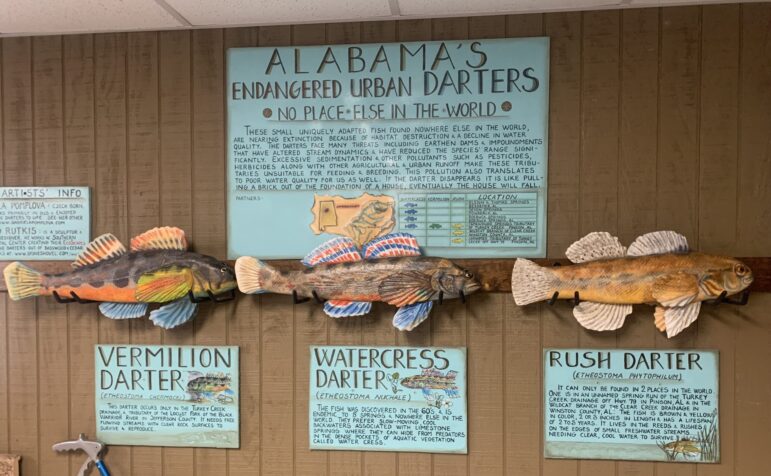
The preserve, along with the U.S. Fish and Wildlife Service and other organizations in Birmingham have been working in other ways to help these endangered species. The groups educate the local community about biodiversity, emphasizing that what is put in the water matters. A few years ago, the creek underwent a construction project to replace the passageways under the road, allowing rush darters easier and safer access to different parts of the creek. Workers also removed a dam, which allowed the darters to expand their habitats.
Yeager said more darters are being found downstream than ever been before. That’s a good sign suggesting better conditions in the water and larger populations. Along with the expanded habitat, Yeager said Turkey Creek hopes to implement more water quality monitoring, to ensure the water is clean and healthy.
Though the population seems to be stable, it is impossible to conduct a census of exactly how many different darters occupy the area due to how difficult they are to find. The best course of action, Yeager said, is to continue surveying, making sure they are still present and keeping Turkey Creek’s ecosystem as vibrant and diverse as it can be for all the species that call this small creek home.
Do you have an idea worth featuring as part of our Outdoor Connections series? Email [email protected].

Reporters’ notebook: The Olympics closing ceremony is way more fun than you’d think
Olympics opening ceremonies tend to get more love than their closing counterparts. But a pair of NPR reporters who watched both in Italy left with a newfound appreciation for the latter.

Northeast readies for a major winter storm, with blizzard warnings in effect
New Jersey through Massachusetts could see 2 feet of snow. New York City's mayor said the city had not "seen a storm like this in a decade."

Mexican army kills leader of Jalisco New Generation Cartel, official says
The Mexican army killed the leader of the powerful Jalisco New Generation Cartel, Nemesio Rubén Oseguera Cervantes, "El Mencho," in an operation Sunday, a federal official said.

Ukraine’s combat amputees cling to hope as a weapon of war
Along with a growing number of war-wounded amputees, Mykhailo Varvarych and Iryna Botvynska are navigating an altered destiny after Varvarych lost both his legs during the Russian invasion.
University students hold new protests in Iran around memorials for those killed
Iran's state news agency said students protested at five universities in the capital, Tehran, and one in the city of Mashhad on Sunday.
Pakistan claims to have killed at least 70 militants in strikes along Afghan border
Pakistan's military killed at least 70 militants in strikes along the border with Afghanistan early Sunday, the deputy interior minister said.
