
As grocery prices soar, push grows to end sales tax on food
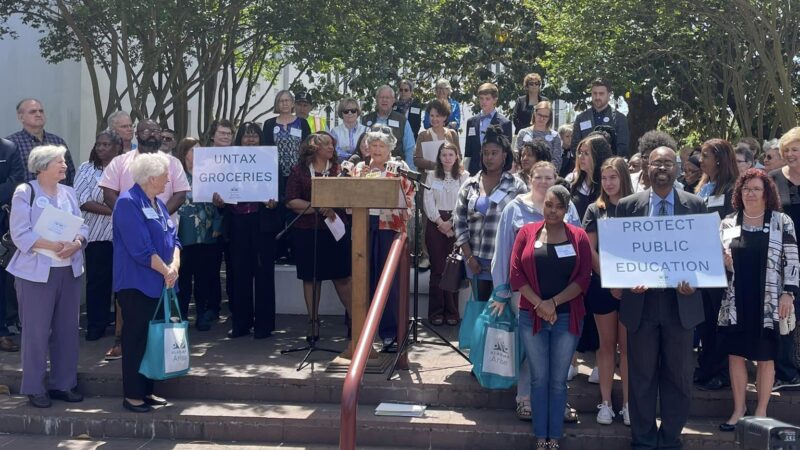
Kathy Vincent, board president of Alabama Arise, speaks during a protest over the state sales tax on groceries at the Alabama State House in Montgomery, Ala., on Tuesday, April 11, 2023.
MONTGOMERY, Ala. (AP) — Alabama is one of only three states that tax groceries at the same rate as other purchases. But as food prices soar — and as the state sees a record budget surplus — Alabama lawmakers are considering removing, or phasing out, the state’s 4% sales tax on food.
Competing proposals are being introduced by Democrats and Republicans in the Alabama Legislature to end the sales tax on all, or at least some, groceries. While the idea has been proposed for decades in Montgomery, it has gained traction this session. Alabama Arise, an organization that lobbies for policies that would benefit low-income families, said the average Alabama family spends $600 a year on the state grocery tax and removing it would be a lasting benefit to families struggling to make ends meet.
“Our families our hurting. We can’t afford to pay 4% on top of already expensive food,” Robyn Hyden, executive director of Alabama Arise, said during a Tuesday press conference and rally outside the Alabama Statehouse.
Only Alabama, Mississippi, and South Dakota still tax groceries at the full state sales tax rate. South Dakota Gov. Kristi Noem had urged lawmakers to remove that state’s sales tax on groceries, but lawmakers instead approved a general sales tax cut.
Various lawmakers, mostly Democrats, have proposed removing the state sales tax on food since at least the early 1990s, but the proposals were never approved, partly because of the projected blow to education funding. The tax on groceries provides more than $600 million annually to schools, according to estimates from the Legislative Services Agency. Alabama primarily uses sales and income tax collections to provide the state’s share of education funding.
Soaring grocery prices, coupled with a record budget surplus, have lawmakers in both parties throwing their support behind the idea. But the proposals vary on if the tax would be removed on all food items and if the revenue stream would be replaced.
“We can all agree on this: That the tax on groceries is just plain, wrong an unfair,” Sen. Merika Coleman, D-Pleasant Grove, said.
Coleman’s proposal would let voters decide whether to remove the state sales tax on food and replace the money by ending the deduction that allows Alabamians to deduct federal income tax payments before computing their state income taxes. She said the tax break disproportionately lowers taxes for the wealthiest people.
“Let them choose whether they prefer a tax loophole that mostly benefits the richest few or if they want a grocery tax cut that benefits everyone,” Coleman said.
Republican Sen. Arthur Orr, who chairs the Senate Finance and Taxation Education budget-writing committee, has proposed to phase out the state sales tax on some foods, such as milk, eggs, vegetables, fruit, whole-grain breads and baby formula. The bill would use the list of food items that are covered by the federal Women, Infants and Children nutrition program to decide what would be untaxed. Orr said last week that would offer relief to families while also limiting the blow to the education budget.
That WIC definition, if used, would leave the state sales tax on meat, desserts and many other items. Others have discussed using the list of foods eligible under the Supplemental Nutrition Assistance Program. That would remove the state tax on most grocery items, but leave it on items such as alcoholic beverages or prepared meals that are hot at the point of sale. The Legislative Services Agency estimated that would cost the state $608 million annually.
Hyden said their organization supports the “broadest possible” proposal for removing the tax on food, as well as proposals that would protect education funding.
State Rep. Penni McClammy, the daughter of the late Rep. Thad McClammy, said during the Alabama Arise press conference that she has shared the difficult decisions many families face in trying to stretch a budget at the grocery store.
“I was a caregiver. I know what it feels like to make decisions on buying Depends, Ensure, medication. What we call healthy food is the most expensive food in the grocery store,” McClammy, D-Montgomery, said.
Supreme Court strikes down Trump’s tariffs
The 6-3 ruling is a major blow to the president's signature economic policy.
The economy slowed in the last 3 months of the year — but was still solid in 2025
The U.S. economy grew 2.2% in 2025, a modest slowdown from 2.4% the previous year. GDP gains were fueled by solid consumer spending and business investment.

Ali Akbar, who’s sold newspapers on the streets of Paris for 50 years, is now a knight
For decades, Ali Akbar has sold papers on the Left Bank of Paris. Last month, France gave the beloved 73-year-old immigrant from Pakistan one of its highest honors — and his neighborhood is cheering.
Bill limiting environmental regulations goes to the governor’s desk
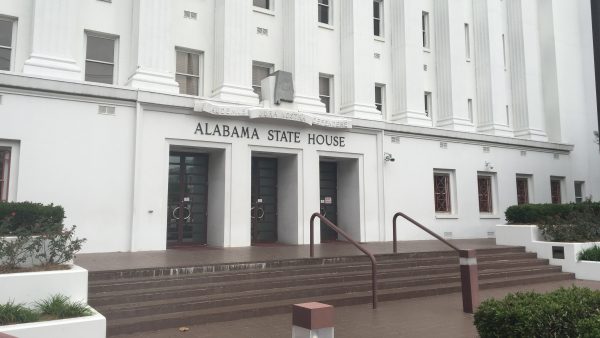
President Trump has taken steps to roll back environmental regulations. Some of that same action is taking place in statehouses, including Alabama's. Lawmakers gave final passage this week to a bill that would ban the state from enacting environmental rules more stringent than those at the federal level. That's where we start our weekly legislative update with Todd Stacy, host of Capitol Journal on Alabama Public Television.

For years the Taliban told women to cover up in public. Now they’re cracking down
At hospitals, at seminaries and on buses, the Taliban is stepping up enforcement of rules on women's dress in the city of Herat.

What I learned watching every sport at the Winter Olympics
Sit down with pop culture critic Linda Holmes as she watches the 2026 Winter Games. She is exhausted by cross-country, says "ow ow ow" during moguls, and makes the case, once and for all, for curling.
