
Alabama sets January execution date using nitrogen gas
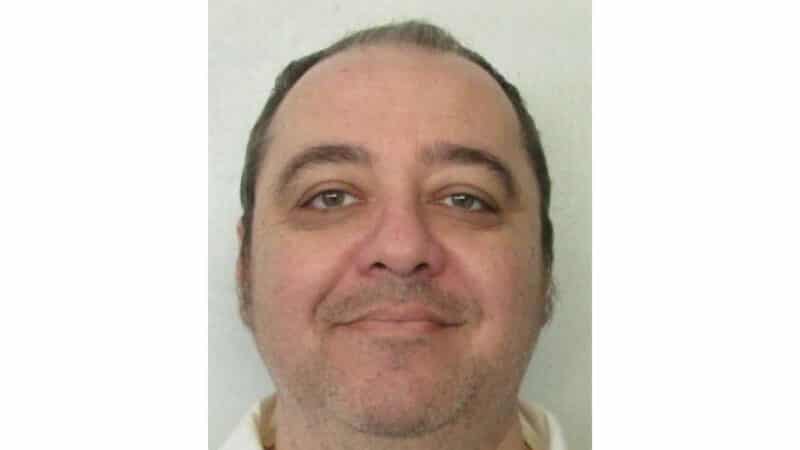
Kenneth Eugene Smith
MONTGOMERY, Ala. (AP) — Alabama has set a January execution date for what would be the nation’s first attempt to put an inmate to death using nitrogen gas.
Alabama Gov. Kay Ivey on Wednesday announced a Jan. 25 execution date for Kenneth Eugene Smith using the new method. Smith was one of two men convicted in the 1988 murder-for-hire slaying of Elizabeth Sennett in northwestern Alabama.
“The execution will be carried out by nitrogen hypoxia, the method previously requested by the inmate as an alternative to lethal injection,” Ivey spokesperson Gina Maiola wrote in an emailed statement. The statement referenced how Smith’s attorneys noted the state was developing the nitrogen method when fighting previous efforts to execute him by lethal injection.
The announcement of the execution date moves Alabama closer to becoming the first state to attempt an execution by nitrogen gas, although there will be a legal fight before it is used. Nitrogen hypoxia has been authorized as an execution method in Alabama, Oklahoma and Mississippi, but no state has used it.
Smith’s attorneys on Thursday filed a lawsuit in federal court seeking to stop the execution, saying Alabama was attempting to make their client the “test subject for this novel and experimental method.”
They noted the state tried but failed to execute Smith by lethal injection last year. The Alabama Department of Corrections called off the execution when the execution team could not get the required two intravenous lines connected to Smith.
“Like the eleven jurors who did not believe Mr. Smith should be executed, we remain hopeful that those who review this case will see that a second attempt to execute Mr. Smith — this time with an experimental, never-before-used method and with a protocol that has never been fully disclosed to him or his counsel — is unwarranted and unjust,” Smith’s attorney Robert Grass wrote in an emailed statement. The statement referenced that jurors at Smith’s trial voted 11-1 to recommend a sentence of life imprisonment, but a judge overrode that recommendation and imposed the death penalty.
A divided Alabama Supreme Court last week granted the state attorney general’s request to authorize Smith’s execution. It is the responsibility of the governor to set the exact execution date.
While proponents have theorized the execution method would be painless, opponents have likened it to human experimentation.
Nitrogen makes up 78% of the air inhaled by humans and is harmless when inhaled with proper levels of oxygen. Under the proposed procedures, a mask would be placed over the inmate’s nose and mouth and their breathing air would be replaced with nitrogen, depriving them of the oxygen needed to stay alive. The nitrogen “will be administered for 15 minutes or five minutes following a flatline indication on the EKG, whichever is longer,” according to the execution protocol.
Alabama Attorney General Steve Marshall last week said the court decision had “cleared the way” for Smith’s execution by nitrogen hypoxia. He said Sennett’s family has “waited an unconscionable 35 years to see justice served.”
An attorney for Smith did not immediately return an email seeking comment.
The state tried but failed to execute Smith by lethal injection last year. The Alabama Department of Corrections called off the execution when the execution team could not get the required two intravenous lines connected to Smith.
Prosecutors say Smith was one of two men who were each paid $1,000 to kill Sennett on behalf of her pastor husband, who was deeply in debt and wanted to collect on insurance. Her husband killed himself a week later. The other man convicted in the slaying was executed in 2010.
Here’s how world leaders are reacting to the US-Israel strikes on Iran
Several leaders voiced support for the operation – but most, including those who stopped short of condemning it, called for restraint moving forward.
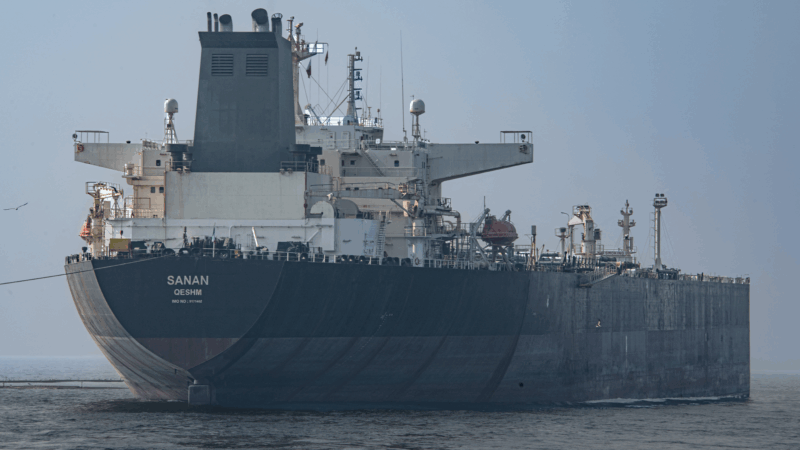
How could the U.S. strikes in Iran affect the world’s oil supply?
Despite sanctions, Iran is one of the world's major oil producers, with much of its crude exported to China.
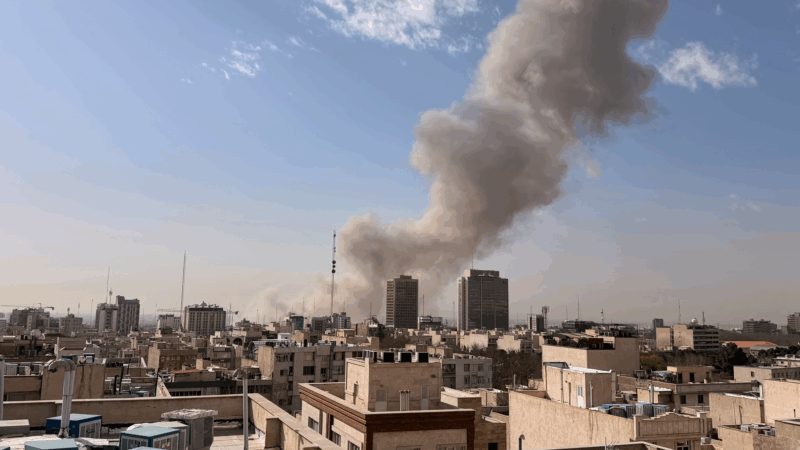
Why is the U.S. attacking Iran? Six things to know
The U.S. and Israel launched military strikes in Iran, targeting Khamenei and the Iranian president. "Operation Epic Fury" will be "massive and ongoing," President Trump said Saturday morning.
Sen. Tim Kaine calls on the Senate to vote on the war powers resolution
NPR's Scott Simon talks to Sen. Tim Kaine, D-Va., about the U.S. strikes on Iran.
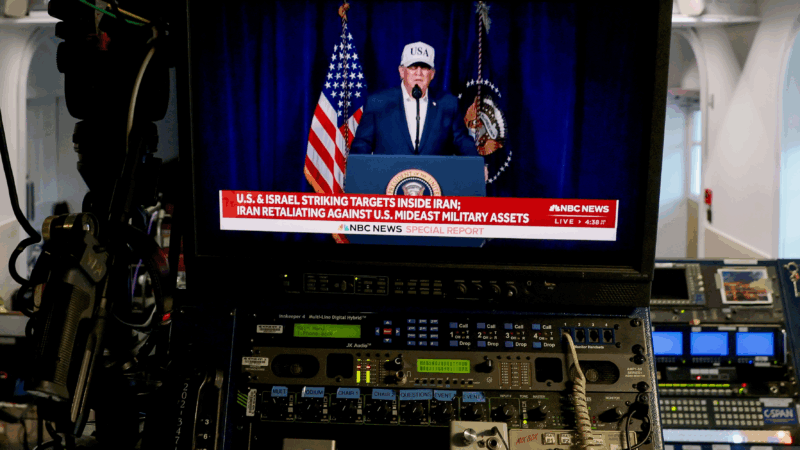
Iran strikes were launched without approval from Congress, deeply dividing lawmakers
Top lawmakers were notified about the operation shortly before it was launched, but the White House did not seek authorization from Congress to carry out the strikes.
Political science expert weighs in on Iran’s nuclear program in light of U.S. strikes
NPR's Scott Simon speaks to Ariane Tabatabai, the Public Service Fellow at Lawfare, about U.S. attacks on Iran and how President Trump's calls for regime change might be received there.
