
Outdoorsy Black Women helps change the face of outdoor activities
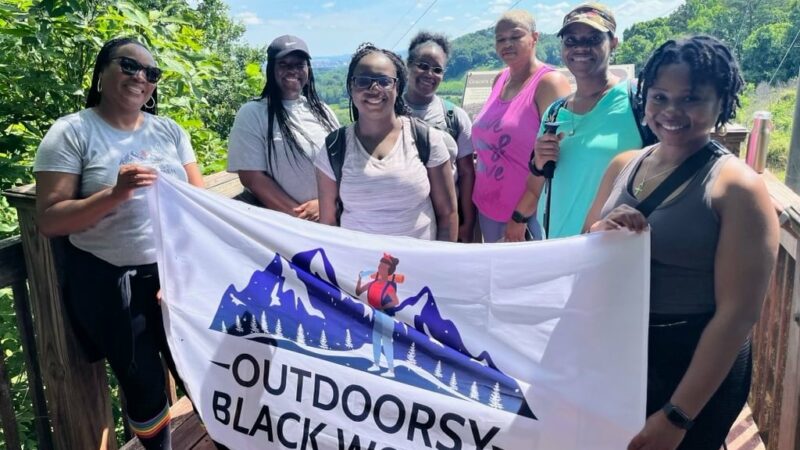
Birmingham participants meet at Red Mountain Park for their first hike as the Birmingham chapter of Outdoorsy Black Women.
This story is part of a monthly series called Outdoor Connections, which features stories that explore the biodiversity of Alabama and how we depend on it.
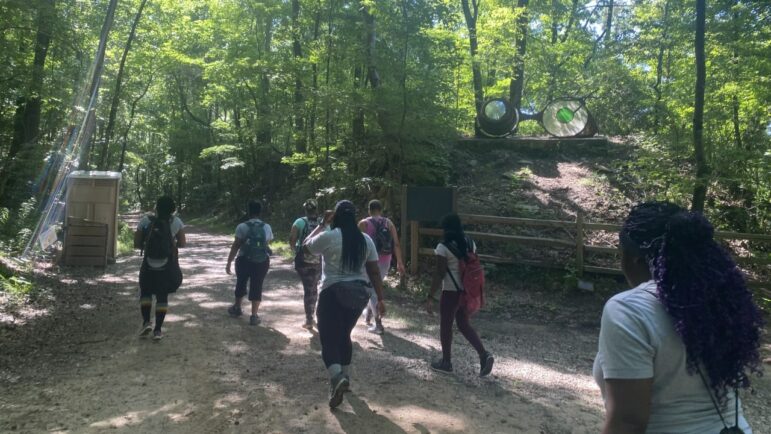
Once a month, a group of women meet at Red Mountain Park in the Birmingham area for a hike. Before they start their two-mile hike, they stretch in unison while standing in a circle. The group leaders ask if any of the women have allergies or need inhalers, and they all trade cans of bug spray. Then they hit the trail.
Black women have always enjoyed participating in outdoor activities. But that’s not the typical image of the people who go hiking, canoeing or camping. A group called Outdoorsy Black Women is changing that narrative.
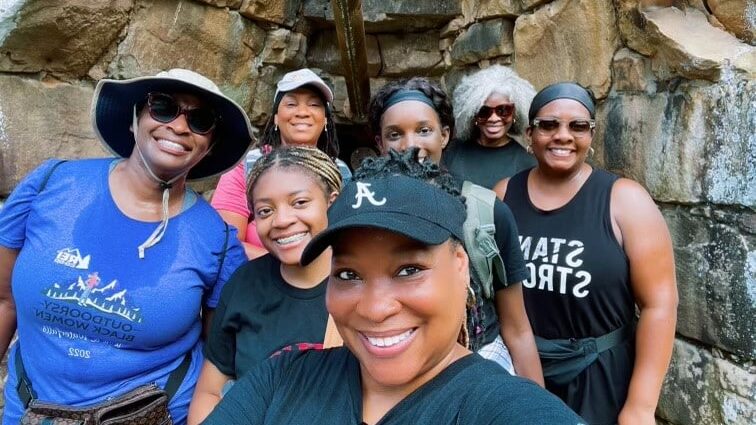
Lakeitha Clark fell into Outdoorsy Black Women when she was approaching her 50th birthday. She wanted to take a trip that would involve a lot of time outside and needed inspiration. She came across the group on Instagram.
“I love to have Black women to do stuff with because I’m usually by myself in places like this. None of my friends or family are into this. They think I’m the crazy one. But I found my people. I have other friends, but to have other Black women that have the love for the outdoors in common is special,” Clark said.
Outdoorsy Black Women is a national organization with more than 3,000 members across the country. Clark helped launch the Birmingham chapter in early 2022 and it already has 160 members.
Toyin Ajayi founded the national organization in the middle of the pandemic. She had been working remotely for an online magazine since 2011, but always dreamed of trading a stationary life for living in an RV. She made that jump in 2020 and wanted to find other Black women who lived in their RVs and liked outdoor activities. Plus, when racial tensions heightened after the murder of George Floyd, Ajayi wanted to create a safe space for Black women.
“One thing I recognize is the outdoors can be experienced in different ways by different people and it’s going to be different things that people connect with,” Ajayi said.
She says that within three months of its founding in 2020, Outdoorsy Black Women grew to a thousand members.
Ajayi is aware that these activities may be new for some people and doesn’t want anyone to feel left out. For instance, she said if a person feels she can only complete a half a mile hike, then she’ll walk back with her to the start of the route while the rest of the group completes the hike.
“We’re coming out of a pandemic. I don’t think any of us are in our best shape,” Ajayi said.
Valerie Jones has always liked being around nature. She grew up on a farm in rural Alabama and was used to walking long distances and being out in the sun all day. She usually did some kind of physical activity to maintain her weight and stay healthy, so she joined Outdoorsy Black Women, and has since lost a few extra pounds. But she also likes to have a community of people to lean on.
“Being among others is just good for your mental health. Having a village, not going through life alone. People fail to realize that just doing 10 to 15 minutes of exercise a day will help you lose weight and help you feel better,” Jones said.
Samantha White, a sports studies professor at Manhattanville College, said this isn’t new for Black women. She says W.E.B. Dubois tooks his daughter, Yolanda, to a summer camp in New York during the early 20th century.
“There are stories in magazines such as Ebony. You can find narratives in write-ups about Black women skiing and hiking in the 1970s and 1980s,” White said.
Despite that history, White said outdoor activities have always been seen as something that only white people do. When looking at the marketing materials for some outdoor recreation brands, you don’t see many Black faces.
“Some of these companies have had trouble imagining their larger audience, envisioning who uses the trails or who hikes or who kayaks or who canoes. It’s a very narrow vision of what kind of communities take part in that,” White said.
Outdoorsy Black Women is pushing against that. Retailer REI recently formed a partnership with the group that focuses on creating more diverse communities for outdoor leisure and adventure. This fall, the company launched a new line of hiking gear intended to be more inclusive of Black people’s differing body shapes.
While the weather is getting cooler, the Birmingham chapter of Outdoorsy Black Women will continue their hikes through the winter – with each step representing community and sisterhood.
Do you have an idea worth featuring as part of our Outdoor Connections series? Email [email protected].
Pentagon puts Scouts ‘on notice’ over DEI and girl-centered policies
After threatening to sever ties with the organization formerly known as the Boy Scouts, Defense Secretary Hegseth announced a 6-month reprieve

President Trump bans Anthropic from use in government systems
Trump called the AI lab a "RADICAL LEFT, WOKE COMPANY" in a social media post. The Pentagon also ordered all military contractors to stop doing business with Anthropic.
HUD proposes time limits and work requirements for rental aid
The rule would allow housing agencies and landlords to impose such requirements "to encourage self-sufficiency." Critics say most who can work already do, but their wages are low.
Paramount and Warner Bros’ deal is about merging studios, and a whole lot more
The nearly $111 billion marriage would unite Paramount and Warner film studios, streamers and television properties — including CNN — under the control of the wealthy Ellison family.
A new film follows Paul McCartney’s 2nd act after The Beatles’ breakup
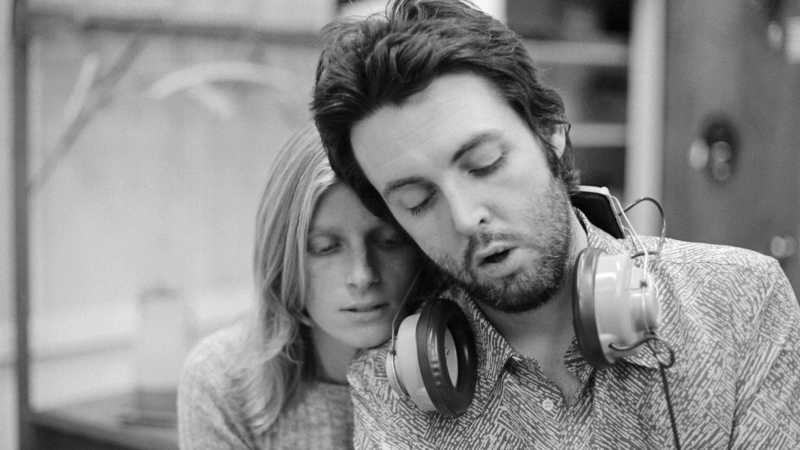
While previous documentaries captured the frenzy of Beatlemania, Man on the Run focuses on McCartney in the years between the band's breakup and John Lennon's death.
An aspiring dancer. A wealthy benefactor. And ‘Dreams’ turned to nightmare
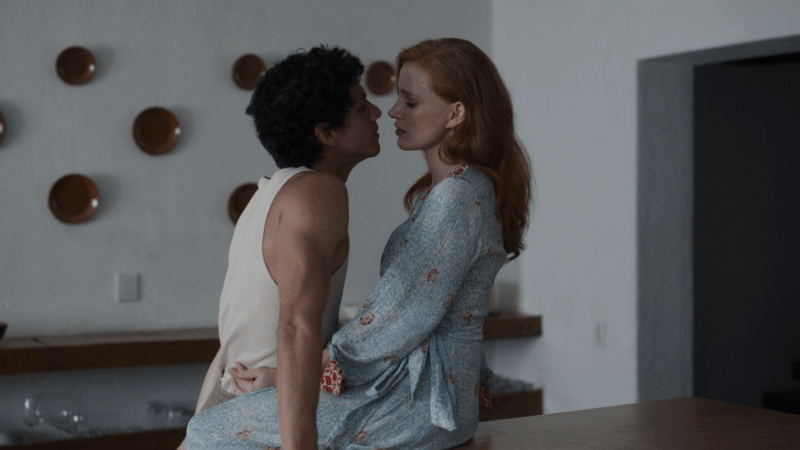
A new psychological drama from Mexican filmmaker Michel Franco centers on the torrid affair between a wealthy San Francisco philanthropist and an undocumented immigrant who aspires to be a dancer.
