
First case of omicron variant in Alabama has been confirmed
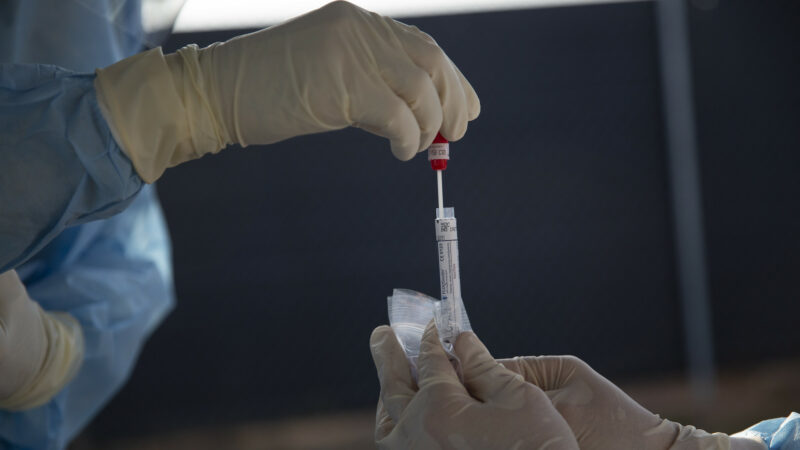
A health care worker administers a swab test for COVID-19.
MONTGOMERY, Ala. (AP) — Alabama confirmed its first case of the omicron variant of the coronavirus Thursday, a development that was expected as the latest mutation spreads in the United States, the state health officer said.
State Health Officer Scott Harris said Alabama officials had presumed the variant was already in Alabama since it had been confirmed in neighboring states and much of the country.
“The No. 1 message remains get vaccinated. That is the single best thing you can do to protect yourself,” Harris said, adding that people who are eligible should also get a booster.
Harris said reports that omicron causes less severe illness are, “encouraging if that is true” but cautioned that scientists are still learning about the new variant.
Alabama in recent days has seen a slight increase in cases and hospitalizations, and health officials say delta for now remains the dominant variant in the state.
“They are beginning to tick up,” Harris said, adding that the rise is primarily caused by unvaccinated people.
The seven-day rolling average of daily new cases in Alabama has risen over the past two weeks from 303 on Nov. 29 to 542 on Dec. 13, according to researchers at Johns Hopkins University. However, that is well below the two pandemic peaks when the state was reporting as many as 4,000 new cases per day.
Dr. Don Williamson, the former state health officer who now heads the Alabama Hospital Association, said the state has seen a slight uptick in the number of people hospitalized with COVID-19. The number had dropped under 300 in late November, but on Wednesday there were 378 people with COVID-19 in state hospitals, according to numbers reported to the Alabama Department of Public Health.
That is a fraction of the hospitalizations that occurred during the previous two peaks, when about 3,000 people were hospitalized.
“It is trending up. I wouldn’t call it a spike yet,” Williamson said. “Everything tells me we are in an upslope of another increase. How high is it going to be? That we don’t know.”
Williamson said a key question is what happens when omicron goes from a “negligible impact to being the dominant variant.”
Williamson said Thanksgiving gatherings, in a population with a low vaccination rate, might have driven some of the current uptick.
“People traveled more. People got together more, and more of the gatherings are indoors, and that is going to drive more spread of the disease in a population where still less than 50% have had two doses,” he said.
‘One year of failure.’ The Lancet slams RFK Jr.’s first year as health chief
In a scathing review, the top US medical journal's editorial board warned that the "destruction that Kennedy has wrought in 1 in office might take generations to repair."
Here’s how world leaders are reacting to the US-Israel strikes on Iran
Several leaders voiced support for the operation – but most, including those who stopped short of condemning it, called for restraint moving forward.

How could the U.S. strikes in Iran affect the world’s oil supply?
Despite sanctions, Iran is one of the world's major oil producers, with much of its crude exported to China.
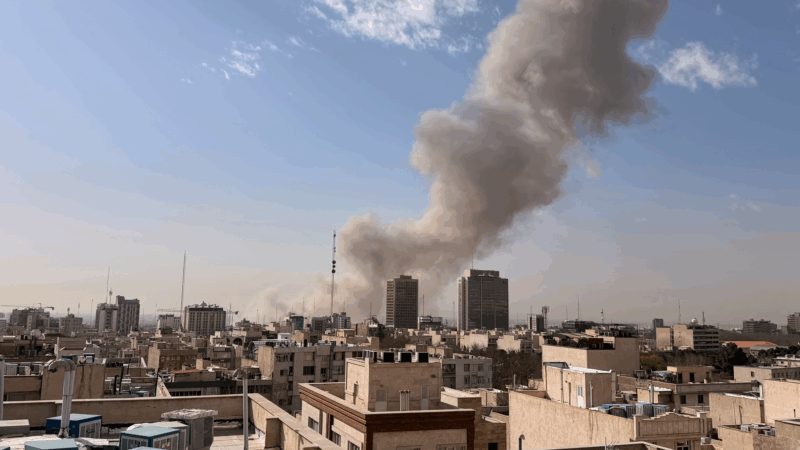
Why is the U.S. attacking Iran? Six things to know
The U.S. and Israel launched military strikes in Iran, targeting Khamenei and the Iranian president. "Operation Epic Fury" will be "massive and ongoing," President Trump said Saturday morning.
Sen. Tim Kaine calls on the Senate to vote on the war powers resolution
NPR's Scott Simon talks to Sen. Tim Kaine, D-Va., about the U.S. strikes on Iran.
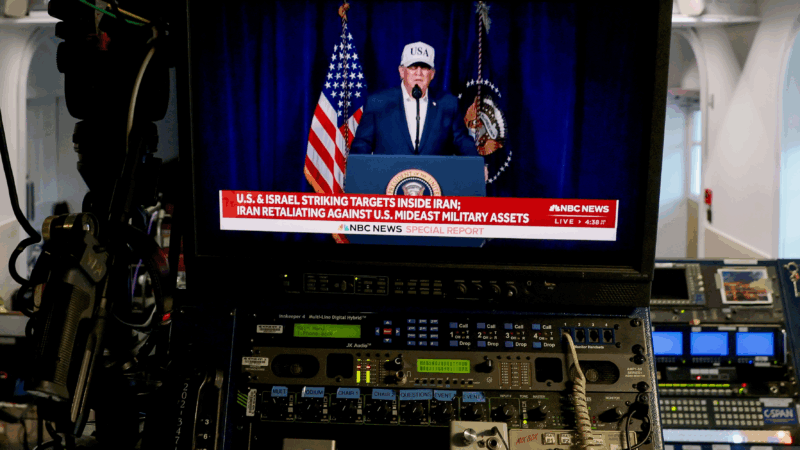
Iran strikes were launched without approval from Congress, deeply dividing lawmakers
Top lawmakers were notified about the operation shortly before it was launched, but the White House did not seek authorization from Congress to carry out the strikes.
