
Voters Could Change How Education Leaders Are Picked In Alabama
When Alabama voters go the polls on March 3rd, they’ll be voting on a constitutional amendment that changes the state board of education. Currently board members are elected. If Amendment One is approved, the governor would appoint school board members.
Any appointee would have to be confirmed by the Senate before serving. The amendment also calls for the new board to reflect the geographic, gender and racial diversity of students enrolled in Alabama schools. Members would be limited to two six-year terms.
The state board would be renamed the Alabama Commission on Elementary and Secondary Education. The state superintendent would be called the Secretary of Elementary and Secondary Education. This commission would be required to adopt a new set of standards in lieu of Common Core.
Perhaps the biggest cheerleader for Amendment One is Governor Kay Ivey. She used a sports analogy in this year’s State of the State Address.
“Is there any high school in Alabama, much less any college or university, that would continue to keep a head coach who produced teams that are consistently dead last?” Ivey said.
Ivey pointed out that Alabama is often near the bottom in national education rankings.
“This is not the fault of our hard-working teachers, principals or local superintendents,” Ivey said. “Folks, it all starts with the system at the top.”
The potential overhaul does not sit well with one of the people at the at the top. State school board member Jackie Zeigler is a vocal opponent of Amendment One and says it’s about accountability.
“I am responsible for those people who put me into office. My allegiance is for the students in the state of Alabama, not to whomever put me on the board,” Zeigler says.
Zeigler is running for re-election and says if you don’t like the job a board member is doing, vote him or her out—”that’s democracy.” She adds it’s unfair to educators to put so much emphasis on test scores. Plus, she says board members should have the flexibility to make decisions on state standards.
“I am adamant against any kind of standards written into our constitution,” Zeigler says.
State Republicans are divided on Amendment One. Governor Ivey, a Republican, is for it. In August, the Alabama Republican Party executive committee passed a resolution opposing the measure saying voters should determine who is on the school board.
Most states have appointed boards, but the type of board doesn’t automatically mean better governance or higher test scores, according to Michael Ford, who studies education policy at the University of Wisconsin-Oshkosh. He says each set-up has tradeoffs. An elected board comes with built-in legitimacy while an appointed board is insulated from electoral politics. Ford says there are bigger questions for enacting policy. For example, do board members share the same goals?
“You could have seven brilliant minds that are all appointed by the governor, but if they all disagree about what they’re trying to accomplish in that room, it’s going to be a mess,” Ford says.
Ford offers a couple of things for voters to consider. First, what are the priorities of current education leaders and is it worth potentially giving that up if the board changes? And then, what’s the vision?
“Does the governor have an idea of why this is going to make a positive difference? Has that been articulated?” Ford says.
Alabama voters will have their say March 3rd.
Click for a summary of the amendment from the Alabama Fair Ballot Commission and analysis from the Public Affairs Research Council of Alabama.
The following is how Amendment One will appear on the ballot.
AMENDMENT NUMBER ONE
Proposing an amendment to the Constitution of Alabama of 1901, to change the name of the State Board of Education to the Alabama Commission on Elementary and Secondary Education; to provide for the appointment of the members of the commission by the Governor, subject to confirmation by the Senate; to change the name of the State Superintendent of Education to the Secretary of Elementary and Secondary Education; to provide for the appointment of the secretary by the commission, subject to confirmation by the Senate; and to authorize the Governor to appoint a team of local educators and other officials to advise the commission on matters relating to the functioning and duties of the State Department of Education. (Proposed by Act 2019-345)
Supreme Court blocks redrawing of New York congressional map, dealing a win for GOP
At issue is the mid-term redrawing of New York's 11th congressional district, including Staten Island and a small part of Brooklyn.
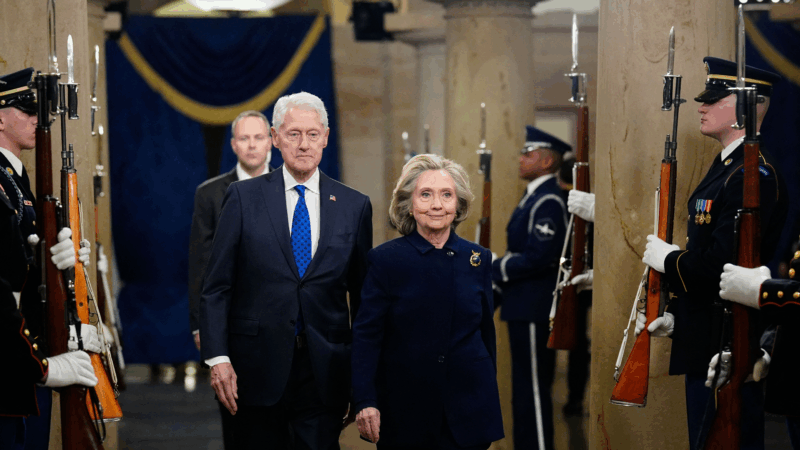
Video of Clinton depositions in Epstein investigation released by House Republicans
Over hours of testimony, the Clintons both denied knowledge of Epstein's crimes prior to his pleading guilty in 2008 to state charges in Florida for soliciting prostitution from an underage girl.
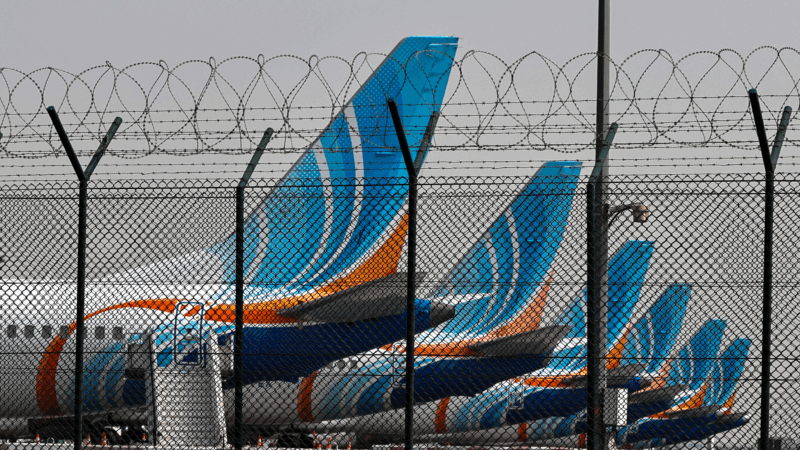
Some Middle East flights resume, but thousands of travelers are still stranded by war
Limited flights out of the Middle East resumed on Monday. But hundreds of thousands of travelers are still stranded in the region after attacks on Iran by the U.S. and Israel.

‘Hamnet’ star Jessie Buckley looks for the ‘shadowy bits’ of her characters
Buckley has been nominated for a best actress Oscar for her portrayal of William Shakespeare's wife in Hamnet. The film "brought me into this next chapter of my life as a mother," Buckley says.
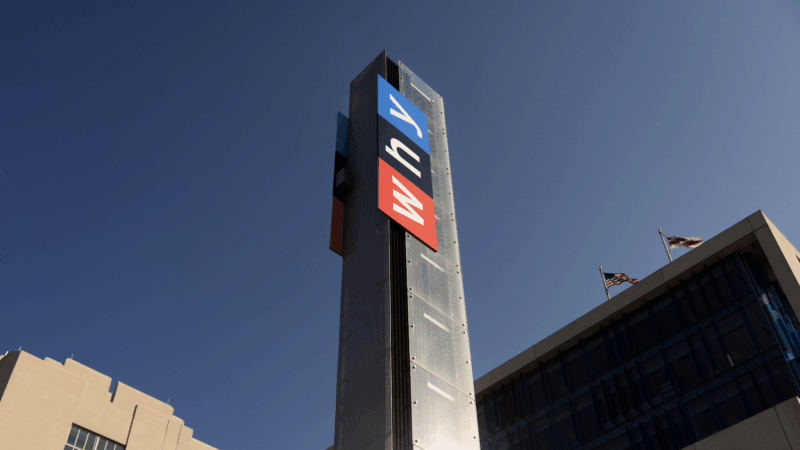
How, who, and why: NPR flips its famous letters to defend the right to be curious
NPR is standing up for the public's right to ask hard questions in a national campaign dubbed "For your right to be curious." At NPR's headquarters, on billboards in New York City, Chicago, and Washington, D.C., and across social media, NPR's three iconic letters transform into "how," "who," and "why" — a bold declaration of its commitment to fight for Americans' right to ask questions both big and small.

Oil prices surge, but no panic yet, as Iran war continues
Global oil prices are in the high $70s as traffic through Strait of Hormuz comes to a halt. Some analysts have warned they could top $100 a barrel if the stoppage is prolonged.
