
Coronavirus Scams Peddling Fake Cures And Work-At-Home Schemes On The Rise
There’s been a sharp uptick in malicious online activity in Alabama and elsewhere in recent weeks. Scammers are increasingly using fake emails, social media posts, and text messages to steal passwords, money, and personal information from unsuspecting users.
Gary Warner, head of research in computer forensics at UAB, says scams around COVID-19 have proliferated. Retailers are peddling all sorts of bogus remedies. Spam email subject lines say things like ‘Are you safe from Corona?’ and ‘Would you like to protect your family from Corona?’ Following these links can redirect users to download a program that infects a computer with malware to steal passwords. Warner says high anxiety around coronavirus has created the perfect panic moment for scammers.
“And because so many people are deeply in fear that they’re going to die from coronavirus, especially the elderly, who may not use as much judgment in some circumstances for online things in general, a lot of people are buying these things,” Warner says.
The products range from face masks to essential oil blends that claim to protect from coronavirus. Some make themselves appear to be affiliated with Fox News online.
“They have something that’s called safe mask, which is also being widely distributed in spam,” Warner says. It’s a mask that supposedly protects people from coronavirus.
There’s also Germidin, a disinfectant scammers are selling, and a product called “Immunity Oil,” which claims it can be used as a skin cream or to sanitize surfaces.
“None of these claims have been validated by the FDA,” Warner says. The cybersecurity expert debunks these claims and tracks COVID-19 scams on his website.
Warner says one company does it like this: they sign people up for a free trial, and then once they’ve got a person’s credit card information, they immediately start charging $89 a month to ship a product that doesn’t work.
The elderly are at particularly high risk of falling prey to such scams. So are low-income people, according to Guy Lescault, executive director of Legal Services Alabama, which provides legal help for the poor. He estimates there’s been a 30 to 50% increase in fraudulent activity around COVID-19 in recent weeks. And it isn’t just online. There are scam robocalls.
“Hackers contacting people by robo phone pretending to be doctors and hospitals and demanding payment,” Lescault says.
There are also charity scams to solicit donations. This robocall recording targets businesses affected by the coronavirus. And Warner says there are an increasing number of work-at-home schemes targeting the recently unemployed. A lot of these, he says, come from fake companies that make users pay for a certificate or some type of training before they can apply.
“And almost all of those are going to be fake,” he says. “You should never have to pay a fee to apply for a job.”
Other tips to stay safe online? Check url’s carefully. Watch for fake emails that look like they’re from the Centers for Disease Control and Prevention (it’s cdc.gov, not dot.org or dot.com). The Federal Trade Commission, which tracks coronavirus scams, offers more tips on its website. There’s additional information from the FTC here and information on illegal robocalls here.
‘One year of failure.’ The Lancet slams RFK Jr.’s first year as health chief
In a scathing review, the top US medical journal's editorial board warned that the "destruction that Kennedy has wrought in 1 in office might take generations to repair."
Here’s how world leaders are reacting to the US-Israel strikes on Iran
Several leaders voiced support for the operation – but most, including those who stopped short of condemning it, called for restraint moving forward.

How could the U.S. strikes in Iran affect the world’s oil supply?
Despite sanctions, Iran is one of the world's major oil producers, with much of its crude exported to China.

Why is the U.S. attacking Iran? Six things to know
The U.S. and Israel launched military strikes in Iran, targeting Khamenei and the Iranian president. "Operation Epic Fury" will be "massive and ongoing," President Trump said Saturday morning.
Sen. Tim Kaine calls on the Senate to vote on the war powers resolution
NPR's Scott Simon talks to Sen. Tim Kaine, D-Va., about the U.S. strikes on Iran.
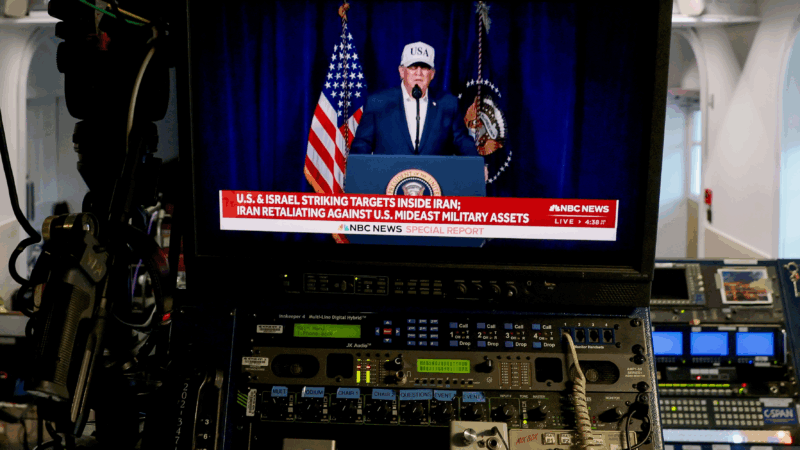
Iran strikes were launched without approval from Congress, deeply dividing lawmakers
Top lawmakers were notified about the operation shortly before it was launched, but the White House did not seek authorization from Congress to carry out the strikes.
