
Concerns Raised About COVID At Horizon Church Polling Place After Worker Tests Positive
Voters who cast their ballots last week at Horizon Church had to endure some very long lines. Now they’ll have to endure concern about possible exposure to COVID-19.
A press release from the office of Jefferson County county manager Tony Petelos says there is a chance persons who voted at Precinct 5120, otherwise known as Horizon Church in Vestavia Hills, on Election Day may have been exposed to the novel coronavirus.
Coincidentally, that is the polling place of Jefferson County Presiding Probate Judge James P. Naftel II, who fielded an Election Day call from his wife about her waiting in the line or returning later.
Naftel said the chief inspector of that polling place alerted him Sunday that a poll worker tested positive for the virus that day. As that was five days after the election, Naftel said he didn’t think much about a potential risk.
“But then, over the next couple days, a couple more poll workers had tested positive,” he said, acknowledging that he doesn’t know names or the roles they played at the polling place. “They may have gone to Waffle House together. I don’t know if they’re all in the same family. I really don’t know if it was directly related to Horizon or if they were COVID-positive or whatever on Election Day. We just don’t know.”
The probate judge consulted county officials about the proper course of action and the Jefferson County Department of Health was alerted. They contacted the chief inspector and ultimately today’s press announcement was released.
According to the press release, JCDH recommends the following for people who voted at Horizon:
- If you are having any symptoms such as fever, chills, muscle aches, cough, loss of taste or smell or other symptoms, you should be tested for COVID-19.
- If you are having shortness of breath or other concerning symptoms, you should seek medical care.
- If you are over the age of 60 or you have a chronic health condition, consider calling your primary care provider to discuss possibly being tested.
- If you are not having symptoms, continue to monitor your health until at least Nov. 17, which is 2 weeks after the date of possible exposure.
Naftel said he has received no reports of any widespread outbreaks among voters.
“Obviously, my wife and I were both there on Election Day, as were a bunch of our friends,” he said. “We haven’t heard anything on any social media or anything like that. Speaking in a nonofficial capacity, I haven’t heard anything from any of my group of people who all vote there. I really was not worried about it but just out of caution (we’re) making sure people have information.”
Precautions Were Taken
The probate judge said he was at Horizon Church for an hour or so on Election Day. “Everybody was masked,” Naftel continued. “If masks mean anything, everybody ought to be OK because they were (wearing masks) and they even had the plexiglass dividers there, which not every precinct had. They had them there on the tables separating the poll workers who were operating the poll pads and things from the voters.”
The probate judge said his really strong sense is that voters were as protected as much as they reasonably could be from exposure, “certainly more protected than if you just go to any retail store or anything like that.”
Naftel acknowledged a “brief period of time” when the inside was probably a little too crowded. For the most part, everyone was waiting outside throughout the day, he said.

How could the U.S. strikes in Iran affect the world’s oil supply?
Despite sanctions, Iran is one of the world's major oil producers, with much of its crude exported to China.
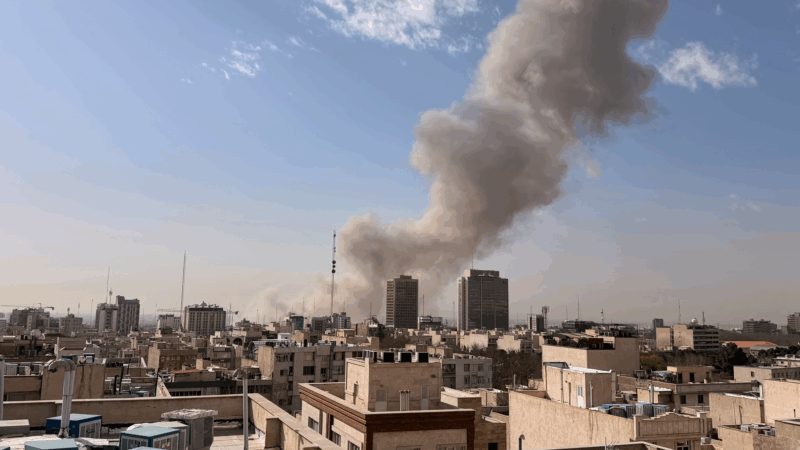
Why is the U.S. attacking Iran? Six things to know
The U.S. and Israel launched military strikes in Iran, targeting Khamenei and the Iranian president. "Operation Epic Fury" will be "massive and ongoing," President Trump said Saturday morning.
Sen. Tim Kaine calls on the Senate to vote on the war powers resolution
NPR's Scott Simon talks to Sen. Tim Kaine, D-Va., about the U.S. strikes on Iran.
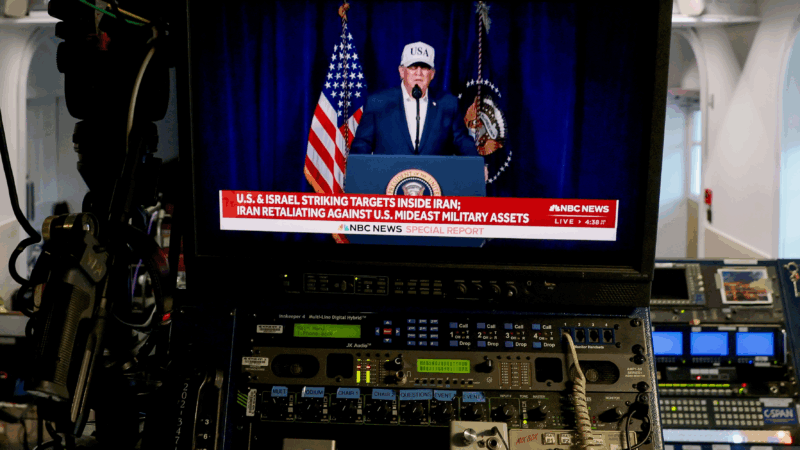
Iran strikes were launched without approval from Congress, deeply dividing lawmakers
Top lawmakers were notified about the operation shortly before it was launched, but the White House did not seek authorization from Congress to carry out the strikes.
Political science expert weighs in on Iran’s nuclear program in light of U.S. strikes
NPR's Scott Simon speaks to Ariane Tabatabai, the Public Service Fellow at Lawfare, about U.S. attacks on Iran and how President Trump's calls for regime change might be received there.
Week in Politics: Does Trump have political support for his actions in Iran?
We look at what President Trump's decision to attack Iran means, what kind of support he has in Iran and what this moment means for his administration.
