
Environmental Groups: Fees Tied to Solar are ‘Unlawful’
Attorneys recently filed a complaint with the state Public Service Commission against Alabama Power over extra fees the power company imposes on homes, schools, and small businesses that use solar power. The complaint calls the five-year-old fees “unlawful” and “contrary to the public interest.”
The filing is 32 pages long, but Katie Ottenweller, senior attorney at the Southern Environmental Law Center and head of its regional solar initiative, boils it down:
“It’s akin to going to the grocery store and getting an extra tax on your bill because you have a tomato garden in your backyard. Alabama Power has a monopoly. Solar is one of the few ways people can actually control their electricity bills.”
Alabama Power charges an extra $5-per-kilowatt monthly fee for people who use solar. For an average customer, that’s about $30 a month. That can add up to $10,000 over the life of a home solar set-up. The SELC filed the complaint on behalf of two affected property owners and G.A.S.P., a clean-air advocacy group . The complaint was filed with the state Public Service Commission, which regulates utility companies. Ottenweller says Alabama already has among the highest electricity rates in the nation.
“Rooftop solar creates more jobs per megawatt than any other source of energy. There’s 10 times as many solar customers in Georgia and Tennessee as there are in Alabama. I mean this charge has really just put the entire rooftop solar market at a standstill.”
Alabama Power has until May 31 to respond to the complaint. A spokesman said in an email the company is still reviewing it. He added the fees ensure customers without solar panels aren’t “subsidizing those who have them.” Public hearings aren’t scheduled, but lawyers say they could happen over the summer.
The SELC is a sponsor of WBHM programming. WBHM’s news and business departments operate separately.
‘One year of failure.’ The Lancet slams RFK Jr.’s first year as health chief
In a scathing review, the top US medical journal's editorial board warned that the "destruction that Kennedy has wrought in 1 in office might take generations to repair."
Here’s how world leaders are reacting to the US-Israel strikes on Iran
Several leaders voiced support for the operation – but most, including those who stopped short of condemning it, called for restraint moving forward.

How could the U.S. strikes in Iran affect the world’s oil supply?
Despite sanctions, Iran is one of the world's major oil producers, with much of its crude exported to China.

Why is the U.S. attacking Iran? Six things to know
The U.S. and Israel launched military strikes in Iran, targeting Khamenei and the Iranian president. "Operation Epic Fury" will be "massive and ongoing," President Trump said Saturday morning.
Sen. Tim Kaine calls on the Senate to vote on the war powers resolution
NPR's Scott Simon talks to Sen. Tim Kaine, D-Va., about the U.S. strikes on Iran.
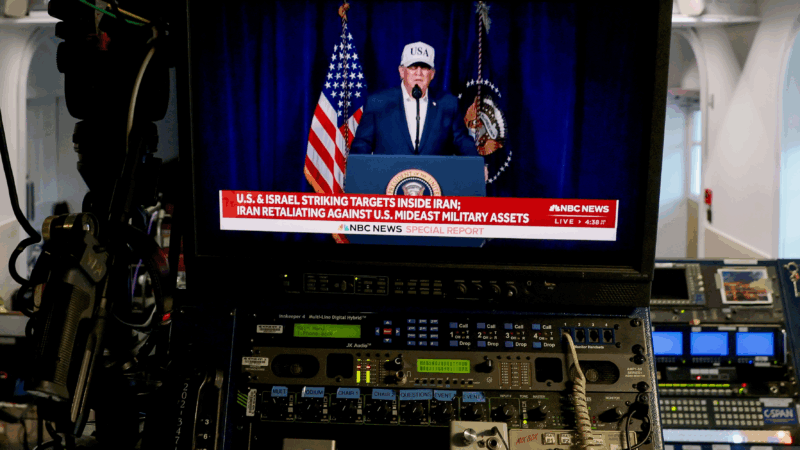
Iran strikes were launched without approval from Congress, deeply dividing lawmakers
Top lawmakers were notified about the operation shortly before it was launched, but the White House did not seek authorization from Congress to carry out the strikes.
