
Despite Immigration Law, 40 Percent of New Hires Are Not Checked Through E-Verify

By Mary Sell
Many Alabama employees aren’t being screened to confirm their legal status to work in the United States, despite a 2011 state law requiring businesses to use the federal E-Verity system.
A recent report in the publication Stateline, an initiative of The Pew Charitable Trusts, said only 60 percent of new Alabama hires were screened with E-Verify in the year ending in June 2017. That’s up from 14 percent in 2011, before the state’s anti-illegal immigration law went into effect.
Now, state Sen. Arthur Orr, R-Decatur, proposes requiring employers to prove their E-Verify usage before obtaining business licenses. He has a bill ready for the 2019 legislative session that mirrors a law in Georgia, where 94 percent of employees were screened through E-Verify, according to Pew.
Orr recently said there will always be bad actors who don’t follow the law, but he thinks some businesses are simply ignorant about it.
“They don’t know about the law or don’t think it applies to them,” Orr said. “Until someone is telling them or reminding them, they’ll continue to be ignorant.”
Orr’s proposal would require employers applying for county or municipal business licenses to sign an affidavit stating they use E-Verify. The affidavit would be provided by the state attorney general.
Violating the law would be a Class C misdemeanor, punishable with a fine of up to $500.
“The hope would be to reduce the lack of awareness among businesses and raise the bar for increased compliance,” Orr said. “That’s what the Georgia experience has indicated.”
He said he didn’t want to make compliance burdensome for employers. The affidavit would swear to the use of E-Verity but wouldn’t require documentation for each new employee.
“But if you’re knowingly breaking the law, that affidavit will become exhibit A in your prosecution,” he said.
The 2011 law said no business “shall knowingly employ, hire for employment, or continue to employ an unauthorized alien to perform work within the State of Alabama.”
It required every employer to enroll in the federal E-Verify system, which confirms the eligibility of their employees to work in the United States by comparing information provided by the employee to Social Security Administration and U.S. Department of Homeland Security records. Use of E-Verify is still voluntary in most states.
Quick Check
E-Verify is free to use, and Nancy Washington, the office manager at Alpha Millwork, LLC, in Birmingham, said the most burdensome aspect is remembering to change her online password as required.
She said she punches in new employees’ driver’s license and Social Security numbers and gets immediate results saying they’re OK to work.
“It takes maybe five minutes,” Washington said.
Alabama’s law does not establish a specific mechanism to confirm business compliance with E-Verify provisions, a spokeswoman for the Alabama attorney general said recently.
“The authority of the attorney general’s office is limited to bringing a civil action to suspend or revoke the license of the business, after receiving a petition from a state resident alleging a violation,” Joy Patterson said. “To the best of our knowledge, the attorney general’s office has not received any such petitions.”
Scott Beason, a former state senator and one of the sponsors of the law, said recently he’s not surprised some businesses aren’t complying and wishes “a bigger stick” had been put into the legislation.
“But I will say if it were there, it wouldn’t be enforced anyway,” Beason said. “No one is checking, as far as I can tell.”
The multi-pronged legislation was geared toward getting illegal immigrants out of the state. Several of its provisions were blocked by federal courts, but the E-Verify requirement stands.
The law mandates that the Alabama Department of Homeland Security establish E-Verify services for businesses with 25 employees or fewer. Homeland Security became part of the Alabama Law Enforcement Agency under a 2013 bill to consolidate law enforcement agencies.
Since ALEA was established Jan. 1, 2015, the agency has assisted 4,530 employers with 25 or fewer employees to enroll in E-Verify, the agency said.
Rosemary Elebash, the Alabama director of the National Federation of Independent Business, said that after the law was passed, steps were taken to help educate the group’s about 7,000 members. But in recent years, Elebash said, she hasn’t heard of any issues businesses have had complying with the law.
“As far as we’re concerned, we’re not getting complaints,” Elebash said. “I’m assuming all of my folks are doing exactly what they’re supposed to be doing, because I’m not getting any phone calls.”
Gov. Kay Ivey said she’s pleased with the increased E-Verify usage in recent years, but there still is work to be done.
“The Legislature may need to look, in the future, at additional ways of reporting non-compliant businesses or make the penalties tougher,” Ivey said in a written statement. “I remain proud of our progress so far and the fact that more people are working today than at any time in our state’s history and I remain committed to ensuring every Alabamians who wants a job can find a job.”
A statement from a spokesman for Walt Maddox, the Democrat running for governor, said Maddox “absolutely feels that all laws should be followed and enforced and the effectiveness of the existing law should be evaluated periodically and appropriate recommendations made.”
The Alabama law called for the creation of a database where companies’ E-Verify enrollment would be made public, but bill sponsors later said the federal government advised the state not to do that.
The federal website has a searchable database of registered companies with five or more employees by state and city or ZIP code. That database is here.
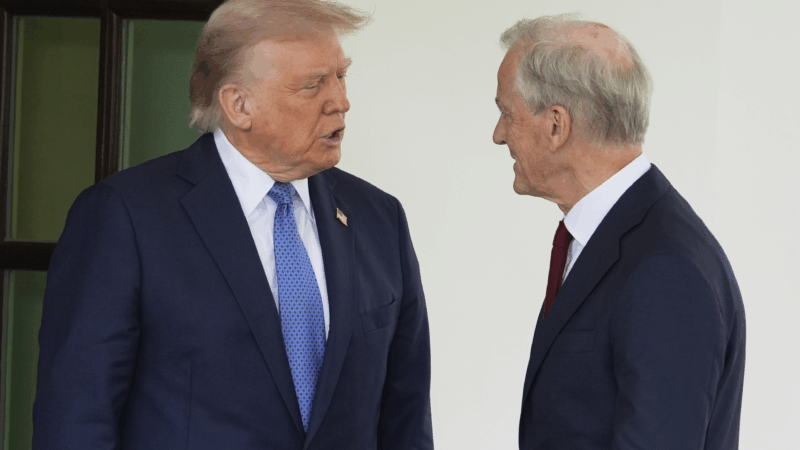
Trump says he’s pursuing Greenland after perceived Nobel Peace Prize snub
"Considering your Country decided not to give me the Nobel Peace Prize… I no longer feel an obligation to think purely of Peace," Trump wrote in a message to the Norwegian Prime Minister.
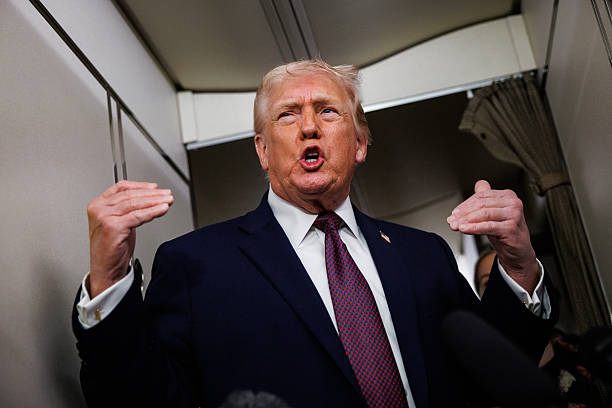
Trump has rolled out many of the Project 2025 policies he once claimed ignorance about
Some of the 2025 policies that have been implemented include cracking down on immigration and dismantling the Department of Education.
U.S. lawmakers wrap reassurance tour in Denmark as tensions around Greenland grow
A bipartisan congressional delegation traveled to Denmark to try to deescalate rising tensions. Just as they were finishing, President Trump announced new tariffs on the country until it agrees to his plan of acquiring Greenland.

Can exercise and anti-inflammatories fend off aging? A study aims to find out
New research is underway to test whether a combination of high-intensity interval training and generic medicines can slow down aging and fend off age-related diseases. Here's how it might work.
The 2026 Olympics are the most widespread in history. See what’s happening where
Competitions will be hosted at 25 venues spanning an area of more than 8,000 square miles. Here's what's happening at each of the four main clusters.
High-speed trains collide after one derails in southern Spain, killing at least 21
The crash happened in Spain's Andalusia province. Officials fear the death toll may rise.
