
Are Alabama Prisoners Getting the Mental Health Care They Need?
Fatal stabbings and suicides are not at all uncommon in Alabama prisons. And mental health care for inmates has been the focus of a federal trial that lasted two months beginning in December. U.S. District Judge Myron Thompson is expected to rule in the case in the next few months. In the meantime, those with mental illness continue to cycle through the criminal justice system. At the heart of the recent federal trial under way was a question, “Are prisoners getting the mental health care they need?” Maria Morris, an attorney with the Southern Poverty Law Center representing prisoners in the trial, says they are not.
“There’s a lot of evidence that there’s just simply not enough mental health staff to do what needs to be done for the mentally ill people in the prison system,” Morris says. “And that’s a problem of not having numbers of people working but also not having people at the right level of qualification.”
Morris says at least 30 percent of those incarcerated in Alabama have a serious mental illness such as depression, schizophrenia and bipolar disorder. Take inmate Jamie Wallace. Weeks after he testified about his own struggles getting mental health treatment, Wallace was found hanging from his cell. Morris says one suicide haunts her. During a visit to one prison, she was told a prisoner hanged himself in solitary confinement. “The idea of putting someone into such a harmful environment, that this person begged for help,” Morris says. “Other people begging for him. And no one came.”
Larry Wood, a 20-year veteran of the Federal Bureau of Prisons and a retired clinical psychologist, counseled inmates at Julia Tutwiler Prison for Women. “My shock was that there was nothing to be done there,” Woods says. “This system is so chaotic, disorganized and on top of all that, the whole tone was it was simply abusive.”
Helping those with mental illness re-enter society is important too. One program sponsored by the state helps inmates, some with mental health issues, transition back to the community. Selected inmates who are due for release can participate in a 6-month program at the Alabama Therapeutic Education Facility or ATEF. It’s private owned. There are no bars. The guards don’t carry guns. Gary Hetzel is with Community Education Centers, the company that owns ATEF.
“What we try to do here is bring them hope and show them respect,” Hetzel says. “Teach them a new way of thinking and then getting their education so they can communicate well with people.”
Mental health advocates and state prison system officials are awaiting the outcome of the federal trial. In the meantime, advocates are working with State Rep. Mike Ball on a bill that would train law enforcement to de-escalate confrontations with the mentally ill. The hope is that more will end up getting the help they need, rather than landing in prison.
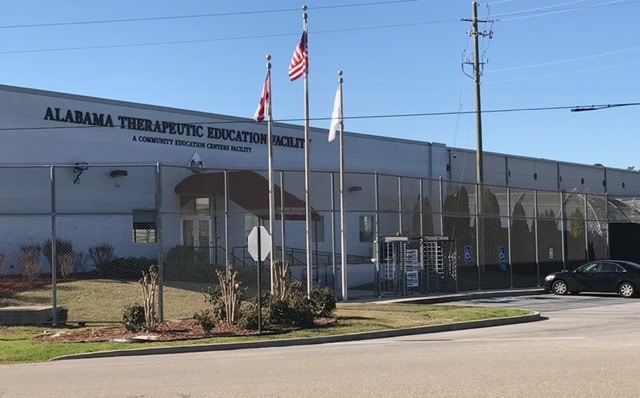
The Alabama Therapeutic Education Facility (ATEF) offers a 6-month program for soon-to-be-released Alabama inmates. ATEF says they treat their clients with respect hoping it will change their way of thinking to be contributing members of society once released.
Photo by Les Lovoy
Trump administration sends letter wiping out addiction, mental health grants
The Trump administration sent hundreds of letters Tuesday terminating federal grants supporting mental health and drug addiction services. The cuts could total as much as $2 billion.
Greetings from Acre, Israel, where an old fortress recalls the time of the Crusades
Far-Flung Postcards is a weekly series in which NPR's international team shares moments from their lives and work around the world.

Can’t decide what to read next? Here are 20 recommendations for your book club
You know that feeling when you finish a book and just have to discuss it with someone? That's a great book club book. Here are 20 tried-and-true titles that are sure to get the conversation started.

The risks of AI in schools outweigh the benefits, report says
A new report warns that AI poses a serious threat to children's cognitive development and emotional well-being.

The death toll from a crackdown on protests in Iran jumps to over 2,500, activists say
The number of dead climbed to at least 2,571 early Wednesday, as reported by the U.S.-based Human Rights Activists News Agency, as Iranians made phone calls abroad for the first time in days.
How have prices changed in a year? NPR checked 114 items at Walmart
We found the effects of tariffs and extreme weather, relief (finally!) in the egg cooler, plus one case of shrinkflation.
