
Oxford Officials: Transgender Bathroom Law is About Public Safety
Oxford city leaders say public safety is what sparked the recent passage of an ordinance that forces transgender people to use public restrooms corresponding with their biological sex. But transgender advocates say the eastern Alabama city’s law is unjustifiable.
The Oxford City Council unanimously approved what is being called the most sweeping anti-transgender law in the country, punishable by a $500 fine or six months in prison.
“Really what we’re looking at here is a nonsensical ordinance to the fear mongering that we’re seeing across the United States, says,” Eva Walton Kendrick of the Human Rights Campaign in Birmingham.
But council president, Steven Waits, says the law is about public safety. He argues that allowing people to use a bathroom that doesn’t match their biological sex endangers citizens, particularly women and children.
“There have been those who have become so politically immersed in political correctness that they become blind to the unsafe conditions their policies may create,” Waits says.
He adds that the council is not concerned about how this law will affect transgender residents and visitors in Oxford since they make up only a fraction of the population.
The ordinance now goes to Oxford Mayor, Leon Smith, for approval. However, city officials say they’re unsure when this is will take place.
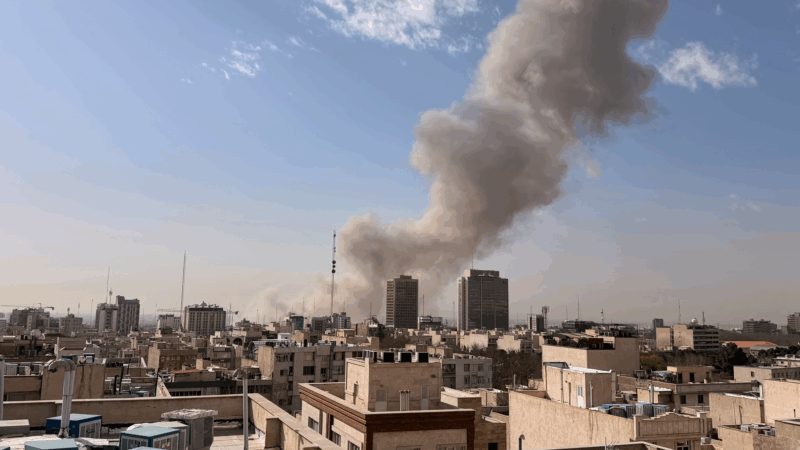
Why is the U.S. attacking Iran? Six things to know
The U.S. and Israel launched military strikes in Iran, targeting Khamenei and the Iranian president. "Operation Epic Fury" will be "massive and ongoing," President Trump said Saturday morning.
Sen. Tim Kaine calls on the Senate to vote on the war powers resolution
NPR's Scott Simon talks to Sen. Tim Kaine, D-Va., about the U.S. strikes on Iran.
Political science expert weighs in on Iran’s nuclear program in light of U.S. strikes
NPR's Scott Simon speaks to Ariane Tabatabai, the Public Service Fellow at Lawfare, about U.S. attacks on Iran and how President Trump's calls for regime change might be received there.
Week in Politics: Does Trump have political support for his actions in Iran?
We look at what President Trump's decision to attack Iran means, what kind of support he has in Iran and what this moment means for his administration.
Unlocking the secrets of an ancient plague
The first historically recorded pandemic is believed to have struck the walled city of Jirash, in what is now modern-day Jordan, in the 7th century. A new study reveals details about those who died.
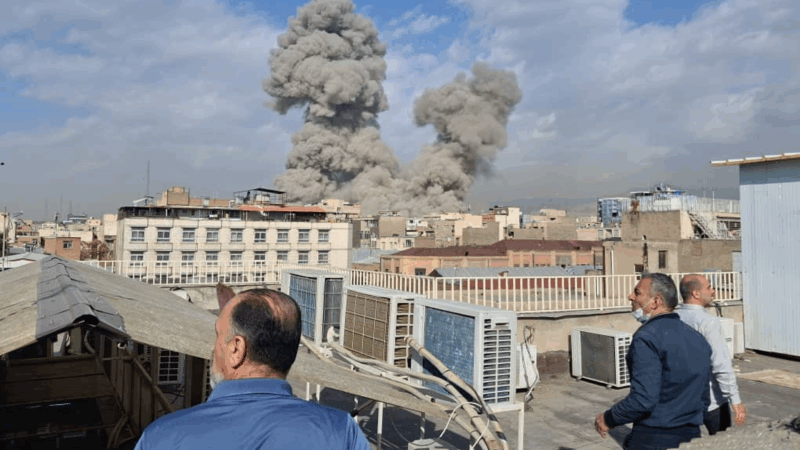
Panic, fury, and some hope, in Iran as U.S. launches strikes
In Tehran, panicked residents rushed home to shelter and terrified children poured out of classrooms as U.S. air strikes hit the capitol.
