
Majority of Alabamians Willing to Pay More for Education and Healthcare
A majority of Alabamians believe key state services are not adequately funded and would be willing to pay more in taxes to avoid cuts in education and healthcare for the poor and elderly. That’s among the findings of an annual public opinion survey conducted by the Public Affairs Research Council of Alabama. However the research group found Alabamians are less willing to support tax increases to raise revenue.
About 48 percent of respondents say education is the most important service provided by the state with healthcare for the poor and elderly following at 31 percent. Majorities also believe education and healthcare, along with other key budget items, are not adequately funded.
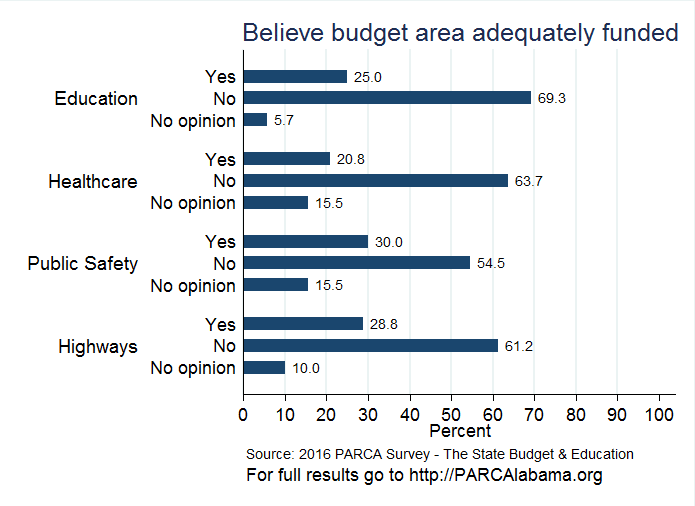
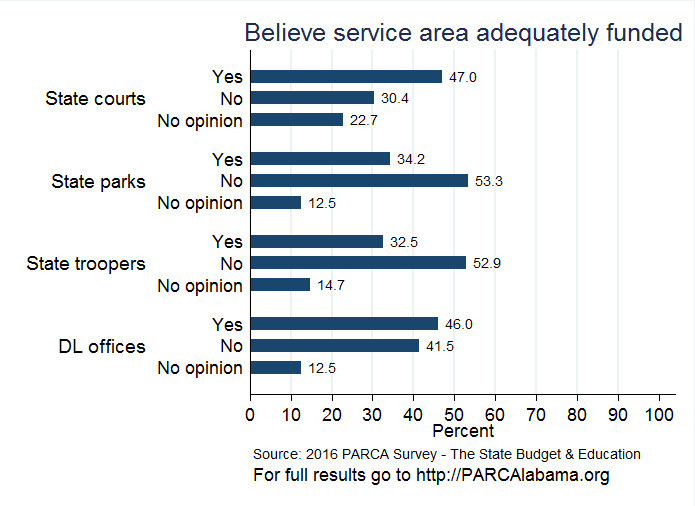
The expressed support for education is long-standing says Samford University political scientist Randolph Horn. He oversaw the PARCA survey.
“One question we’ve asked dates back over 20 years and Alabamians consistently report that they think education should be better funded,” says Horn.
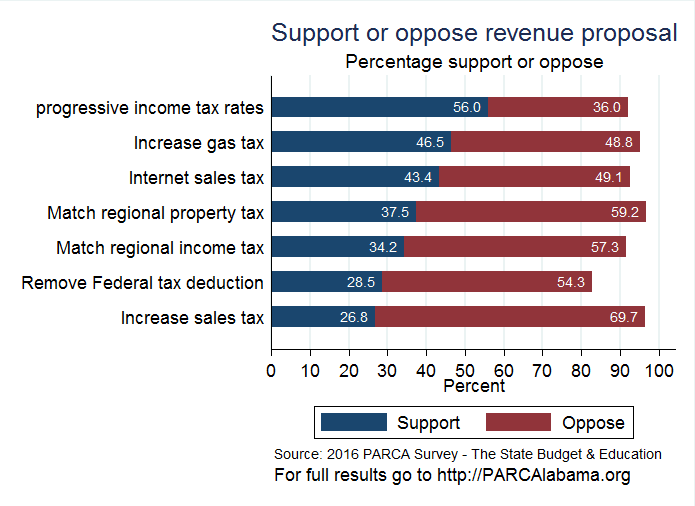
But those responses are in the abstract. When it comes to specific revenue measures to maintain or increase funding for state programs, support is much lower.
This year’s survey asked about expanding Medicaid under the Affordable Care Act. Governor Robert Bentley says he’s opposed to expanding Medicaid in its current form, although he’s softened his language against it over the last year. The PARCA research shows a majority, about 54 percent, support expanding Medicaid. But the support splits when considering political party.
 Horn emphasizes the survey results have been mostly the same through the years, but there does seem to be a trend when it comes to what residents think of state leaders in Montgomery.
“There’s evidence that there’s an increasing sense of alienation from state government,” says Horn.

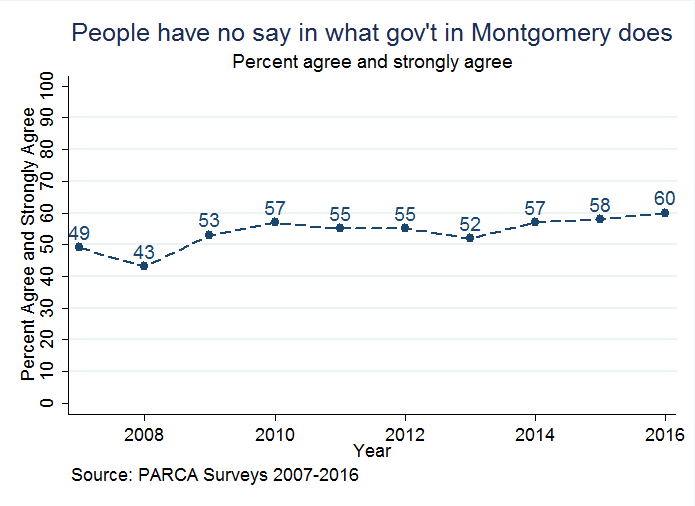
Additionally, about 60 percent believe earmarking revenue is good. Much of state revenue is earmarked leaving state lawmakers less flexibility in appropriating funds.
Overall, Horn says the survey responses don’t vary much by demographic groups.
“In that way the public seems to be different than some of the elites in politics or political leaders,” says Horn. “They are trying to distinguish themselves from each other or one party or the other. We see a lot of unity in the public.”
The phone survey was conducted from January 4 to January 21, 2016. It has a margin of error of +/- 4.5 percent. You can find more results from the survey here.
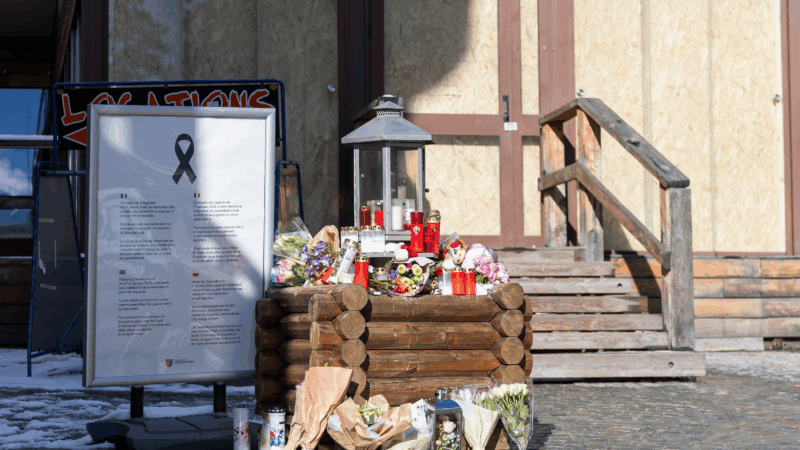
Swiss Alpine bar fire claims 41st victim, an 18-year-old Swiss national
Swiss prosecutors have opened a criminal investigation into the owners of Le Constellation bar in the ski resort of Crans-Montana, where a fire in the early hours of Jan. 1 killed dozens.

Sunday Puzzle: Rhyme Time
NPR's Ayesha Rascoe plays the puzzle with WBUR listener Laurie Rose and Weekend Edition Puzzlemaster Will Shortz.
Alcaraz beats Djokovic to become the youngest man to complete a career Grand Slam
The 22-year-old Spaniard's win against 38-year-old rival Novak Djokovic at Sunday's Australian Open makes him the youngest male player to win all four major tournaments.
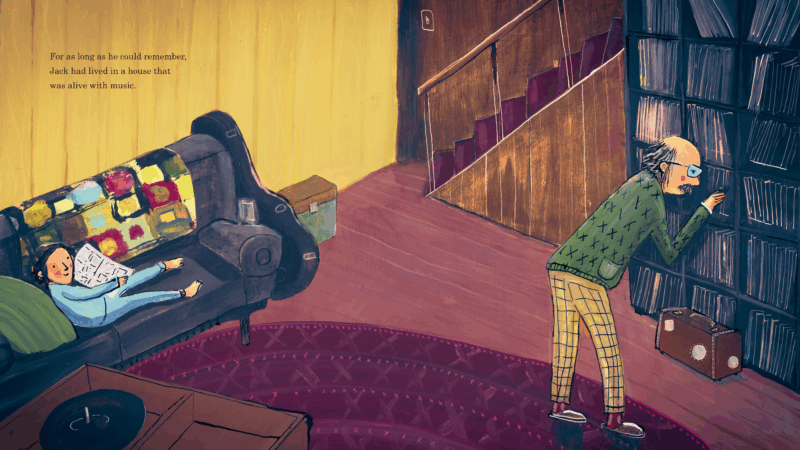
You already know the song — now, ‘The One About the Blackbird’ is also a picture book
In The One About the Blackbird, a young boy learns to play guitar from his grandfather. And there's one song in particular that they love…
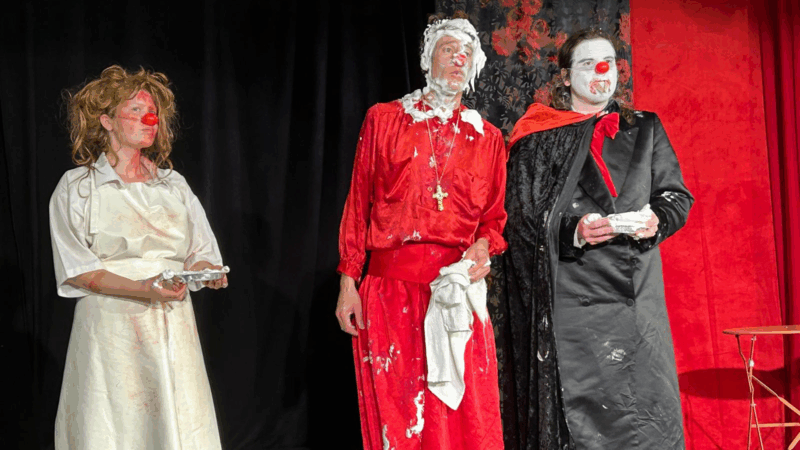
At a clown school near Paris, failure is the lesson
For decades, students at the Ecole Philippe Gaulier have been paying to bomb onstage. The goal isn't laughs — it's learning how to take the humiliation and keep going.
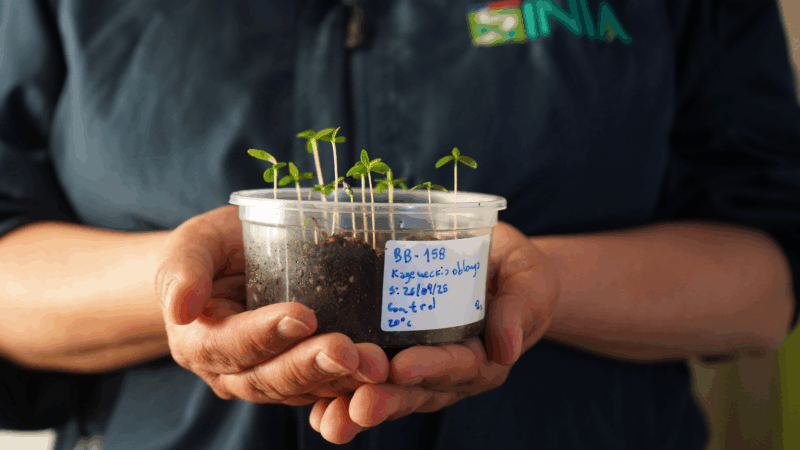
In the world’s driest desert, Chile freezes its future to protect plants
Tucked away in a remote desert town, a hidden vault safeguards Chile's most precious natural treasures. From long-forgotten flowers to endangered crops.
