
U.S Attorney General Visits Birmingham
U.S. Attorney General Loretta Lynch spent Wednesday in Birmingham to meet with local law enforcement officers and city leaders about improving cooperation between police and their communities. She also addressed issues raised by last week’s shooting at a historically black church in Charleston, South Carolina.
Hate Crimes and the Confederate Flag
Lynch says crimes like that shooting, which killed 9 people, are tantamount to domestic terrorism even if they aren’t called that. The Justice Department has said it’s investigating the Charleston shooting as a hate crime. While Lynch says she can’t comment on the specific case, she says hate crime statutes were created to go after domestic terrorism perpetrated by groups such as the Ku Klux Klan.
“They are classified as hate crimes because that is the impetus behind them,” said Lynch. “But make no mistake about it, hate crimes are the original domestic terrorism.”
Images of the Charleston shooting suspect flaunting the Confederate battle flag have also spurred debate over its power as symbol of white supremacy as well as culture. Lynch says if states want to commemorate that part of their history, a museum is an appropriate place to do it.
Mending Relationships Between Police and Community
Loretta Lynch’s visit comes as some police departments face criticism, particularly for shootings of unarmed black men. She says she believes police and the communities they serve can mend that fractured relationship with better communication.
“So when incidents do happen there can be a context to have a discussion,” said Lynch. “It doesn’t mean there won’t be disagreement or difficult times or challenges. Those exist and we will deal with them. But we can at least have a discussion about it with some basis of understanding.”
She praised Birmingham police for their efforts to combat gun crime and says she hopes it can be a model for other cities.
Opinion: The immorality of betting on war
Traders on prediction markets bet on nearly anything. One made more than half a million dollars betting on the U.S. strike against Iran. But should people wager on human suffering?
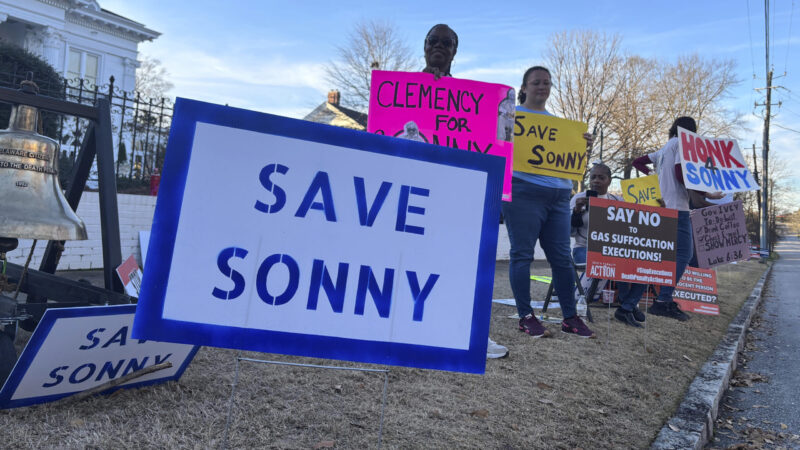
Alabama man facing execution for deadly robbery asks for clemency as he didn’t kill victim
Charles “Sonny” Burton is scheduled to be executed March 12 for his role in a 1991 robbery in which a man was fatally shot. His supporters and attorney are asking the governor for clemency, arguing that his life should be spared because Burton didn’t fire the gun or witness the killing.

Curling had its moment at the Olympics and now Paralympics. It sparked a curling bonanza in America
Hundreds of people become interested in curling every four years and the 2026 numbers already show that boom.
One week into the Iran war, the fallout is global
The war is no longer just about the U.S., Israel and Iran. More countries are getting caught in the political crossfire or being drawn into the fighting themselves.
Iran’s president defies U.S. demands while apologizing for strikes on neighbors
President Masoud Pezeshkian said Saturday that a demand by the U.S. for an unconditional surrender is a "dream that they should take to their grave." He also apologized for Iran's attacks on regional countries.
What the Trump administration says about why it went to war with Iran
The Trump administration says it is "laser focused" and mission driven, but the messaging has been varied. The range of cited motivations for striking Iran now are sometimes at odds with each other.
