
The General Fund Budget Pie
State lawmakers will gather in Montgomery Tuesday to kick off this year’s legislative session. One of the biggest issues they face is how to make up for a projected shortfall in the General Fund budget. There are no easy fixes.
We’ll get to the numbers in a moment, but first, let’s start in the kitchen.
Cynthia Stermer is a private baker in Montevallo. She’s known for her pies. On this day she rolls little dough balls for cherry pies.
“The little balls are going to be part of a flower design that I put on top,” Stermer said. “Pies are like snow flakes and no two are ever the same.”
She assembles the pieces carefully on the mound of red goodness and pops the pies in the oven.
“Now we play the waiting game,” Stermer said. She adds making pies gives you a lot of time to think.
“There are so many analogies for life in baking.” said Stermer
The Budget Pie
So try this legislative analogy. A lot of people want a piece of the pie that is the state’s General Fund budget. It covers anything non-education related, such as prisons, state police, Medicaid andthe court system. The problem is there’s not enough pie to go around.
The legislative fiscal office projects a $283 million shortfall in the General Fund next year.
“We don’t have enough revenue coming into the General Fund to support the operations that we want to pay for,” said Thomas Spencer, senior research associate at the Public Affairs Research Council of Alabama — a non-partisan research group.
He says since the recession Alabama has padded its budget with one-time monies. First the state used stimulus funds and then borrowed money from various state accounts.
Spencer says Alabama’s reaching its borrowing limits. Much of the state’s revenue is earmarked and can’t be moved around. Lawmakers have been cutting with 5,000 fewer state employees and a General Fund budget that’s $400 million smaller than in 2009.
“We’ve done the cutting and the slicing and the dicing,” said Republican Representative Steve Clouse, Chair of the House Ways and Means General Fund Committee.
He says there aren’t substantial cuts or savings left. That has state leaders looking at the revenue side.
Did Someone Say Taxes?
Even though Alabama is a tax adverse state, Governor Robert Bentley is proposing a $700 million tax and revenue package.
The plan consists of eliminating some tax credits, increasing tobacco and automobile-related taxes and un-earmarking some revenue. It doesn’t include gambling and it doesn’t involve anything that has to go to a statewide vote.
Representative Steve Clouse says filling the budget gap will likely consist of mixing together smaller cuts or revenue measures that add up. He’d even consider gambling.
“I think everything is on the table,” said Clouse. “If it dedicated some of the funds to the General Fund.”
A lottery is among the Democrats proposals with proceeds going to both the general fund and education. House Minority Leader Craig Ford says they also propose a compact with the Poarch Creek Indians, which have casinos in Alabama, and support an increase to the tobacco tax. Representative Ford says this type of revenue is voluntary.
“Nobody wants to pass taxes but you can pass revenue measure that aren’t taxes,” said Ford.
Republicans dominate state government and some aren’t too fond of Governor Bentley’s idea of raising taxes. One north Alabama lawmaker even bought a billboard opposing the governor’s tax plan.
But the public, which historically doesn’t like taxes, might not be as tough an audience. The Public Affairs Research Council of Alabama conducts an annual survey of attitudes toward government. Thomas Spencer says what they found might be surprising.
“Alabamians are willing in the key areas of education and health, they would be willing to pay more in taxes to avoid cuts,” said Spencer.
Spencer says the survey also shows residents don’t trust lawmakers to spend the money wisely.
One other note about our budget pie — this $283 million shortfall — that number only gets us back to where we are now. So no new money for an overcrowded prison system that risks a federal takeover. No new money for understaffed state police or Medicaid. Also the money we borrowed must be paid back in the coming years.
Montevallo baker Cynthia Stermer’s pie looks delicious with its golden brown crust. A much more contentious baking operation awaits in Montgomery.
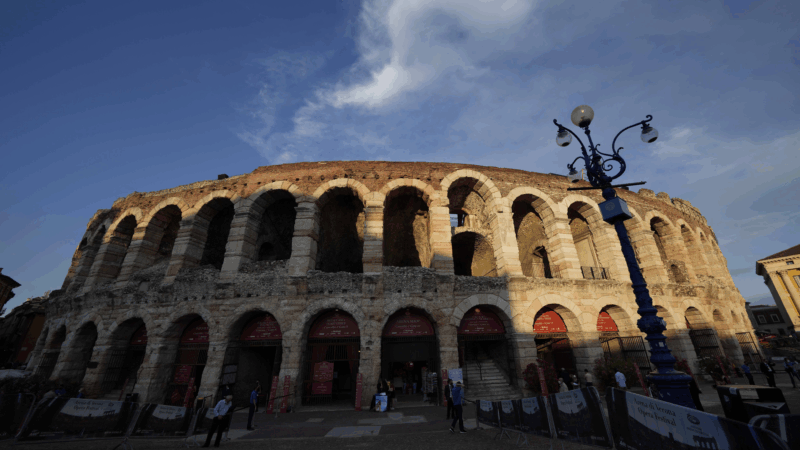
Mideast clashes breach Olympic truce as athletes gather for Winter Paralympic Games
Fighting intensified in the Middle East during the Olympic truce, in effect through March 15. Flights are being disrupted as athletes and families converge on Italy for the Winter Paralympics.
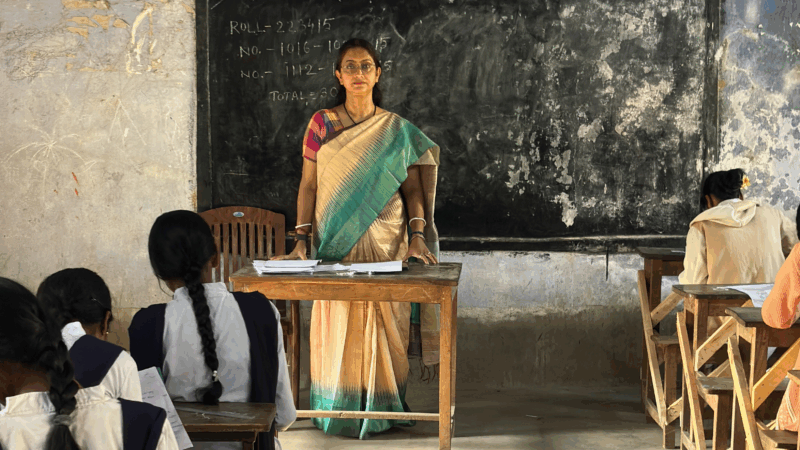
A U.S. scholarship thrills a teacher in India. Then came the soul-crushing questions
She was thrilled to become the first teacher from a government-sponsored school in India to get a Fulbright exchange award to learn from U.S. schools. People asked two questions that clouded her joy.
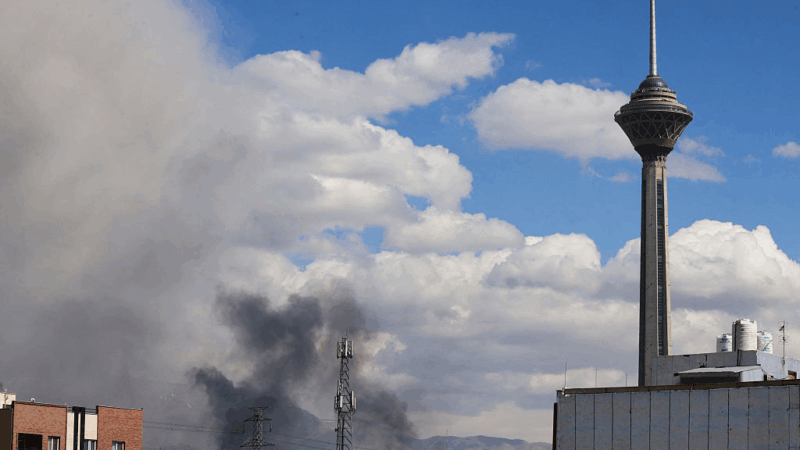
U.S.-Israeli strikes in Iran continue into 2nd day, as the region faces turmoil
Israel said on Sunday it had launched more attacks on Iran, while the Iranian government continued strikes on Israel and on U.S. targets in Gulf states, Iraq and Jordan.

Trump warns Iran not to retaliate after Ayatollah Ali Khamenei is killed
The Iranian government has announced 40 days of mourning. The country's supreme leader was killed following an attack launched by the U.S. and Israel on Saturday against Iran.
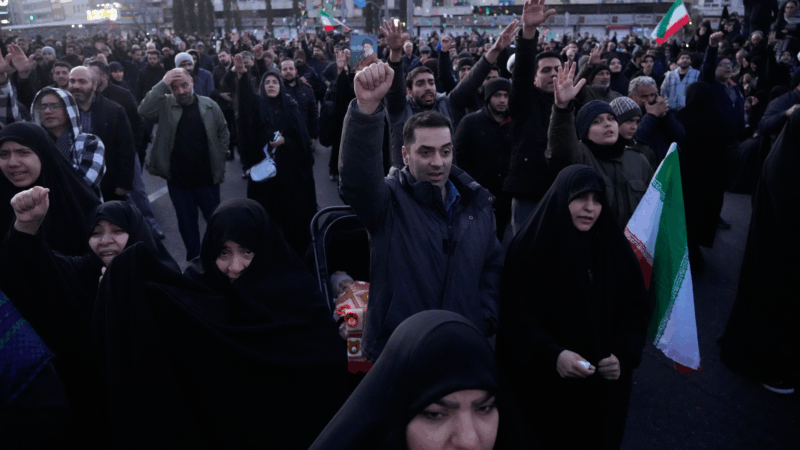
Iran fires missiles at Israel and Gulf states after U.S.-Israeli strike kills Khamenei
Iran fired missiles at targets in Israel and Gulf Arab states Sunday after vowing massive retaliation for the killing of Supreme Leader Ayatollah Ali Khamenei by the United States and Israel.
Iran’s Ayatollah Ali Khamenei is killed in Israeli strike, ending 36-year iron rule
Khamenei, the Islamic Republic's second supreme leader, has been killed. He had held power since 1989, guiding Iran through difficult times — and overseeing the violent suppression of dissent.
