Civil Rights Complaint Filed Against Jefferson County Health Department
North Birmingham neighborhoods have long struggled with pollution from nearby heavy industry. Last week, the Environmental Protection Agency accepted a civil rights complaint against the Jefferson County Health department, filed by a local environmental activist group. Nick Patterson, the editor of WELD, told WBHM what’s in the complaint, and why it matters.
A Civil Environmental Issue
The complaint essentially says that the Jefferson County Department of Health should not have issued a permit to operate to Walter Coke, which is one of many industries that exist in the North Birmingham area.
These industries have been implicated by the EPA for putting out pollution that has been effecting people’s health, contaminants that have been found in the soil that the EPA has been working to remove, which others are arguing is also coming from the air. As a consequence of that, GASP, an environmental organization that produced a documentary called “Toxic City,” says that the county should not have granted that permit to Walter Coke.
“The reason why it’s a civil rights violation is essentially, the 1964 Civil Rights Act prohibits anyone that gets federal funds from discriminating anyone on the basis of race among other things,” Patterson says. “These neighborhoods – Collegeville, Harriman Park and Fairmont – are predominantly African American and have traditionally been so. The complaint essentially says because this permit was issued that it’s going to have a negative impact on the people in that community.”
This might cause that permit to be revoked.
“It could lead to more actions of a similar nature to other industries. Ultimately the goal is to get the federal government to do more to get these industries to stop polluting or find ways to remediate the pollution if they can. There have even been movements to try to fund people moving out of those neighborhoods,” he says.
A Problem that Can’t Be Avoided
Heavy industry produces a lot of byproducts. “One constant complaint, besides health conditions, there’s also the fact that there is a persistent black coating of soot and other particulate matter that appears on people’s homes. When people cleans their homes, it comes right back. When people touch it, it gets on them,” Patterson says.
“The government has suggested that people should not let their children eat dirt, not let their children walk into the house with shoes contaminated with the dirt from their own yards, so living in these areas is fraught with a number of difficulties.”
The EPA is entering phase four of their clean-up, which is going to address another 260 homes that are in that area. “There are people that still live outside of that designated clean-up site who say that they should also be considered, because their homes, even they’re outside the imaginary line that makes up the clean-up site, are also being contaminated by the same pollutants that their neighbors are dealing with,” says Patterson.
The Jefferson County Department of Health Responds
The Jefferson County Department of Health released this statement in regard to the EPA filing:
The Jefferson County Department of Health(JCDH) received a letter from the United States Environmental Protection Agency (EPA) Office of Civil Rights (OCR) concerning acceptance of an investigation request. JCDH is aware that this process is procedural in nature when a complainant meets four criteria including:
- The complaint must be in writing
- The complaint must describe an alleged discriminatory act
- The complaint must be filed within 180 calendar days
- The complaint must be against an applicant for, or a recipient of, EPA financial assistance
Per the EPA notice, “The decision to investigate the claim in no way amounts to a decision on its merits. Rather, it means the complaint has met the jurisdictional criteria.” JCDH is cooperating with the EPA’s Office of Civil Rights completely, and is committed to promoting healthy communities and environments throughout Jefferson County.

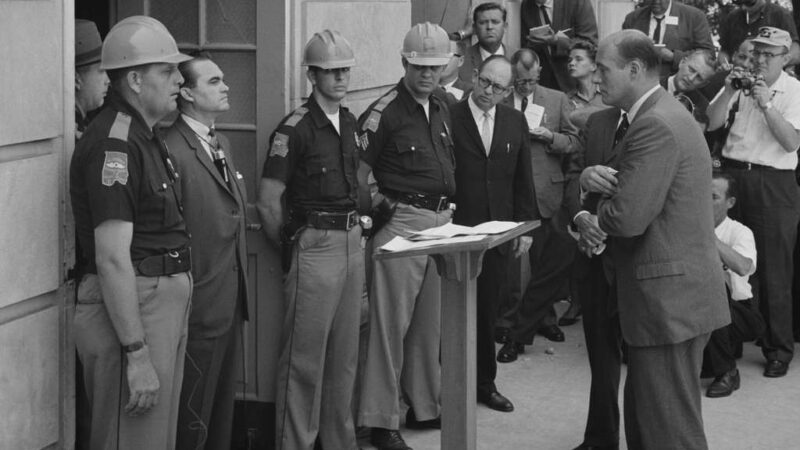
How George Wallace and Bull Connor set the stage for Alabama’s sky-high electric rates
After his notorious stand in the schoolhouse door, Wallace needed a new target. He found it in Alabama Power.

FIFA president defends World Cup ticket prices, saying demand is hitting records
The FIFA President addressed outrage over ticket prices for the World Cup by pointing to record demand and reiterating that most of the proceeds will help support soccer around the world.

From chess to a medical mystery: Great global reads from 2025 you may have missed
We published hundreds of stories on global health and development each year. Some are ... alas ... a bit underappreciated by readers. We've asked our staff for their favorite overlooked posts of 2025.
The U.S. offers Ukraine a 15-year security guarantee for now, Zelenskyy says
Ukrainian President Volodymyr Zelenskyy said Monday the United States is offering his country security guarantees for a period of 15 years as part of a proposed peace plan.

Genre fiction and female authors top U.S. libraries’ most-borrowed lists in 2025
All of the top 10 books borrowed through the public library app Libby were written by women. And Kristin Hannah's The Women was the top checkout in many library systems around the country.

The Best Tiny Desk Concerts of 2025
Which Tiny Desk made an audio engineer question everything? Which one made a producer want to cry? Touch grass? Look back on the year in Tiny Desk, with the people who make them.