
Commentary: How Politicians Send The Wrong Message To Alabama’s Teachers
Education is a hot topic for politicians in Alabama. This year we saw intense debates in the Legislature around Alabama’s College & Career Ready Standards and the state’s education budget, including pay raises for teachers.
Commentator and rural education advocate Larry Lee thinks all the political rhetoric sends the wrong message to Alabama teachers. In this commentary, he says it can hurt morale, and even drive qualified educators out of state.
Alabama has been sending its daughters to Judson College in the little Black Belt community of Marion for more than 170 years. The fifth oldest women’s college in the country, Judson has trained hundreds and hundreds of teachers.
And a chance encounter not long ago with one of these students left me with an unforgettable memory. I was having lunch in Marion one summer day. My waitress was a Judson student who would soon get her degree in elementary education.
I asked her what she planned to do.
“Get a teaching job – but not in Alabama,” she replied. When I asked why not she said, “Because the legislature here doesn’t like teachers.”
Certainly we can debate whether she was right or wrong. But that hardly matters. What does matter is that this was her perception and that she intended to move to another state.
Unfortunately, we seem far too eager to fuel it such perceptions.
Recent remarks by Governor Robert Bentley at a Chilton County political rally are a case in point. The governor is president of the Alabama State Board of Education. In addition to the governor, there are eight elected members of this board. Six are Republicans, two are Democrats.
This is the board that voted to adopt the Alabama College & Career Ready standards for K-12.
This is the board that recently adopted an extremely definitive resolution addressing how new assessments will be used.
The board worked with community colleges, universities and business and industry to make sure tests are aligned with everyone’s needs.
Students will spend less time taking standardized tests than they have been; and scores from the first year of testing will be used as benchmarks for the future.
But instead of supporting the actions of the board he chairs, the governor spoke out against certain standards and spoke in favor of parents not allowing their children to be tested.
I showed the governor’s remarks to a longtime south Alabama principal and her reaction was simply, “It is really sad when the governor does not know what is going on and is more interested in scoring political points than supporting education.”
Another example of sending the wrong message happened in the last legislative session. I sat in a senate committee hearing for two hours listening to school board members, teachers, parents, students and superintendents speak in favor of the Alabama College & Career Ready standards; while Tea Party activists and a preacher spoke against them.
When this committee voted the next morning to support the Tea Party, instead of educators, the message sent is that folks in the statehouse don’t think education is a profession or that educators are professionals.
And because they feel this way, they were willing to play games with 740,000 kids and 40,000 teachers to try to get re-elected.
There is nothing good about what we call “bad-mouthing.” A constant stream of abuse is never good. This is not the way we raise our children, or coach our Little League team or teach our Sunday school class. We do not coax excellence from someone by constantly telling them they really don’t matter–educators included.
Pogo’s statement of, “We have met the enemy and he is us: is a fitting summation for the situation we constantly put ourselves in across Alabama. That was what I learned one day at lunch in Marion. And our political leaders have done nothing lately to change my mind.
Iran’s Ayatollah Ali Khamenei is killed in Israeli strike, ending 36-year iron rule
Khamenei, the Islamic Republic's second supreme leader, has been killed. He had held power since 1989, guiding Iran through difficult times — and overseeing the violent suppression of dissent.
‘One year of failure.’ The Lancet slams RFK Jr.’s first year as health chief
In a scathing review, the top US medical journal's editorial board warned that the "destruction that Kennedy has wrought in 1 in office might take generations to repair."
Here’s how world leaders are reacting to the US-Israel strikes on Iran
Several leaders voiced support for the operation – but most, including those who stopped short of condemning it, called for restraint moving forward.

How could the U.S. strikes in Iran affect the world’s oil supply?
Despite sanctions, Iran is one of the world's major oil producers, with much of its crude exported to China.

Why is the U.S. attacking Iran? Six things to know
The U.S. and Israel launched military strikes in Iran, targeting Khamenei and the Iranian president. "Operation Epic Fury" will be "massive and ongoing," President Trump said Saturday morning.
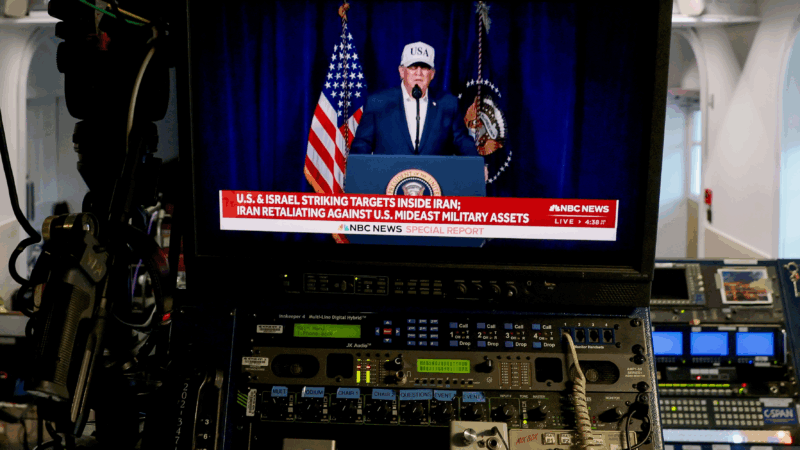
Iran strikes were launched without approval from Congress, deeply dividing lawmakers
Top lawmakers were notified about the operation shortly before it was launched, but the White House did not seek authorization from Congress to carry out the strikes.
