
Mental Music
Sunny Speaker is a slight woman with red curly hair. She looks younger than she is and with her guitar in hand and her folksy voice, she would fit right in at open mic night at a coffee house. But she’s dressed in scrubs and her music is peppered with the beeps and noises from various medical devices. Speaker is a music therapist at UAB hospital. Actually, she’s the music therapist. When she started the department five years ago, she says there were lots of misconceptions.
“A lot of people think music therapy is for patients who are bored of they think it’s for patients who are musicians or they think it’s to trying and turn patients into musicians, but it’s none of those things — it’s just the way we try to accomplish non-musical goals — decreasing anxiety, decreasing symptoms of depression, increasing relaxation?trying to increase appropriate social interaction. None of these goals have anything to do with music.”
Aristotle and Plato were the first to note the profound effect of music on the emotions. The practice resurfaced in the early 20th century when veteran?s hospitals used music therapy to vets suffering from the physical and emotional wounds of World Wars One and Two. The first music therapy degree program in the world was founded at Michigan State University in 1944 and by 1991 the US Congress recognized its merits by passing the Music Therapy for Older Americans Act. In short, while music therapy was once considered an “alternative” practice, it’s now gaining acceptance in mainstream medicine — buoyed by research that suggests it helps alleviate pain, counteract depression and lesson muscle tension.
This afternoon, Sunny Speaker is holding a session in the geriatric psychiatric unit where many patients suffer from Alzheimers and dementia. Speaker begins with a song in which she poses questions and the patients answer. This is called “reality orientation.” Speaker’s intern, Claudia Lewis, notes that this practice is particularly effective for the geriatric patients.
“A lot of times just asking the day of the week or the month, they can?t respond but it you put it in a song, it comes. Or you know a song asking them their name or a song encouraging them to smile or to change their outfits. They don?t realize that we?re actually trying to get them to reach goals. And that they?re actually reaching them with the use of music.”
The patients may not realize it, but the nurses do. Judy Wilson is a clinical nurse specialist in the geriatric psych unit.
“A lot of times we’ll have people who are somewhat disruptive, they’re loud and their saying nonsensical things and Sunny will come in and within minutes, have people singing. People who have illnesses such as Alzheimers disease or vascular dementia that really can no longer have a meaningful conversation and all of the sudden, you’ll hear them singing, they’ll remember lyrics of a song and you’re really surprised that they have that ability.”
Later in the session, each patient picks a percussion instrument to play along. Sunny Speaker notes that this is a significant part of the afternoon for the patients.
“It’s something very small but since when you’re hospitalized, you don’t have a choice about many things, so something as small as letting them pick what instrument they want to play gives them a sense of control for the afternoon — it’s something as small as that where music therapy can make a big difference with mental health patients.”
Throughout the session the universal appeal of music is apparent.
“It’s part of every single person’s life. Whether it was lullabies that their mother sang to them when they were a baby or part of fun memories from high school or associated with some type of family connection, it’s just inherent to everyone. And it’s so easy to use it as therapy because everyone is connected to it in some way.”
At the end of the session, as I gather my equipment, I feel someone touch my arm. It’s the woman who’s been lying next to me. When the session began, she pulled her blanket over her head. As the session wore on, she uncovered her face and began to participate. Now she looks at me, smiles slightly, and begins to softly sing.

Mideast clashes breach Olympic truce as athletes gather for Winter Paralympic Games
Fighting intensified in the Middle East during the Olympic truce, in effect through March 15. Flights are being disrupted as athletes and families converge on Italy for the Winter Paralympics.

A U.S. scholarship thrills a teacher in India. Then came the soul-crushing questions
She was thrilled to become the first teacher from a government-sponsored school in India to get a Fulbright exchange award to learn from U.S. schools. People asked two questions that clouded her joy.

U.S.-Israeli strikes in Iran continue into 2nd day, as the region faces turmoil
Israel said on Sunday it had launched more attacks on Iran, while the Iranian government continued strikes on Israel and on U.S. targets in Gulf states, Iraq and Jordan.
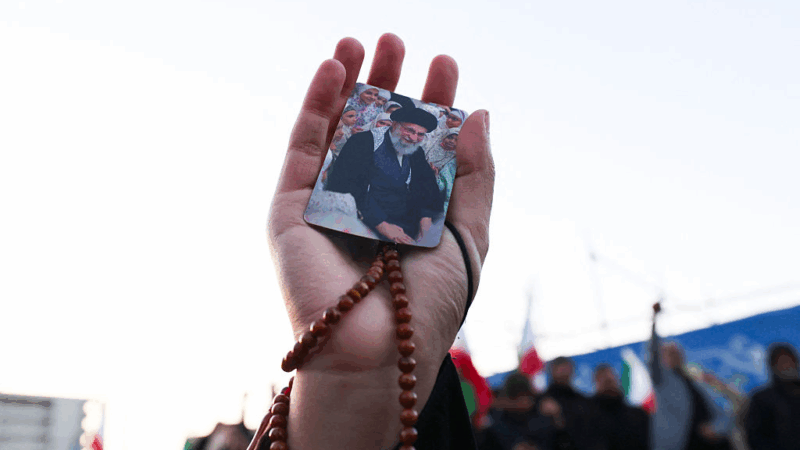
Trump warns Iran not to retaliate after Ayatollah Ali Khamenei is killed
The Iranian government has announced 40 days of mourning. The country's supreme leader was killed following an attack launched by the U.S. and Israel on Saturday against Iran.
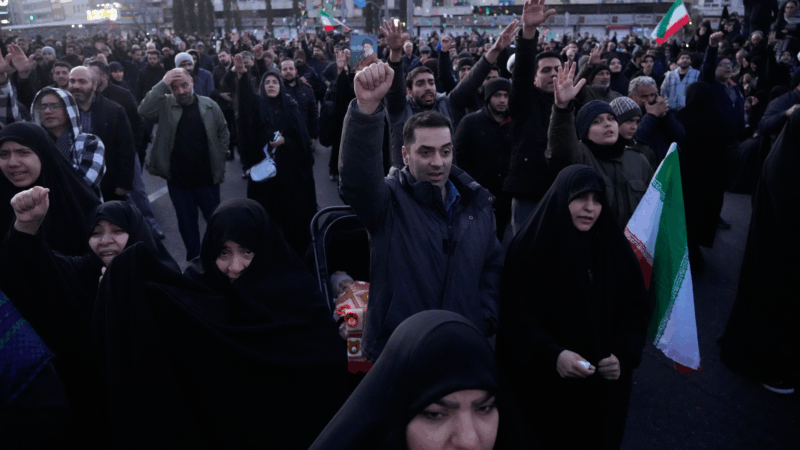
Iran fires missiles at Israel and Gulf states after U.S.-Israeli strike kills Khamenei
Iran fired missiles at targets in Israel and Gulf Arab states Sunday after vowing massive retaliation for the killing of Supreme Leader Ayatollah Ali Khamenei by the United States and Israel.
Iran’s Ayatollah Ali Khamenei is killed in Israeli strike, ending 36-year iron rule
Khamenei, the Islamic Republic's second supreme leader, has been killed. He had held power since 1989, guiding Iran through difficult times — and overseeing the violent suppression of dissent.
