
Your call to a local Social Security office may be picked up by someone who can’t help

Phone calls to local Social Security offices are currently being rerouted to other field offices — often to staff who don’t have jurisdiction over the caller’s case, employees say.
Disability advocates and experts warn this is making it harder for people to get help.
The latest change is part of the Social Security Administration’s ongoing efforts to bring down wait times for phone services.
In a statement to NPR, a spokesperson for the agency said that “the goal of the phone sharing system is to enhance customer service by reducing wait times and addressing customer needs at the first point of contact.
“Under the newly implemented system, calls to local field offices may be routed to available staff at other field offices, regardless of geographic location, to help manage high call volumes.”
But Angela Digeronimo, a claims specialist in Woodbridge, N.J., and president of a union that represents employees at 25 offices in the state, told NPR this new system creates a “hit or miss” situation for people calling in to their local office.
Digeronimo said the intention of this change “may have been to not have callers waiting,” which is a good thing. But in practice, she said, it delays getting an issue sorted if a caller is rerouted to a local office that can’t actually fix their problem.
“If it’s someone else’s office, the jurisdiction is someone else’s,” she said. “You can’t take action on it because your office does not have the ability to clear that claim. You have to refer it over to the servicing office, which is what the member of the public thought they were doing. So, it gets a little bit cumbersome.”
A spokesperson for the agency refuted the claim that callers are getting routed to offices that can’t help.
“All SSA field offices are equipped to handle inquiries and resolve issues for callers, irrespective of where a caller lives or where their case originated,” the spokesperson said in a statement. “SSA staff across the country have access to the necessary systems and information to assist with a wide range of Social Security matters.”
But Amber Westbrook, a local union chapter president and field office employee in the Chicago region, said that’s just not how the system works.
“Our system is very specific to the office that we can do things in,” she explained. “So I, physically, if another claim is open in another office, I cannot clear their case. It’s just kind of the way that they retain that to make sure that things are accurate and complete.”
Westbrook said workers in other field offices may be able to see what’s going on with someone’s case, but if they’re in the wrong jurisdiction they can’t “actually take care of the issue.”
Jen Burdick, a supervising attorney at Community Legal Services of Philadelphia, said the new phone sharing system is creating a situation where it is taking her group “more time to help people” get and keep Social Security disability benefits.
“I feel like perhaps there was good intentions here, but this is ineffective and this is going to waste more people’s time, at least when I am rerouted to another office,” she said.
Burdick said she is most concerned, though, about individuals who don’t have a representative helping them.
“How does that impact them? Does that make them think that they can’t call SSA in the future?” she asked. “I’m worried that it’ll undermine confidence in the system.”
For employees, Westbrook said there’s also been very little communicated about how long this program will be in place.
“They haven’t really given us a whole lot of idea of how long this is going to last,” she said. “Things [are] changing so rapidly within the agency … something may be different tomorrow than it is today. It’s been a whirlwind for people.”
Nancy Altman — president of Social Security Works, a group that advocates for the expansion of Social Security — said in past administrations officials would have gotten input from every level before implementing a new system.
“So everyone understands when it’s happening, how it’s going to happen, what they’ll do with overflow and so forth,” she said. “Then you announce it to the employees and it’s only then that you roll it out to the public.”
Altman said phone sharing is also another example of the agency rolling out a new policy without a head’s up to the public and stakeholders, which is forcing advocates and beneficiaries to scramble.
“It’s hard for those of us on the outside to keep up with,” she said. “It’s hard for the media to keep up with. But for that matter, it’s hard for the American people and the employees to keep up with it.”
Trump administration’s embattled FDA vaccine chief is leaving for the second time
The FDA's controversial vaccine chief, Dr. Vinay Prasad, is leaving the agency. It's the second time he has abruptly departed following decisions involving the review of vaccinations and specialty drugs.
Family, former presidents and a Hall of Famer give Rev. Jesse Jackson a final sendoff
Several speakers at Jackson's funeral invoked his hallmark catchphrases: "Keep hope alive" and "I am somebody."
Bernard LaFayette, Selma voting rights organizer, dies at 85
Bernard LaFayette, who died Thursday, laid the foundations of the Selma, Alabama, campaign that culminated in the passage of the Voting Rights Act. He was a Freedom Rider and helped found the Student Nonviolent Coordinating Committee.
Oil surges to its highest price since 2023, and stocks drop after U.S. jobs report
Stocks fell Friday on worries that the economy could become stuck in a worst-case scenario of stagnating growth and high inflation. Oil prices touched their highest levels since 2023 after surging again because of the Iran war.
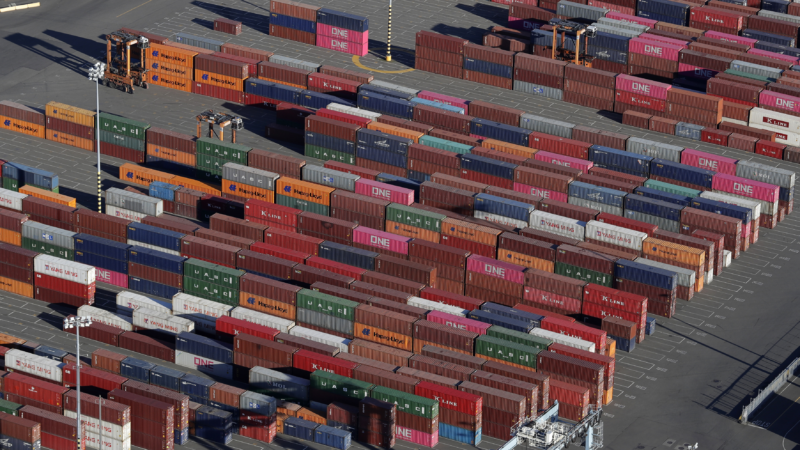
No lawsuits required: U.S. Customs is working on a system to refund tariffs
U.S. Customs told the trade court it aims for a streamlined process in 45 days to return importers' money without requiring individual lawsuits.
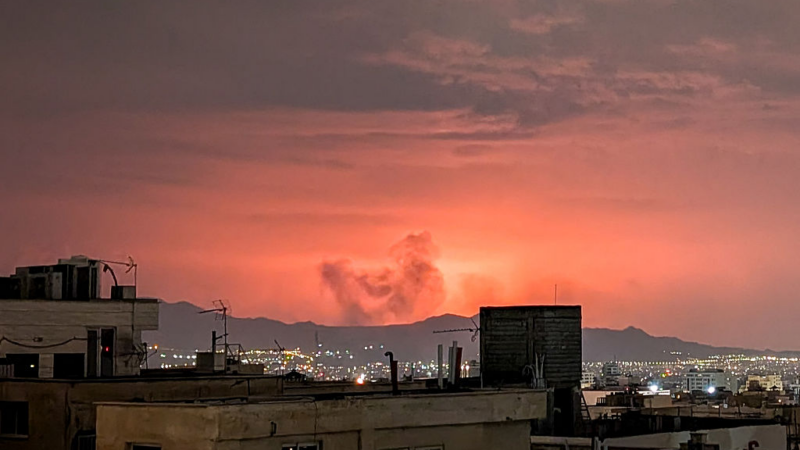
Poll: A majority of Americans opposes U.S. military action in Iran
Most Americans disapprove of President Trump's handling of Iran, and a majority sees Iran as either only a minor threat or no threat at all, an NPR/PBS News/Marist poll finds.
