
Word of the Week: This four-letter word doesn’t mean what it used to. That’s nice

It can compliment, or dismiss. It sometimes conveys strong emotions, or no emotion at all. And that’s “nice” — a tidy, sturdy word that’s remarkably adaptable. Hundreds of years ago, it meant someone was ignorant or foolish; now the meaning of “nice” is basically up to whoever is saying it.
“Hey, I know some Russian oligarchs that are very nice people,” President Trump said in February, discussing plans for a “Gold Card” for preferred, wealthy visitors to the U.S. And in his trade dispute with China, Trump pledged, “So much for being Mr. NICE GUY.”
Then there’s the use of “nice” — and frequently, “noice” — as a one-word joke, peppering TikTok commentaries and TV comedies like Brooklyn Nine-Nine with joking, but enthusiastic, affirmation.
Like any self-respecting four-letter word, “nice” has many connotations, depending on how it’s used and the tone of voice.
“For a four-letter word, it is complicated,” says Anne Curzan, professor of English linguistics and education at the University of Michigan.
“Because it has carried multiple meanings in English,” she adds, “nice” can be ambiguous depending on the context. “And that’s been true historically, and it’s true today.”
Where did ‘nice’ come from?
“It’s from the Latin nescius, meaning ignorant or unaware, essentially,” says Jess Zafarris, an author of etymology books who writes about word origins, primarily for Chambers dictionaries. “So originally, to be nice was not a good thing.”
The Latin source combined two ideas: ne- for “not” and the infinitive scire (“to know”). So when looking at their roots, “nice” and “science” are more closely related than it might seem at first glance.
“It’s not necessarily a negation of the word ‘science,’ ” Zafarris says of nescius. “It is a negation of the word ‘knowledge’ in Latin.”
Nice passed into Old French and then was borrowed into Middle English, making numerous appearances in the 1300s, according to the Oxford English Dictionary. For much of that early journey, it remained a pejorative for someone who was uninformed. But “nice” started to accrue more nuance and meaning, describing people who were preoccupied with how they look, for instance, or someone seen as lazy.
“Quickly, I mean, this is in the 1400s, we’ve got the foolish utterances, the wanton or lascivious behavior, the extravagant or showy dress,” Curzan says.
Nice gets a glow-up

By the 16th century, “nice” was being used to refer to someone or something seen as being refined or associated with polite society, according to Zafarris and Curzan.
“It becomes a term for something more precise or particular. So that sense of delicacy became a good thing,” Zafarris says.
It came to be associated with ideas such as being scrupulous and careful to preserve one’s reputation, Curzan says.
“And that’s where you can start to see this word pick up some more positive connotations to it,” she adds. “And by the 1800s, ‘nice’ is being used to refer to behavior that is respectable or people that are respectable, virtuous, decent.”
Along the way, “nice” also became associated with notions of subtlety and precision — at least in some connotations.
“This is also where we get terms like ‘nice and early,'” Zafarris says. “If you say something is ‘nice and early,’ ‘nice and tasty,’ ‘nice and pretty,’ you’re not saying that it is kind. You’re saying that it is precise.”
As Curzan says, “When someone says, ‘That’s a nice distinction between those two ideas,’ it can refer to that subtle meaning of nice, which you’ll still see listed in dictionaries.”
As you might expect, the English language lends itself to nice irony.
“The editors of the Oxford English Dictionary have citations for these ironic uses of ‘nice’ since the late 1700s,” Curzan says. As examples, she adds, “Well, that’s a nice way to behave” or “a nice, long car ride.”
Why does ‘nice’ matter today?
“Nice” is bustling along, lending its accumulated meanings to everything from TikTok comments to political discourse. Often, “nice” is the faint praise with which people damn everything from matchmakers’ friends to pasta salad.
“The word ‘nice’ has always been a little slippery,” Zafarris says. “It’s been praise, a putdown, sometimes both. It started as an insult, became a compliment, now lives as this blank check.”

To her, it’s no surprise that the president frequently uses the word.
“Trump is the master of imprecision,” Zafarris says. “All of his phrasing relies on plausible deniability. And ‘nice’ is a great word that you can shove in basically anywhere to mean basically anything.”
For Trump, “nice” has been a buzzword for years. He often says critics are “not nice” — a use of the word that can raise concerns, Curzan says.
Telling someone they’re not being nice, she says, is “a way to put someone in their place to say you’re not being socially acceptable right now because you are being challenging in some way. You’re disrupting what I see as acceptable social norms or you’re disrupting the power dynamic right now. And that’s, ‘not nice.'”
As a renegade candidate nearly 10 years ago, Trump noted that a poll showed him doing well with voters — with one exception.
“The only thing I did badly on was: Is he a nice person? I was last in terms of niceness,” Trump told an audience in Greenville, S.C.
“I think I’m the nicest of all,” Trump said. “I just don’t want to be taken advantage of!”
In Zafarris’ view, the word “nice” is like a mirror: “It’s what you see, and it depends on what you expect it to mean.”
British Columbia to make daylight saving time permanent
The Canadian province is permanently ending the biannual time shifts for more light at the day's end. But research shows daylight saving increases health risks.
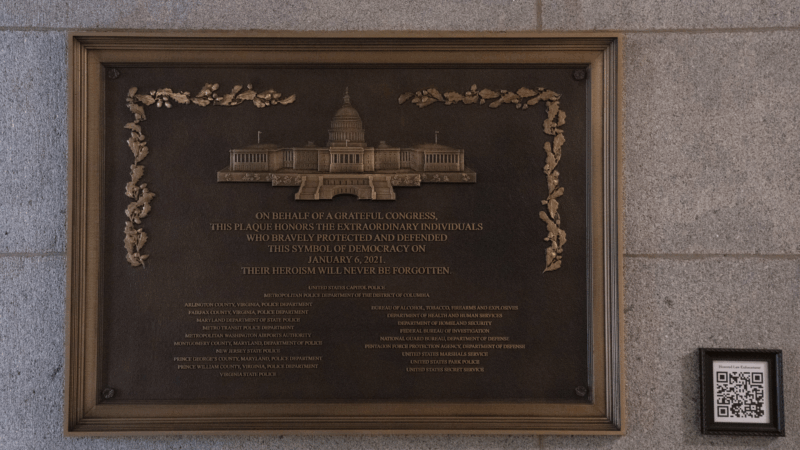
Jan. 6 plaque honoring police officers is now displayed at the Capitol after a 3-year delay
Visitors to the Capitol in Washington now have a visible reminder of the siege there on Jan. 6, 2021, and the officers who fought and were injured that day.
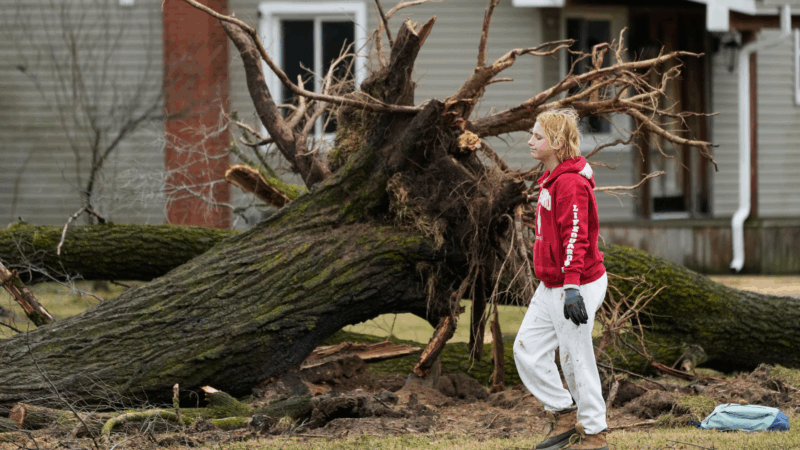
Authorities searching debris after suspected tornadoes kill 6 in Michigan, Oklahoma
A 12-year-old boy is reported to be among the dead following powerful storms that stretched across the middle of the country.
Opinion: The immorality of betting on war
Traders on prediction markets bet on nearly anything. One made more than half a million dollars betting on the U.S. strike against Iran. But should people wager on human suffering?
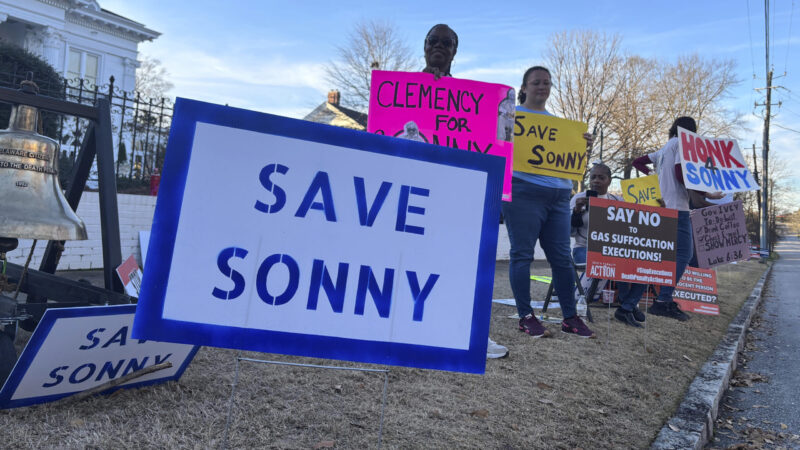
Alabama man facing execution for deadly robbery asks for clemency as he didn’t kill victim
Charles “Sonny” Burton is scheduled to be executed March 12 for his role in a 1991 robbery in which a man was fatally shot. His supporters and attorney are asking the governor for clemency, arguing that his life should be spared because Burton didn’t fire the gun or witness the killing.

Curling had its moment at the Olympics and now Paralympics. It sparked a curling bonanza in America
Hundreds of people become interested in curling every four years and the 2026 numbers already show that boom.
