
With U.S. leadership in doubt, can its allies chart their own course?
Ben Bland is the director of the Asia-Pacific Program at Chatham House, an international policy think tank based in London. He is also the author of two books on Asian politics.
Even before President Trump returned to the White House earlier this year, conversations with diplomatic and security officials across Europe and Asia revealed a deep contradiction. On the one hand, U.S. allies fear the breakdown of the international order that has underpinned their stability in recent decades. On the other, they are hesitant to invest in the structural changes needed to adapt to a more uncertain world.
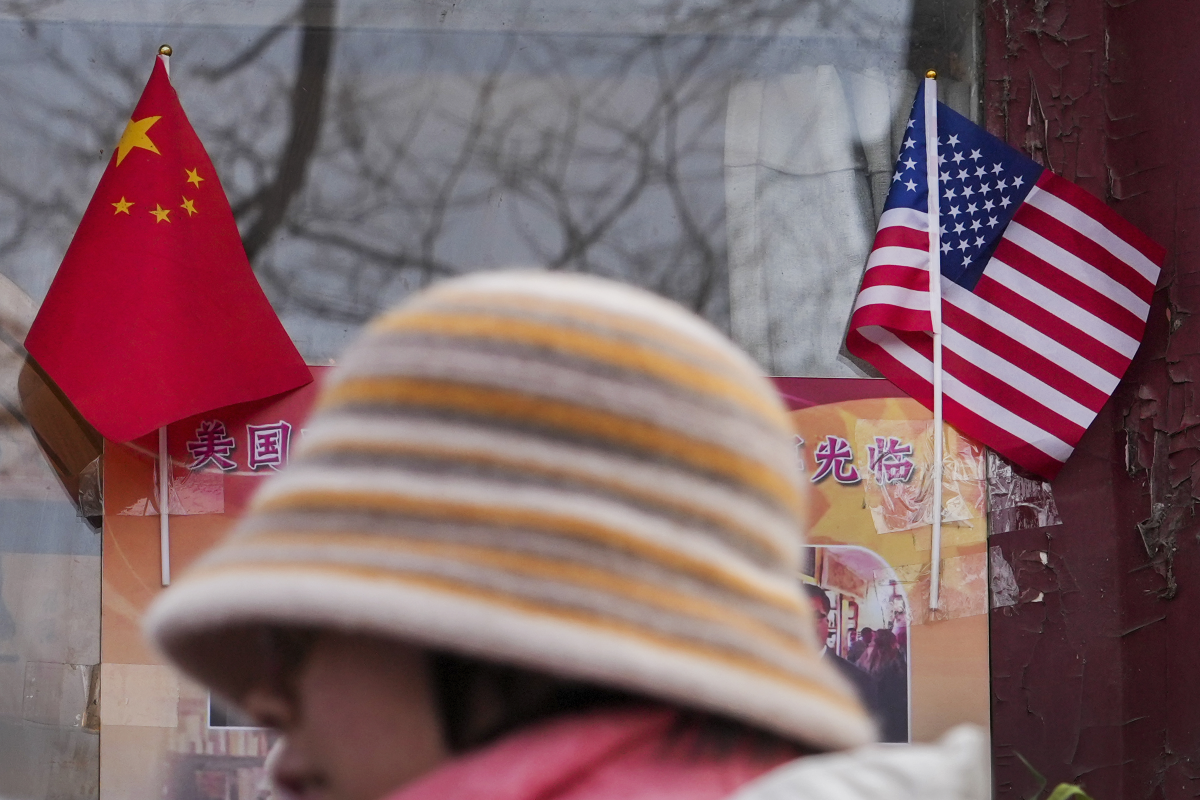
But this may be changing. U.S. allies in Europe and the Indo-Pacific have shown an increasing willingness in recent months to coordinate and cooperate across a wide range of shared interests, from trade to defense and alliance management to China. As democratic middle powers that are committed to open trade and investment, the U.K., France and Germany, Washington’s most important European allies, have much in common with Australia, New Zealand, Japan and South Korea, the Indo-Pacific pillars of the U.S. alliance system.
The foreign ministers of these seven countries and Poland, another key European security player, met recently on the sidelines of the U.N. General Assembly in New York, acknowledging that “peace, security and resilience in the Indo-Pacific and Europe are becoming more intertwined”. Meeting in a new format, and without the U.S. present even while on U.S. soil, they promised to cooperate more closely on maritime security, cybersecurity, economic security, climate change and broader geopolitical uncertainties.

On economic policy, these countries are looking to shield themselves from Beijing’s weaponization of its dominance in manufacturing and emerging technologies. They are also seeking better defenses against growing protectionist pressures emanating from the U.S., which pre-date the return of President Trump to the White House.
How can U.S. allies organize among themselves?
Whether or not autarky makes sense for a superpower like America, its allies in Europe and the Indo-Pacific will suffer in a world where barriers to trade and investment continue to rise. Large, advanced, open economies such as the U.K., France, Germany, Japan, South Korea and Australia will need to work much harder together in the coming years to defend the free flow of goods, services and investments.
One avenue for doing so is cooperation around the Comprehensive and Progressive Agreement for Trans-Pacific Partnership (CPTPP), a regional trade agreement that was backed by Washington before President Trump withdrew in 2017. Australia, Japan, New Zealand and the U.K. are CPTPP members, while South Korea is considering joining, and the European Union has discussed deepening trade linkages with the CPTPP.
Another area where these nations could form a stronger coalition is technology. Both China and the U.S. are taking ever more assertive measures as they vie for leadership in key technologies from artificial intelligence and semiconductors to electric vehicle batteries. None of Washington’s major allies have the financial heft or corporate base to compete in their own right. But they can pool knowledge and resources to try to ensure they are not left behind. And they can discuss how to prevent being isolated in a world of bifurcating technological systems and standards.
On defense and intelligence, there is clearly no substitute for the anchor role that Washington plays. However, European and Indo-Pacific allies are already expanding the linkages between themselves, rather than relying on the U.S. for leadership, connections and defense procurement. For example, instead of procuring fighters from the U.S., Italy, Japan and the U.K. are already working together to develop their own next-generation aircraft under the Global Combat Air Program. This could be the start of a broader push to interweave defense and security between allies in Europe and the Indo-Pacific.
Overcoming tensions and leading without a leader
This shift is not about severing ties with Washington. On the contrary, it is about reacting to changes in U.S. domestic politics, and ensuring that U.S. allies in Europe and the Indo-Pacific can make more meaningful contributions in their own right.
However, coordinating between middle powers in Europe and Asia without the heft of U.S. leadership will be challenging.
Within the EU, France and Germany still clash, with their own joint fighter jet program, the Future Combat Air System, in doubt because of political wrangling and commercial rivalry. The U.K. is mending fences with its European neighbors after Brexit but standing outside the EU makes defense and industrial cooperation difficult.
In the Indo-Pacific, the historical tensions between Japan and South Korea have in the past limited their ability to cooperate with the U.S. and other allies.
It will take vision to look beyond these tensions and smart leadership to find creative, flexible and cost-effective solutions. If U.S. allies in Europe and the Indo-Pacific fail to do more together, alone they will not have the resources or scale to thrive in these uncertain times.
Urban sketchers find the sublime in the city block
Sketchers say making art together in urban environments allows them to create a record of a moment and to notice a little bit more about the city they see every day.
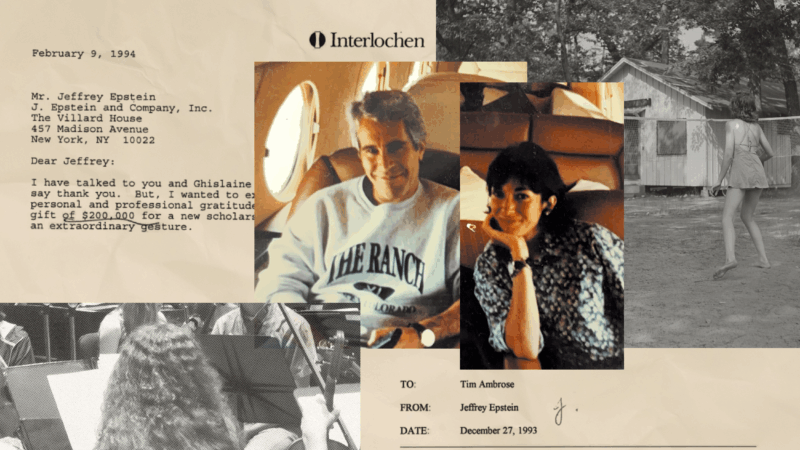
Epstein once attended an elite arts camp. Years later, he used it to find his victims
Jeffrey Epstein and Ghislaine Maxwell lavished money on the Interlochen Center for the Arts to gain access, documents show — even funding an on-campus lodge they stayed in. In the process, two teenagers were pulled into their orbit.

How a recent shift in DNA sleuthing might help investigators in the Nancy Guthrie case
DNA science has helped solve criminal cases for decades. But increasingly, investigative genetic genealogy — which was first used for cold cases — is helping to solve active cases as well.

An unsung hero stepped in to help a newly widowed mom in a moment of need
Barbara Alvarez lost her husband in 2017, just before their daughter went off to college. Her unsung hero helped her find the strength to be a single mother to her child at a key moment in their lives.

How do Olympians like Eileen Gu earn $23 million? Here are all the ways
Most Olympians never win big money — or big fame. So how are athletes such as Eileen Gu or Chloe Kim able to earn millions of dollars? Here are some of the ways.
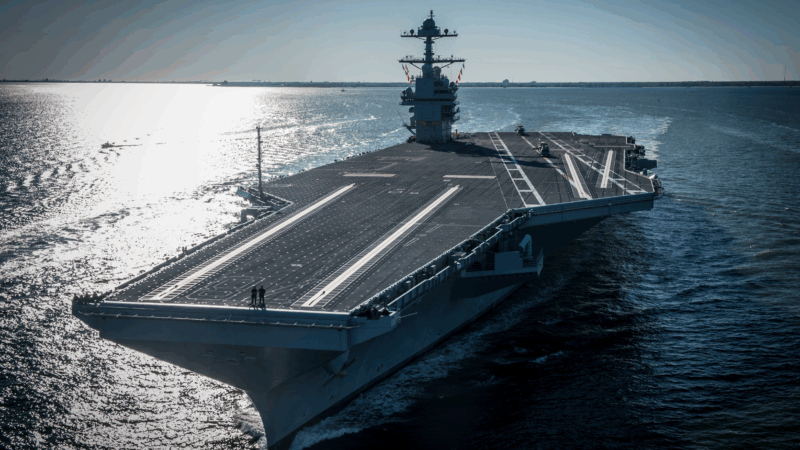
Iran and the U.S. lean into gunboat diplomacy as nuclear talks hang in balance
Iran and the United States leaned into gunboat diplomacy Thursday, with Tehran holding drills with Russia and the Americans bringing another aircraft carrier closer to the Mideast.
