
Wildfire smoke is like smoking ‘half a pack a day.’ Here’s how to protect yourself

This story is updated to reflect the current wildfire smoke conditions in the U.S. The original story was published Jan. 8, 2025.
Smoke from Canadian wildfires continued to prompt air quality alerts Monday in the Northeast U.S. as well as the Upper Midwest.
Michigan saw a statewide air quality advisory on Monday, and while Minnesota is seeing some relief, the wildfire smoke is persisting in Wisconsin, and spreading across New York, Vermont, and Maine.
Canada is experiencing its second worst wildfire season on record, according to government data. There have been nearly 4,000 fires recorded already this calendar year.
Exposure to wildfire smoke is a growing health problem across the country, as human-caused climate change increases the risk and intensity of wildfires and the smoke that can drift thousands of miles downwind from them.
Here’s what you need to know about the health risks — and how to protect yourself.
The health risks of breathing wildfire smoke
May-Lin Wilgus, a pulmonologist and professor at UCLA, compares breathing wildfire smoke to smoking cigarettes – a lot of cigarettes.
Scientists track air quality with the air quality index, or AQI, which incorporates different pollution sources like ozone and fine particulates. Many scientists don’t think there’s a “safe” AQI level because the measurement doesn’t capture many harmful pollutants, but under 50 is often considered acceptable. Higher numbers indicate more health-damaging pollution in the air.
On Monday the AQI in Detroit was at least 159. On a smoky day, when AQI levels reach 100 to 200, “the exposure to the fine particulate matter, the air pollution, is similar to smoking a quarter to half a pack a day,” Wilgus says.
That exposure takes a toll on a healthy person. But it is particularly harmful for those with pre-existing health issues, Wilgus adds. Emergency room visits for respiratory issues like asthma and COPD increase dramatically during wildfire smoke events, as much as doubling in some cases. During the Canadian wildfires in 2023, when smoke wafted across much of the U.S., emergency room visits for asthma increased by nearly 20%.
Smoke exposure can also worsen other medical conditions. Emergency departments see more cardiovascular related visits after smoky days. And a growing body of research suggests smoke exposure is linked to long-term impacts such as a higher risk of developing dementia.
Overall, air quality has improved in the U.S. over the past 20 years, says Tarik Benmarhnia, a climate and health scientist at the Scripps Institution of Oceanography at the University of California, San Diego. But wildfire smoke is erasing many of those gains.
“Just maybe like ten years ago wildfire was an exceptional issue. It was something that happens once in a lifetime for most people,” he says.
But climate change has increased the chance of wildfires across many parts of the country, and the intensity of many of the burns themselves and the smoke they produce.
“This is unfortunately not the first one and not the last one the people in Los Angeles are going to be experiencing,” Benmarhnia says.
Wondering what AQI is safe and what activities are safe at different AQIs? Life Kit explains.
The dangers of breathing wildfire smoke
Wildfires burn at extremely high temperatures, which makes their ash more toxic than other pollution, such as car exhaust. But in many cases, including during these ongoing fires, it’s not just trees and organic matter that burn. Homes, cars and other materials go up in flames, too, adding potentially harmful particles to the pollution load.
“It’s just a toxic soup,” says Lisa Miller, a wildfire smoke expert at the University of California, Davis. “Think of all the synthetic fibers that are present in your living room – in your couch, in your carpet, in your clothes. All those things can be particularly toxic” if they go up in smoke, she says.
Higher risks for some people
Wildfire smoke is hazardous for everyone, but it’s especially dangerous for some people, including children and older adults, pregnant people and anyone with preexisting health problems.
First responders and firefighters are exposed to the worst of the smoke. A 2019 study found that heavy, repeated smoke exposure among wildland firefighters is linked with higher risks of lung cancer and cardiovascular disease.
Children can be especially vulnerable, doctors say, because they breathe in more air – and therefore more smoke – relative to their body size.
Pregnant people should also take care, says Miller. There’s growing evidence that wildfire smoke exposure is linked with higher chances of preterm birth and lower birth weights, an outcome sometimes linked with health issues later in life.
Older people and those with preexisting health problems like heart issues are also at higher risk.
The Shots Blog breaks down advice for how to protect people who are more at risk from wildfire smoke.
How to protect yourself from wildfire smoke
“If you can smell smoke, those are times to limit your exposure as much as possible,” says Wilgus. She says the best way to protect yourself is to leave the area and get outside the range of the wildfire smoke, if possible.
If that’s not an option, she suggests staying indoors with the windows tightly shut. Limit your physical activity. Run an air filter if you have one.
If you have to go outside, consider wearing an N95 mask, which effectively blocks most tiny particles from getting into your lungs if worn correctly.
No level of exposure to wildfire smoke is completely safe, says Miller. But toxicologists have a saying, she says: “The dose makes the poison. It’s about how much, and how long, you’re exposed.”
That means everything you can do to limit the dose, she says, helps protect you.
For more tips, check out Life Kit’s guide.
Trump administration’s embattled FDA vaccine chief is leaving for the second time
The FDA's controversial vaccine chief, Dr. Vinay Prasad, is leaving the agency. It's the second time he has abruptly departed following decisions involving the review of vaccinations and specialty drugs.
Family, former presidents and a Hall of Famer give Rev. Jesse Jackson a final sendoff
Several speakers at Jackson's funeral invoked his hallmark catchphrases: "Keep hope alive" and "I am somebody."
Bernard LaFayette, Selma voting rights organizer, dies at 85
Bernard LaFayette, who died Thursday, laid the foundations of the Selma, Alabama, campaign that culminated in the passage of the Voting Rights Act. He was a Freedom Rider and helped found the Student Nonviolent Coordinating Committee.

Oil surges to its highest price since 2023, and stocks drop after U.S. jobs report
Stocks fell Friday on worries that the economy could become stuck in a worst-case scenario of stagnating growth and high inflation. Oil prices touched their highest levels since 2023 after surging again because of the Iran war.

No lawsuits required: U.S. Customs is working on a system to refund tariffs
U.S. Customs told the trade court it aims for a streamlined process in 45 days to return importers' money without requiring individual lawsuits.
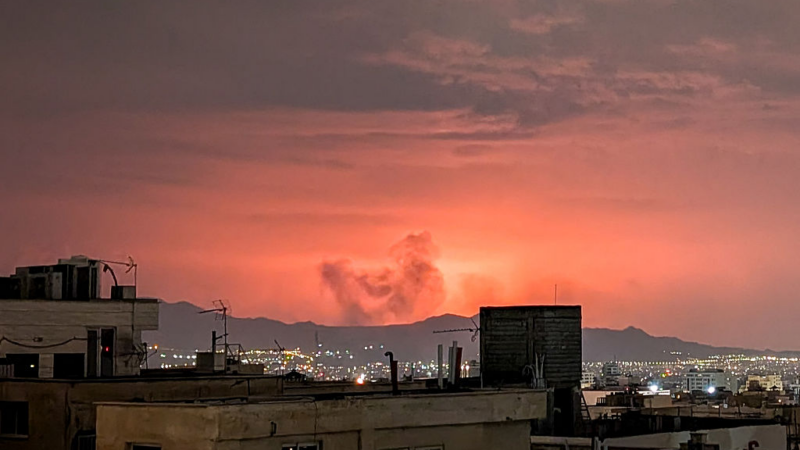
Poll: A majority of Americans opposes U.S. military action in Iran
Most Americans disapprove of President Trump's handling of Iran, and a majority sees Iran as either only a minor threat or no threat at all, an NPR/PBS News/Marist poll finds.
