
Why Trump wants companies to report earnings less frequently
Every three months, thousands of public companies big and small report their earnings and give investors an update about how they are doing.
Executives hate the practice: They say it’s expensive and laborious to compile the information — and leads companies to chase short-term wins rather than what’s good for their organization over the long run.
Now President Trump is taking up their cause. In a social media post, he called for companies to report their earnings every six months, which he says would benefit the country.
“This will save money, and allow managers to focus on properly running their companies,” Trump said in his social media post. “Did you ever hear the statement that, “China has a 50 to 100 year view on management of a company, whereas we run our companies on a quarterly basis???” Not good!!!”
But some investor advocates and many finance experts reacted with alarm, saying less frequent disclosures will lead to less transparency because companies could withhold important information for up to six months.
Prof. Salman Arif from the University of Minnesota’s Carlson School of Management says moving to reporting earnings twice a year could potentially lead to illegal activities by companies because there would be less chances for investors to scrutinize their financial numbers.
“If we want to reduce accounting fraud, reduce opportunities for insider trading, improve the strength of our capital markets, and allow companies to invest for the long run, I think more transparency is is truly beneficial,” Arif says.
Any action on disclosures would take a while
The Securities and Exchange Commission — the main regulator for stocks — has mandated since 1970 that companies report their quarterly earnings four times a year.
Bigger companies typically also hold investors calls in which executives take questions from analysts about their performance and give “guidance” of what to expect going forward. The process can sometimes lead to big drops in share prices if a company’s results significantly miss what investors were expecting, or if a company issues a disappointing guidance — and conversely, big gains if the company does much better.
Executives have long complained that being judged so frequently can lead to short-term thinking as companies try to please investors every three months. The Business Roundtable, which represents over 200 of the biggest companies in the U.S, has called for less frequent disclosures of earnings, writing that “earnings guidance all too often leads to an unhealthy focus on short-term profits, at the expense of long-term strategy, growth and sustainability.”
But finance experts warn that quarterly updates with investors act as an important check on company behavior. Arif says waiting up to six months for updates could lead to more volatility in share prices because investors would have less information and be more prone to being surprised by news.
“Disclosure is a type of sort of truth telling,” he says. “You’re trying to reveal what’s happening behind the scenes. And so if you don’t have to do that very often, there’s just more chances that the few numbers that you do report could be manipulated more easily.
Despite Trump’s call for less frequent earnings disclosures, any actual action to change how frequently U.S. public companies report their earnings would take a while.
Even during this first term, Trump similarly called for less frequent disclosures of earnings, but the SEC never meaningfully took up the proposal.
The SEC did not reply to a request for comment on Monday. Any move this time to change the decades-long practice of reporting earnings four times a year would require extensive consultation and debate — and would not be in place anytime soon.

Harrison Ford isn’t retiring: ‘I really wouldn’t know what to do with myself’
Ford struggled to find his footing in Hollywood before being cast as Han Solo in Star Wars. Now 83, he plays a therapist in the Apple TV series Shrinking: "I really do love the work," he says.
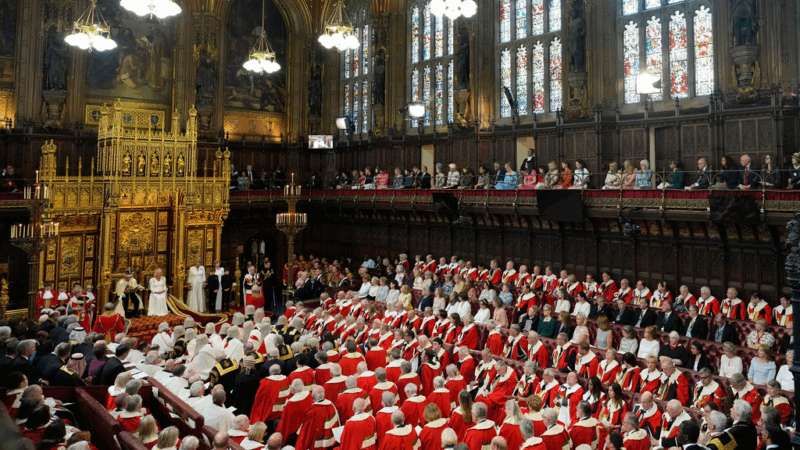
No Nobles Day: Britain’s Parliament boots its last hereditary Lords after 700 years
Government minister Nick Thomas-Symonds said the change put an end to "an archaic and undemocratic principle." The removed aristocrats are 92 of the House of Lords' 800 members.

On her new album, Kacey Musgraves returns home, to the ‘Middle of Nowhere’
Before making her upcoming sixth album, the country star returned to her small-town Texas home and discovered the power of in-between spaces. "I found a lot of clarity there," she says.

How the Iran war is disrupting air travel — and advice if you’re planning a trip
The war in Iran is roiling jet fuel prices and airlines are beginning to hike prices, unsettling travelers far from the Middle East. If you're booking a flight soon, here are things to know.

ChatGPT might give you bad medical advice, studies warn
New research finds AI can point people in the wrong direction. And the quality of health information it imparts depends on how well you prompt the tools.

Greetings from a Shanghai temple where you can ward off bad luck in the Year of the Horse
According to Chinese mythology, those born in the Year of the Horse will clash with Tai Sui, a heavenly general. Luckily, there are ways to appease Tai Sui, including amulets at Shanghai's Jade Buddha Temple.
