
Why there’s an unexpected surge in people claiming Social Security

Social Security retirement claims tend to follow a seasonal pattern each year, and they increase over time with the aging of the population, says Jack Smalligan, senior policy fellow at the Urban Institute.
But this spring, something different happened, he says: an unexpected surge in the number of people applying for retirement benefits.
Between January and May, the number of claims was nearly 18% higher than during the same period last year.
The surge is disconcerting, he says, “because for most individuals, it’s financially smart for them to postpone claiming as long as they’re financially able to.” That’s because the longer you wait to claim your monthly benefit, the more it grows.
“The question I have is, are these largely people who were planning to retire like six months from now, who have accelerated by a short period of time?” Smalligan says. “Or are they people who are making a much more fundamental shift in their retirement plans, in terms of claiming years earlier than they had been planning?”
Social Security is financed through a payroll tax. During your working years, you and your employer pay into the system. When you retire, your benefits are based on how much you (or your spouse) paid in and your age. The earliest anyone can claim benefits is age 62, and full retirement is between age 66 and 67. Once you reach age 70, the monthly benefit stops increasing, even if you further delay taking it.
Loading…
So what accounts for the uptick in claims? There are several factors at play.
In a statement to NPR, the Social Security Administration wrote that it had identified “three key reasons” that people are filing claims now: a peak of retiring Baby Boomers; a rule change that increases Social Security benefits for some people with pensions; and a bump in people who had been collecting spousal benefits re-filing to claim a higher benefit based on their own records.
But there appears to be another big factor among those in their 60s: worries about their economic future under the Trump administration.
‘We better get it while we can’
A slide from a now-deleted agency operational report in late April showed significant year-over-year increases in claims by 62-year-olds — the earliest age you can file.
Bill Armstrong is one of them. He lives in Berthoud, Colo., and says he “recently decided it was in my best interest to retire.”
His career was in IT, testing software. In recent years he was diagnosed with prostate cancer, was laid off from his tech job, and then weathered the ups and downs of government contract work. By last fall, he was applying for jobs, with no luck.
The November election result spurred Armstrong to consider filing for early Social Security benefits, he says. He worried about the direction of the economy, and his inability to get a job as the federal government cuts staffing and jobs in the private sector get harder to find. And he worried that the government would raise Social Security’s minimum retirement age.
“With the election and the impetus of Project 2025, I thought my career might be over as I know it,” he says. “I’m battling cancer, I’m married with a spouse, I’m single income. And I decided I better get in the system before they move that age higher.”
The last time Congress shifted the retirement age was in 1983, when full retirement was raised from 65 to 67, a change that was phased in over decades.
And although Social Security payments are called “entitlements,” Armstrong notes that they are earned.
“We all paid into those things. In my case, 42 years now,” he says.
President Trump has said he won’t touch Social Security. But that’s not putting everyone’s mind at ease. Armstrong says he knows plenty of other people making the same decision he did.
“We feel like that may be taken away from us, so we better get it while we can,” Armstrong says.
The former head of the Social Security Administration acknowledged those worries in a late March meeting that was posted on YouTube but later removed.
In the video, Leland Dudek, who was then the agency’s acting commissioner, says to another official, “So what you’re telling me is that [the pension rule change] put a strain on us being able to process claims. We have normal seasonal highs that are in that mix as well. And that fear mongering has driven people to claim benefits earlier, because they’re afraid they’re not going to claim benefits at all.”
“Yes, you’re exactly right,” the official replies.
‘I’ll just put it in the bank’
Karen Mccahey, 66, moved up her timeline once Trump took office.
“I was originally not going to claim until I was like 70. That was my goal. Because then when you claim it at 70, you get, of course, more money,” she says. But Mccahey, who lives in suburban Chicago, no longer wants to wait that long.

Some of her calculus is rooted in her fears of the Trump administration. She worries about how the administration would respond to another pandemic, and that potential cuts to Medicaid will make it harder than it already is to see a doctor. She used to anticipate living into her 80s, but not anymore.
“I know several people who died during the pandemic,” she says. “Plus I know people who are dying left and right of cancer, you know, around my age.”
So she figures she might as well get her benefits now: “I really don’t need the money, but I’ll just put it in the bank.”
But Mccahey knows that choice has financial repercussions: Her benefit will be lower for the rest of her life. And while Social Security benefits rise with inflation, money kept elsewhere may not.
Mccahey says her financial advisor always tells his clients to wait until age 70 to file. “And I agree with him,” she says. “But not now.”
‘A very consequential decision’
The analysis in late April by Social Security Administration staff found that the uptick in claims was especially pronounced among high-earning 62-year olds.
That’s likely because high earners can generally afford to put off claiming until later, when their benefit is higher. So an uptick in claims from this group could indicate that something other than financial need is behind their decision to claim now.
This decision can be even more important for women, who have a longer life expectancy than men.
For each year that you wait, your monthly benefit grows by 8%, notes Kathleen Romig, who directs Social Security and disability policy at the Center on Budget and Policy Priorities.
“So it’s a very consequential decision. It can mean hundreds of dollars every month and many thousands of dollars over your lifetime,” Romig says.
Smalligan says there have been very few proposals to raise the early retirement age — and changes like that would be a big deal.
“That would be years in the making before that happens,” he says. “I would not be advising people to act now on the basis of that fear. If Congress was to do something like that, they basically always build in a lot of lead time. So a change like that would not be made effective immediately, it would be made effective in five or 10 years from now.”
Romig says that she understands why people are anxious. Yes, there are long-term questions about sustaining the current level of benefits. But Social Security won’t just go away, she says.
“It’s in the law and only an act of Congress can change that,” says Romig. “And Congress would be foolish to try to take Social Security away at this point, when it’s so important in the fabric of American society.”
And, she says, “as long as people are paying into Social Security, then the benefits will be paid out. That’s how it works.”
Smalligan says while Congress needs to address the long-term funding of Social Security, “there’s no reason to think that people’s benefits are at risk.”
“I don’t think people should be claiming early because they think Social Security’s going to go away,” he adds. “It’s a very popular program for beneficiaries, as well as for Congress.”
One thing to note: If you do decide to file to receive benefits earlier than planned, and later regret it, you can withdraw your claim in the first 12 months after approval.
You’ll have to pay all the money back. But you can reapply later to claim your higher benefit amount.
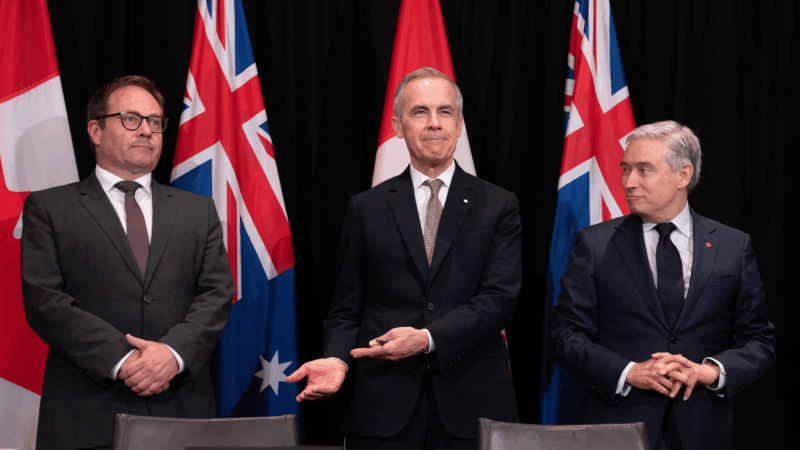
Carney says he backs strikes on Iran ‘with some regret’ as world order frays
Canadian Prime Minister Mark Carney says he supports the strikes on Iran "with some regret" as they represent an extreme example of a rupturing world order.
Iranian civilians are now fleeing the relentless bombing for neighboring Turkey
As the U.S. military broadens its strikes in Iran, traumatized Iranians are reaching the border with Turkey.
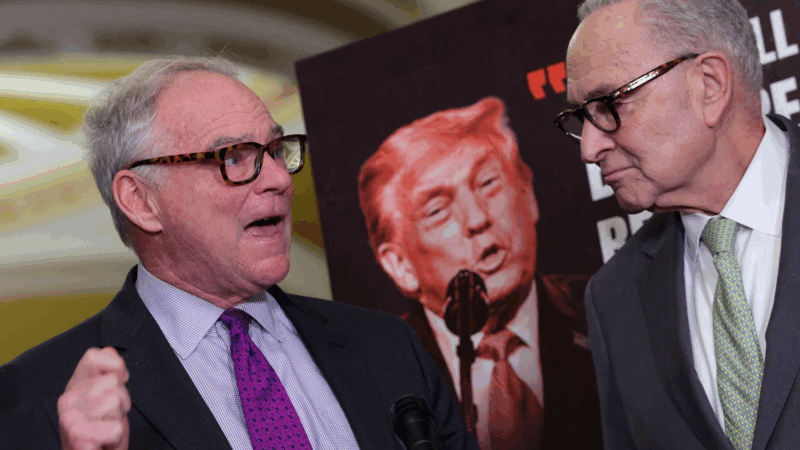
A split Senate votes against measure to constrain Trump’s authorities in Iran
Democrats in the Senate were facing an uphill climb Wednesday in their push to restrain President Trump's ability to wage war against Iran.
WATCH: How traffic dried up in the Strait of Hormuz since the Iran war began
The effective closure of the Strait of Hormuz is "about as wrong as things could go" for global oil markets. Iran achieved it not with a naval blockade, but with cheap drones.

As Mississippi waits to spend opioid settlement funds, children and families suffer
Mississippi will receive more than $400M to fight the opioid epidemic. So far, officials haven't directed it toward programs that support addiction recovery.
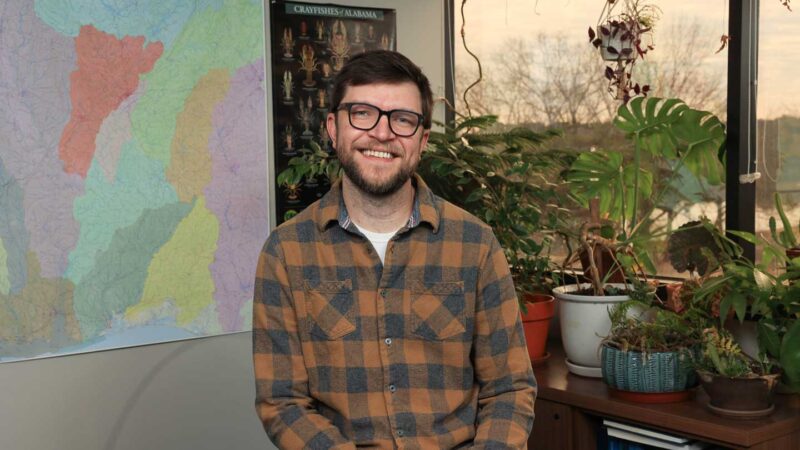
Alabama’s new state climatologist takes the reins
The controversial John Christy is retiring as Alabama’s state climatologist. Lee Ellenburg now assumes the role and is already making a few changes, including declaring that climate change is real and caused by humans.
