
Why oil prices are falling, and what it means for the economy

President Trump promised that during his presidency gasoline prices would drop and U.S. oil production would boom.
One of those things is happening.
Prices at the pump have indeed gone down, largely because the price of crude oil has dropped by nearly 25% since the start of January. West Texas Intermediate, the U.S. benchmark, dropped from a peak of around $80 a barrel in mid-January to just under $60 today.
But that’s not because U.S. producers are opening the spigot. Indeed, prices are now low enough that, on average, U.S. producers cannot profitably drill new wells, according to the latest survey data from the Dallas Federal Reserve.
Here’s a breakdown of the forces that are buffeting oil prices, and what it means for individuals and the economy.
Tariffs are creating economic uncertainty
Sweeping tariffs have raised concerns that trade barriers could slow down the global economy.
Oil demand is closely correlated with economic prosperity: When economies are booming, companies are opening factories, and people are buying things and going places, oil consumption climbs. When economies slump, so does oil demand.
And although environmentalists say that oil consumption must drop if the world is to meet climate goals, demand is still expected to rise this year — even with a trade war. The question is how much.
Analysts at Rystad Energy, a research company, have said that a trade war extending through 2025 could halve the expected growth in Chinese oil demand. Rystad’s global head of oil commodity markets, Mukesh Sahdev, wrote that the tariff situation is so atypical that comparing this year to last year “has become largely irrelevant.”
OPEC+ is putting more barrels on the market
Meanwhile, while there are concerns about a drop in oil demand, production is actually set to rise.
The oil cartel OPEC and its allies, collectively known as OPEC+, have made a series of announcements over the last few months, each increasing the group’s oil production. Most recently, on May 3, some members of the oil cartel that had previously volunteered to cut their production announced that they would unwind some of those cuts.
The news immediately sent the oil market downward; prices touched 4-year lows Monday before recovering.
In a press release, OPEC+ emphasized that its decision is based on “current healthy market fundamentals” — essentially, pointing out that while fears about the future have led to falling oil prices, demand today remains unwavering.
Analysts think there’s more than that going on. OPEC+ member countries agree to production quotas; when everyone sticks to them, it keeps supply limited and prices high. But data shows that some of the group’s members have been exceeding those quotas. This is a recurring problem for OPEC+; each individual country has an incentive to produce more, even as the group as a whole benefits if they all produce less.
Before the most recent OPEC+ gathering, analysts at Clearview Energy Partners predicted in a note that Saudi Arabia, the de facto leader of OPEC+, could urge the group to increase production and bring down prices “in an effort to pressure OPEC+ member countries including Iraq and Kazakhstan to comply with quotas.”
And indeed, the group did order a production increase.
Meanwhile, Trump has explicitly asked OPEC+ to produce more oil to bring down prices — although it’s not clear what influence that may have had.
A boon to consumers and a blow to producers
Lower oil prices mean lower prices at the pump. Gasoline prices usually go up in the spring, but went down in April, and could fall further. That means more money in the pockets of American drivers.
Lower fuel prices also lower the prices of goods in general, because it makes shipping cheaper. Pantheon Macroeconomics estimates that recent drops in oil prices will bring headline consumer prices down by about 0.3%, relative to where they would be otherwise.
But Pantheon also estimates that this benefit will be canceled out — on a national level — by the hit to oil producers, who will cut spending and hiring, sending ripples through the economy.
The U.S. is the largest oil producer in the world. And while companies in the U.S. are not party to OPEC+ negotiations, they are very much affected by OPEC+ decisions.
The combination of tariffs and OPEC+ production hikes has brought prices low enough to hamper U.S. production. In fact, U.S. oil producer Diamondback told investors this week that “it is likely that U.S. onshore oil production has peaked and will begin to decline this quarter.”
This runs counter to Trump’s vision of an expanding U.S. oil industry, summed up by his oft-repeated phrase: “Drill, baby, drill.”
That’s a tension that’s been at the heart of the president’s energy policy all along. The low prices he’s promised consumers and the boom he’s promised oil companies are simply incompatible.
House Dem. Leader Jeffries responds to air strikes on Iran by U.S. and Israel
NPR's Emily Kwong speaks to House Minority Leader Hakeem Jeffries (D-NY), who is still calling for a vote on a war powers resolution following a wave of U.S.- and Israel-led airstrikes on Iran.
Iran’s Ayatollah Ali Khamenei is killed in Israeli strike, ending 36-year iron rule
Khamenei, the Islamic Republic's second supreme leader, has been killed. He had held power since 1989, guiding Iran through difficult times — and overseeing the violent suppression of dissent.

Found: The 19th century silent film that first captured a robot attack
A newly rediscovered 1897 short by famed French filmmaker Georges Méliès is being hailed as the first-ever depiction of a robot in cinema.
‘One year of failure.’ The Lancet slams RFK Jr.’s first year as health chief
In a scathing review, the top US medical journal's editorial board warned that the "destruction that Kennedy has wrought in 1 in office might take generations to repair."
Here’s how world leaders are reacting to the US-Israel strikes on Iran
Several leaders voiced support for the operation – but most, including those who stopped short of condemning it, called for restraint moving forward.
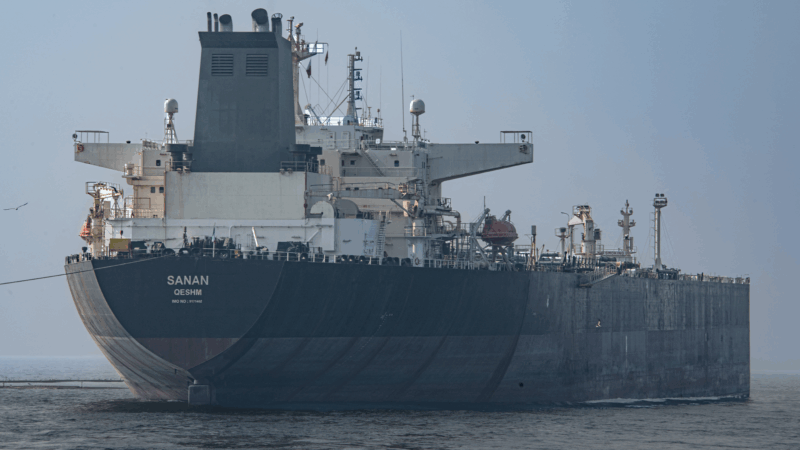
How could the U.S. strikes in Iran affect the world’s oil supply?
Despite sanctions, Iran is one of the world's major oil producers, with much of its crude exported to China.
