
Why inflation data won’t include prices from these cities in Utah, Nebraska and New York

Staffing shortages have forced the U.S. federal government to scale back the price checks it uses to calculate the inflation rate. Economists are warning that could lead to less accurate cost-of-living reports.
Every month, hundreds of government employees check the price of goods and services in cities around the country and those numbers are crunched to produce the inflation measure known as the consumer price index, or CPI.
This week, the Labor Department said it had cut back on price checks nationwide and suspended them entirely in some cities because it didn’t have enough people to do the work.
The agency suspended data gathering altogether in Lincoln, Neb., and Provo, Utah in April and halted it in Buffalo, N.Y., this month.
Federal government hiring freeze
The Bureau of Labor Statistics said in a statement that it “makes reductions when current resources can no longer support the collection effort.”
The federal government has been under a hiring freeze since President Trump took office. And since January, the overall federal workforce has been cut by 26,000, according to the Labor Department’s own tally — though the true size of the cutbacks is somewhat unclear.
The department said it expects the reduced data gathering to have “minimal impact” on the overall inflation rate, but warned it could cause more volatility in regional cost-of-living reports or the price information on particular items.
Government making educated guesses on prices of more goods
The cutbacks come as economists are on the lookout for signs that Trump’s tariffs could rekindle inflation.
“This is the worst possible time to make staffing cuts to the CPI of all data sources,” economist Ernie Tedeschi of the Yale Budget Lab wrote on social media.
“Note that staffing cuts don’t necessarily mean CPI will come in lower! The error could just as easily be a CPI that’s too high, and that’s also bad. We want accuracy as we try to navigate the uncertainty,” wrote Tedeschi, who served on the Council of Economic Advisers during the Biden administration.
For the April inflation report, which was published last month, the government was forced to make educated guesses about more prices than usual, using the price of similar items, said Omair Sharif who tracks the data for Inflation Insights.
“The federal government hiring freeze and the drive to cut funding across federal agencies may be starting to impact the quality of economic data,” Sharif wrote in an email.
Inflation numbers impact Americans in many other ways. They’re closely watched by the Federal Reserve as it sets interest rates, which affect businesses’ and families’ borrowing costs. They’re also used to make cost-of-living adjustments to government programs such as Social Security.
“It’s not a stretch to say that they affect the lives of everyday folks,” Sharif wrote. “Degrading the quality of these statistics only worsens future economic outcomes.”

Lack of transportation keeps many Alabamians from working. Rural public transit programs are trying to help
While lack of transportation is a major employment barrier in Alabama, few people take public transit to work. That dynamic is even more pronounced in rural areas.

When a horse whinnies, there’s more than meets the ear
A new study finds that horse whinnies are made of both a high and a low frequency, generated by different parts of the vocal tract. The two-tone sound may help horses convey more complex information.
Hundreds of American nurses choose Canada over the U.S. under Trump
More than 1,000 American nurses have successfully applied for licensure in British Columbia since April, a massive increase over prior years.
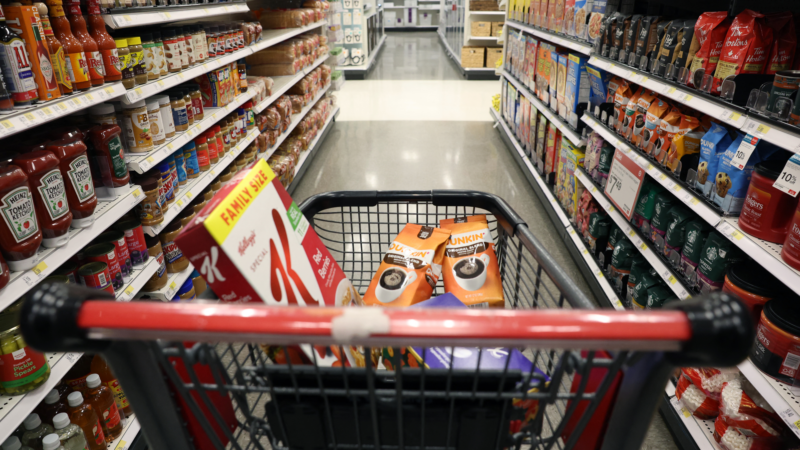
Trump’s many tariff tools mean consumer prices won’t go down, analysts say
The Supreme Court struck down President Trump's signature tariffs. But the president has other tariff tools, and consumers shouldn't expect cheaper prices anytime soon, economists say.
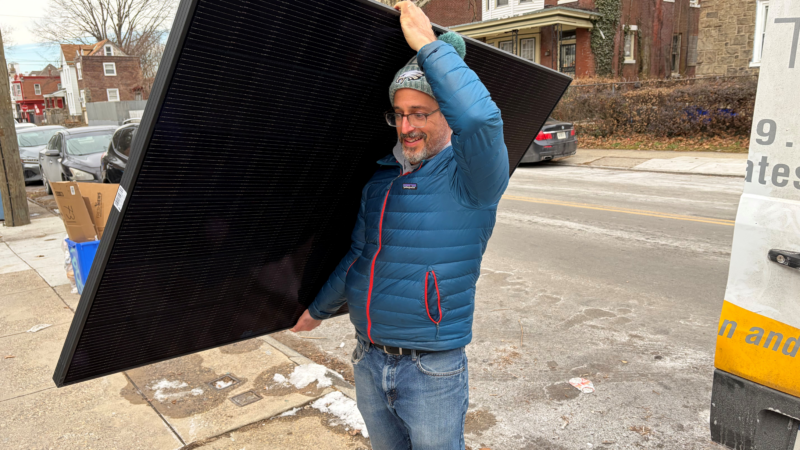
Tax credits for solar panels are available, but the catch is you can’t own them
Rooftop solar installers are steering customers toward leases instead of purchases. Federal tax credits for purchased systems have ended but are still available for leased ones.
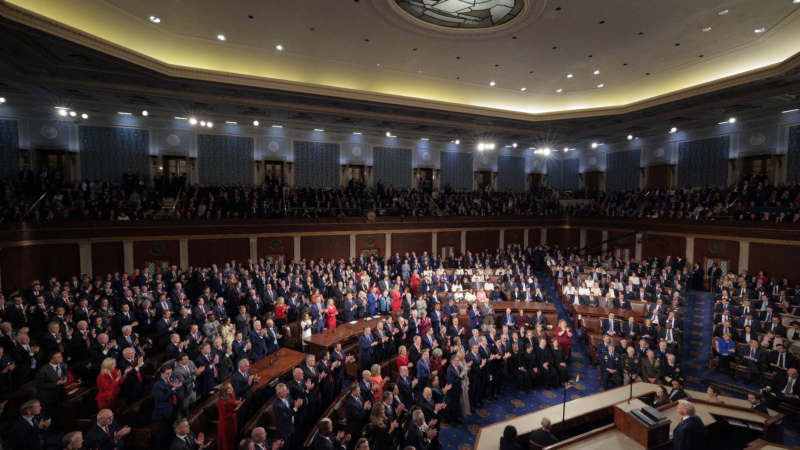
5 takeaways from Trump’s State of the Union address
President Trump hit familiar notes on immigration and culture in his speech Tuesday night, but he largely underplayed the economic problems that voters say they are most concerned about.
