
Who is Reza Pahlavi, the exiled Crown Prince encouraging demonstrations across Iran?
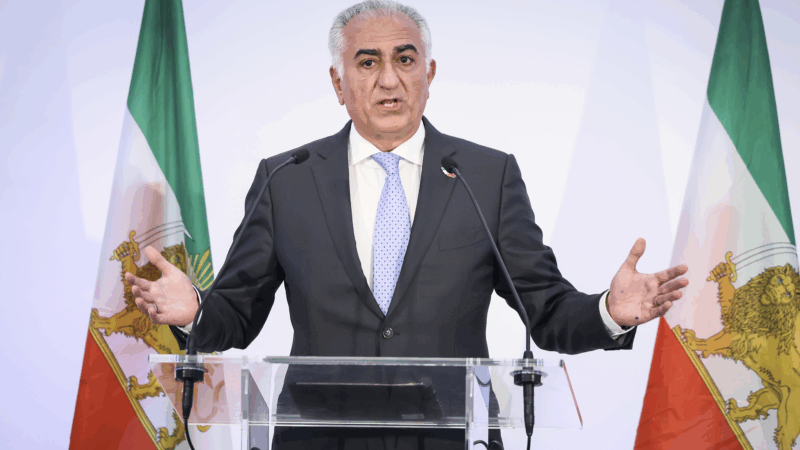
As the Islamic Republic of Iran nears two weeks of nationwide demonstrations, the government in Tehran has acknowledged the protests while continuing with a crackdown.
The death toll from clashes between protestors and government security forces had reached 116 as of early Sunday, with more than 2,600 people detained, according to the U.S.-based Human Rights Activists News Agency (HRANA). Among the most prominent cheerleaders for continued action against the government is Reza Pahlavi, son of the former Shah of Iran, who has issued frequent messages encouraging protesters.
Iran’s attorney general, Mohammad Movahedi Azad, announced Saturday that participants in the unrest would be considered an “enemy of God,” A statement, carried by Iranian state television, said even those who “helped rioters” would face that charge, which carries the death penalty.
The current wave of protests began on Dec. 28, following a collapse in the national currency, the rial, which is currently trading at over 1.4 million to the U.S. dollar and has lost half its value since September. International sanctions have squeezed the economy and the consequent public grievances have prompted direct challenges to Iran’s theocracy.
In response, the government has mobilized security forces and state-controlled media. State television has broadcast pro-government rallies, while at the same time surveillance footage released by the government affiliated Fars news agency depicted a protester in Isfahan allegedly firing a long gun as others lit fires and threw gasoline bombs at what appeared to be a government compound.Another government-affiliated news agency with close ties to Iran’s powerful Revolutionary Guard force, Tasnim, reported that authorities had detained nearly 200 people belonging to “operational terrorist teams,” alongside allegations those arrested had possessed weapons including firearms, grenades, and gasoline bombs.
A divisive figure
Amid these events, Reza Pahlavi, the 65-year-old exiled Crown Prince and son of the late Shah, Mohammad Reza Pahlavi, has re-emerged as a leading figure in the various Iranian opposition movements. In messages shared on social media, Pahlavi spurred protesters onto the streets Thursday night and Friday. He urged demonstrators to continue public street protests over the weekend, carrying the country’s old lion-and-sun flag and other national symbols used during the time of his father to “claim public spaces as your own.”
Despite being born in Iran, Pahlavi has lived in exile for nearly 50 years.
Born in Tehran in 1960, he was appointed Iran’s crown prince until the overthrow of his father – who had inherited the throne from his own father, an army officer who seized power with support from the British. After successfully riding rising oil prices during the 1970s, economic inequality had deepened during the last Shah’s rule, and his Savak intelligence agency became notorious for the torture of dissidents.
That Pahlavi dynasty ended in 1979 when millions across the country participated in protests against the shah, uniting secular leftists, labor unions, professionals, students, and Muslim clergy. Reza Pahlavi had left his homeland for flight school at a U.S. air base in Texas a year earlier, in 1978, and subsequently saw his father flee Iran during the onset of what became known as the Islamic Revolution, during which time Shiite clerics established a new theocratic government. After the death of his father, a royal court in exile announced that Reza Pahlavi had inherited the monarchical role of Shah on Oct. 31,1980, his 20th birthday.A leader for a future Iran?
Pahlavi’s efforts to position himself as a leader for a future Iran have prompted sometimes heated debates inside and outside the country. And while protesters have shouted in support of the shah in some protests, it is not clear whether that is support for Pahlavi himself or a desire to return to a time before the 1979 Islamic Revolution.
His public support of Israel has prompted significant criticism in the past from ordinary Iranians and other members of opposition groups, particularly after the 12-day war launched by Israel in June 2025.
He has sought to have a voice through social media videos, and Farsi-language news channels such as Iran International have highlighted his calls for protests. In press interviews, Pahlavi has repeatedly raised the idea of a constitutional monarchy, perhaps with an elected rather than a hereditary ruler, but has also stated it is up to Iranians to choose.

US military used laser to take down Border Protection drone, lawmakers say
The U.S. military used a laser to shoot down a Customs and Border Protection drone, members of Congress said Thursday, and the Federal Aviation Administration responded by closing more airspace near El Paso, Texas.

Deadline looms as Anthropic rejects Pentagon demands it remove AI safeguards
The Defense Department has been feuding with Anthropic over military uses of its artificial intelligence tools. At stake are hundreds of millions of dollars in contracts and access to some of the most advanced AI on the planet.
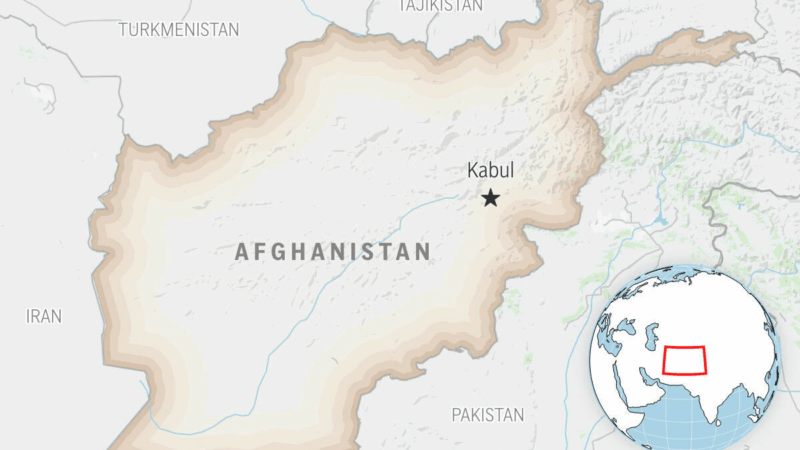
Pakistan’s defense minister says that there is now ‘open war’ with Afghanistan after latest strikes
Pakistan's defense minister said that his country ran out of "patience" and considers that there is now an "open war" with Afghanistan, after both countries launched strikes following an Afghan cross-border attack.
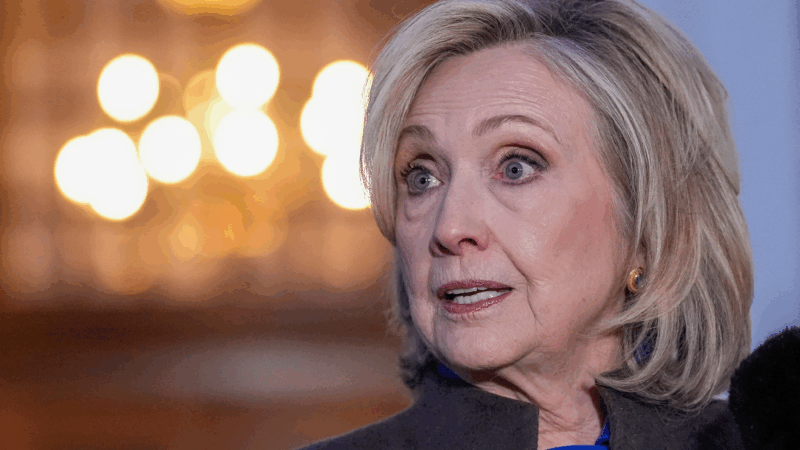
Hillary Clinton calls House Oversight questioning ‘repetitive’ in 6 hour deposition
In more than seven hours behind closed doors, former Secretary of State Hillary Clinton answered questions from the House Oversight Committee as it investigates Jeffrey Epstein.
Chicagoans pay respects to Jesse Jackson as cross-country memorial services begin
Memorial services for the Rev. Jesse Jackson Sr. to honor his long civil rights legacy begin in Chicago. Events will also take place in Washington, D.C., and South Carolina, where he was born and began his activism.

In reversal, Warner Bros. jilts Netflix for Paramount
Warner Bros. says Paramount's sweetened bid to buy the whole company is "superior" to an $83 billion deal it struck with Netflix for just its streaming services, studios, and intellectual property.
