
White House threatens layoffs — not furloughs — if the government shuts down

If the government shuts down on Oct. 1, the White House said it will look for ways to use the funding dispute to permanently eliminate some federal workers, rather than just temporarily send them home on unpaid leave.
This proposed “reduction in force” — outlined in a memo obtained by NPR on Wednesday — would be a significant shift from past government shutdowns, when employees have been temporarily furloughed until a budget deal is reached.
The White House Office of Management and Budget told agency heads that a funding lapse would give the administration the chance to issue “reduction in force” (RIF) notices to people who work on programs that are “not consistent with the president’s priorities.” The plans were first reported by Politico.
It’s the latest push by President Trump’s budget director, Russell Vought, to aggressively cut government programs created and funded by Congress, including foreign aid, spending on electric vehicle charging stations, and funding for the Corporation for Public Broadcasting. Vought has argued that presidents – rather than Congress – have considerable power to control more spending, Democrats and the nonpartisan Government Accountability Office (GAO) have disagreed.
House Republicans have passed a bill that would fund the government at current levels through Nov. 21. But in the Senate, where 60 votes are required to pass the bill, Democrats have insisted on adding a number of measures, including subsidies for Affordable Care Act insurance premiums. They are set to expire, hitting Americans who buy insurance on the Obamacare exchanges with shocking price increases this year.
Schumer calls the memo ‘an attempt at intimidation’
Democratic leaders had been set to sit down with Trump on Thursday to talk about the issues, but Trump canceled the meeting, saying Democrats were making “unserious and ridiculous demands.”
The White House said it supports the bill passed by House Republicans. In the memo, the OMB said its layoff notices could be avoided if Democrats decide to support the bill.
Senate Minority Leader Chuck Schumer, D-N.Y., called the memo “an attempt at intimidation” in a statement released late Wednesday night.
“This is nothing new and has nothing to do with funding the government,” Schumer wrote. “These unnecessary firings will either be overturned in court or the administration will end up hiring the workers back, just like they did as recently as today.”
Congressional Democrats are under intense pressure from their voters to stand up to Trump after they provided the votes to pass a six-month spending bill in March.
At the time, Schumer said that a shutdown would give Trump the power to pick and choose what departments and agencies to reopen.
The plan for layoff notices is a break from the Trump administration’s approach during his first term. In 2018, Trump refused to sign a bipartisan stopgap government funding bill because it didn’t include funding for his border wall, sparking a 35-day shutdown, the longest on record. But the administration worked to reduce the pain from the shutdown by keeping as much of the government open as possible, and pledging to give furloughed workers back pay as quickly as possible.

Israeli soldiers fire on family car in occupied West Bank, killing 4
Israeli soldiers fired on a car carrying a family in the northern West Bank, killing four people including two children, the Palestinian Authority's Health Ministry said.

U.S. military names six killed in plane crash as Iran war enters third week
The conflict in the Middle East has entered a third week, with Israel announcing a barrage of new strikes on western Iran on Sunday, while the U.S. defense department released the names of six service members who died when their military refueling aircraft crashed.
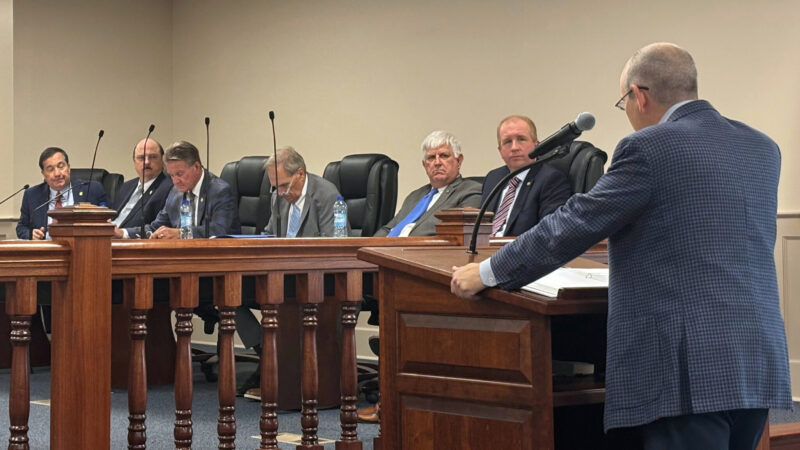
Alabama poised to drastically overhaul utility regulation. Will it lower electric bills?
The Alabama Senate unanimously voted to expand the public service commission, and create a Secretary of Energy to address rising electricity prices. A bill in the House would go even further, requiring rate case hearings and limiting utility profits.

Acclaimed 20th century philosopher Jürgen Habermas dies at 96
Associated with the Frankfurt School, Habermas was a world-renowned thinker on modernity and democracy who helped shape German post-war and post-reunification political discourse.

Why the Chicago Bears could be moving to Indiana
While Illinois is trying to keep the team in Chicago's suburbs, Indiana lawmakers are offering a plan to finance a new stadium

Pentagon tightens controls over Stars and Stripes after calling it “woke”
The new rules for the independent military newspaper are the Defense Department's latest effort to put extraordinary restrictions on journalists covering the agency.
