
Whether you’re driving or flying, here are travel tips for the Fourth of July weekend

This year, the Fourth of July falls on a Friday for the first time in more than a decade. And if you’re hoping to make a trip out of the long weekend, you’re not alone.
A record 72.2 million people will travel at least 50 miles from home in the window between June 28 and July 6, according to projections from AAA. It says that’s an increase of 1.7 million domestic travelers from this time last year.
“Summertime is one of the busiest travel seasons of the year, and July 4th is one of the most popular times to get away,” Stacey Barber, vice president of AAA Travel, said in a news release. “With the holiday falling on a Friday, travelers have the option of making it a long weekend or taking the entire week to make memories with family and friends.”
AAA is forecasting record highs of people traveling by both plane and car. The vast majority — 61.6 million people — are expected to drive to their destination, while another 5.84 million will fly.
Here’s what to know if you’re one of them.
If you’re driving
The transportation analytics company INRIX expects Wednesday, July 2, and Sunday, July 6, to be the busiest days on the road, especially in the afternoons. The best time to drive is before noon on weekdays and before 11 a.m. over the weekend.
For those renting cars, Hertz expects Thursday, July 3, to be the busiest day to pick up a vehicle.
If you’re driving your own car, AAA recommends getting routine vehicle maintenance and packing an emergency kit before you hit the road.
That should contain items including: a first-aid kit, basic tools, a blanket, a car cell phone charger, a flashlight with extra batteries, paper towels or wipes, drinking water, snacks, jumper cables, duct tape, an ice scraper and some sort of emergency warning devices like road flares or reflectors.
“Last July 4th week, AAA responded to nearly 700,000 emergency roadside assistance calls for issues like dead batteries and flat tires, plus people locking themselves out of their car or running out of gas,” the organization says.
Summer gas prices are at their lowest since 2021, according to AAA. Drivers can use websites like TollGuru and GasBuddy to find the cheapest refueling stops on their route.
AAA also recommends mapping your route, filling your tank and packing your trunk the day before departure, so all you have to worry about is getting a good night’s sleep and a filling breakfast.
And even if you’re not feeling sleepy during the drive, you should plan to take a break — either by switching drivers or pulling over for a short rest — about every two hours or 100 miles. Here are more road safety do’s and don’ts from NPR’s Life Kit.
If you’re flying
The Transportation Security Administration (TSA) says it is prepared to screen over 18.5 million travelers at airports nationwide between July 1 and July 7.
It expects Sunday, July 6, to be its busiest day, with a projected 2.9 million flyers passing through its checkpoints.
TSA says it is preparing for the rush by “deploying technologies and procedures to improve security and enhance the passenger experience, including for families.” But it’s urging travelers to do their part too.
“We ask travelers to pack their patience, especially during peak travel days, as we work to provide maximum hospitality to our customers,” Ha Nguyen McNeill, TSA acting administrator, said in a statement.
The agency is reminding passengers to bring their Real ID or an acceptable alternative, which is required for flying as of early May. And it recommends reviewing its travel checklist — and packing guidelines — to save time at the airport.
The trade association Airlines for America (A4A) encourages travelers to download their airline’s mobile app for real-time alerts and updates, reserve an airport parking space in advance if possible and make sure their Known Traveler Number (KTN) is linked to their reservation in order to make use of TSA PreCheck.
It also recommends leaving extra time to get to the airport, given holiday traffic. Most airlines recommend getting to the airport two hours before the scheduled departure time.
The five busiest airports for departures over the holiday weekend are Atlanta, Dallas Fort-Worth Denver, Chicago O’Hare and Los Angeles, according to the travel booking platform Hopper. It says the busiest times to depart will be between 8 a.m. and 12 p.m.
And, if you have any flexibility, it recommends flying as early in the morning as possible.
“In general, flights departing after 9 a.m. are 2X more likely to be delayed than departures scheduled between 5-8am,” Hopper says.
If you need a hotel
This year’s top Fourth of July domestic destinations include Orlando, Seattle, New York City, Denver, Boston, Miami and Atlanta, according to AAA booking data.
Hopper says it’s not too late to book a hotel room — whether you’re away from home or looking for a last-minute staycation.
It says hotels in big cities typically lower prices to fill empty rooms as check-in approaches, while there may also be last-minute hotel deals in cities that tend to empty out for the weekend. Either way, it recommends booking 12-48 hours in advance to score the best deal.

A new one-a-day-pill holds promise for HIV’s ‘forgotten population’
It's designed to take the place of complicated, multiple drug regimens that many people with HIV need to follow. And it's also beneficial because the HIV virus is always evolving.

For filmmaker Chloé Zhao, creative life was never linear
Director Chloé Zhao used meditation, somatic exercises and dance to inspire the cast and crew of this Oscar-nominated story about William Shakespeare's family.

10 new books in March offer mental vacations
March is always a big one for books – this year is no different. We call out a handful of upcoming titles for readers to put on their radars — offering a good alternative to doomscrolling.
Sen. Chris Coons, D-Del., talks about the war with Iran and upcoming war powers vote
NPR's A Martínez asks Delaware Democrat Chris Coons, a member of the Senate Foreign Affairs Committee, about the war with Iran.
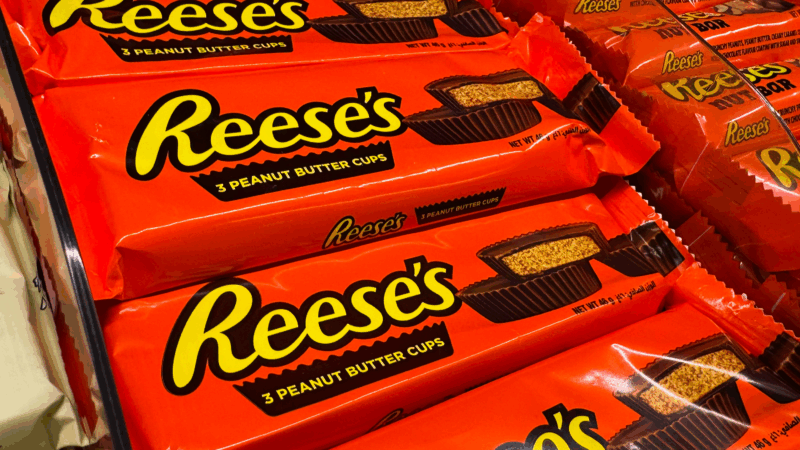
The candy heir vs. chocolate skimpflation
The grandson of the Reese's Peanut Butter Cups creator has launched a campaign against The Hershey Company, which owns the Reese's brand. He wants them to stop skimping on ingredients.

Scientists make a pocket-sized AI brain with help from monkey neurons
A new study suggests AI systems could be a lot more efficient. Researchers were able to shrink an AI vision model to 1/1000th of its original size.
