
Where has Trump suggested sending troops? In cities run by Democratic mayors
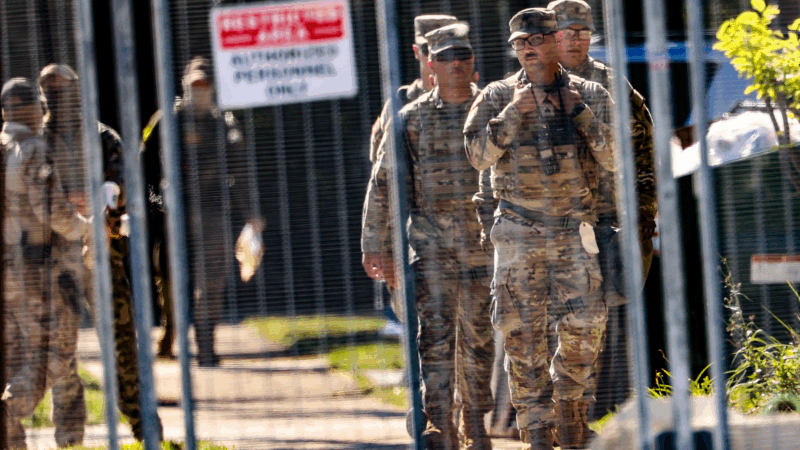
In his second term, President Trump has significantly escalated the use of the National Guard.
In just four months, Trump has suggested or ordered sending federal intervention to nearly a dozen cities — all run by Democratic mayors and in states mostly run by Democratic governors.
The Trump administration has argued that Guard forces are necessary to combat crime, quell protests, or safeguard ICE facilities and personnel. Meanwhile, critics have called it a dangerous abuse of power.
The troop deployments have sparked legal battles and protests. Here’s what to know.
Loading…
Illinois
For several weeks, Trump has threatened sending troops to Chicago, claiming that the city needs federal help to tackle crime. Meanwhile, Chicago Mayor Brandon Johnson, a Democrat, has argued that homicides, shootings, robberies and carjackings have all been declining.
The situation came to a head on Oct. 4 when Defense Secretary Pete Hegseth mobilized 300 members of the Illinois National Guard to Chicago. About 200 members of the Texas National Guard were also deployed, according to the U.S. military’s Northern Command. The Guard forces are assigned to protect ICE facilities and personnel, as well as other federal property.
In response, the state of Illinois and the city of Chicago filed a lawsuit against the Trump administration, alleging that the troop deployment is unlawful. On Wednesday, Trump suggested on Truth Social that Illinois Democratic Gov. JB Pritzker and Mayor Johnson “should be in jail” for failing to protect ICE agents.
On Wednesday night, the U.S. Northern Command said members of the Texas National Guard had begun operations to protect ICE and other government personnel in the greater Chicago area.
Then, on Thursday, a federal judge in Chicago temporarily blocked the Trump administration from federalizing and deploying the Guard in Illinois, member station WBEZ reported. The order will last 14 days. The administration is expected to appeal.
Oregon
On Sept. 28, the Trump administration activated 200 members of the Oregon National Guard for federal duty. It followed concerns by the Department of Homeland Security over protests near an ICE facility in Portland. Trump backed the move, calling Portland “war ravaged” and claiming ICE facilities were under attack by “domestic terrorists.”
Oregon Gov. Tina Kotek, a Democrat, has argued those claims are inaccurate. “City of Portland is safe. Local law enforcement has the situation under control,” she told NPR’s All Things Considered.
The state of Oregon and the city of Portland sued the Trump administration and asked for a temporary restraining order to block the troop deployment. U.S. District Judge Karin J. Immergut granted the temporary restraining order, saying the protests — which she described as having fewer than 30 people and “largely sedate” — did not justify a military response. The Trump administration later appealed.
Then, on Oct. 5, California Democratic Gov. Gavin Newsom said the Trump administration was sending the California National Guard to Portland. In a joint effort, Oregon and California officials challenged the move in court. In response, Immergut issued a broader order blocking any Guard deployment to Oregon.
On Thursday, a three-judge panel at the U.S. Court of Appeals for the Ninth Circuit held a hearing, but no ruling came from the bench.
Tennessee
On Sept. 15, Trump signed a presidential memorandum to set up a federal task force in Memphis — a move supported by Tennessee Republican Gov. Bill Lee. The directive claimed the city’s crime rates reached such “tremendous levels” that it had “overwhelmed its local government’s ability to respond effectively.” Memphis Mayor Paul Young, a Democrat, has asserted that the city has been making progress in reducing crime after a spike in 2023.
The task force involves agents from various federal agencies, as well as the Tennessee National Guard under the governor’s command. According to Lee, troops will be in support roles and not tasked with making arrests.
The task force began operations on Sept. 29. At a city council committee meeting on Tuesday, Memphis Police Chief Cerelyn “CJ” Davis said some Guard members were already in the city for planning purposes, while a larger number of troops are set to arrive on Friday.
Washington, D.C.
On August 11, Trump sent hundreds of Guard members to the streets of D.C. after declaring a “crime emergency” in the nation’s capital. The president also took control of the city’s Metropolitan Police Department for about 30 days. The moves came despite city data showing that violent crime had dropped to a 30-year-low last year.
Over the past two months, the Guard, which includes out-of-state troops, has been seen patrolling train stations and low-crime areas. Guard members have also been tasked with beautification efforts, like collecting trash, spreading mulch and fence painting. They have also packaged thousands of pounds of food.
As of Oct. 1, there were about 2,200 Guard members in D.C. Their deployment is expected to run through Nov. 30. The District of Columbia has filed a suit to end the troop deployment. A court hearing is scheduled for Oct. 24.
California
On June 7, Trump deployed the California National Guard to Los Angeles in response to protests over immigration raids in the city — some of which had turned into clashes with local police. In total, some 4,000 Guard troops and 700 Marines were deployed. The Pentagon began withdrawing troops in mid-July.
A legal battle has ensued, with the state of California accusing the Trump administration of exceeding its legal authority by deploying troops without the consent or input of the state’s governor.
About 100 Guard members remain in California for federal service, according to the U.S. Northern Command.
Next possible cities
Over the past few months, Trump has suggested sending troops to a handful of more cities, including New Orleans, New York City, Baltimore, San Francisco, Oakland and St. Louis, Mo., citing public safety concerns.
“We want to save these places,” Trump said on Sept. 15 after announcing the creation of the anti-crime federal task force in Memphis.
Some Republican-led states have welcomed the support. In Louisiana, Republican governor Jeff Landry requested federal assistance to activate up to 1,000 members of the Louisiana National Guard to combat “high crime rates” — not just in New Orleans — but also in Shreveport and Baton Rouge.
Missouri Republican Gov. Mike Kehoe authorized about 15 members of his state’s National Guard to help ICE with “administrative, clerical, and logistical duties,” member station STLPR reported. The move came at the request of the Department of Homeland Security.
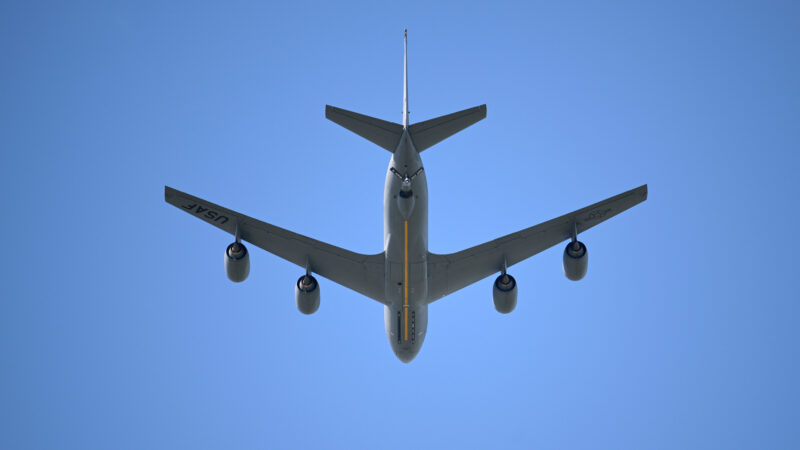
Crew of fatal US military crash included Alabama father recently deployed
The six U.S. service members who died in the crash of a U.S. military refueling aircraft included an Alabama father who had just been promoted and deployed. The U.S. government released the identities of the deceased service members Saturday.
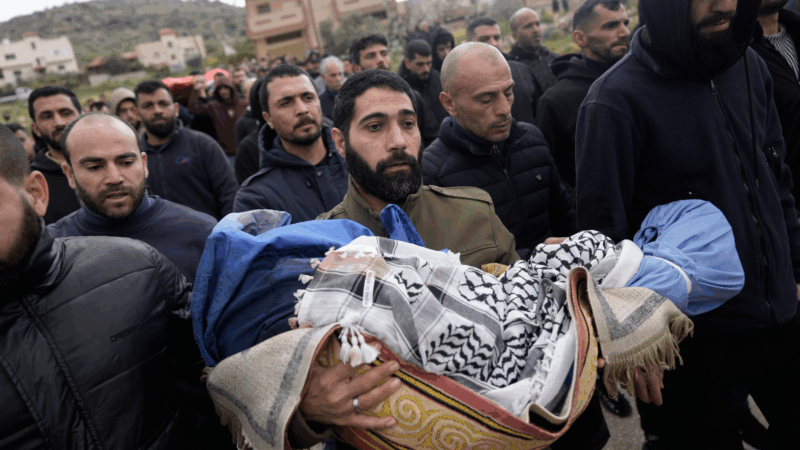
Israeli soldiers fire on family car in occupied West Bank, killing 4
Israeli soldiers fired on a car carrying a family in the northern West Bank, killing four people including two children, the Palestinian Authority's Health Ministry said.
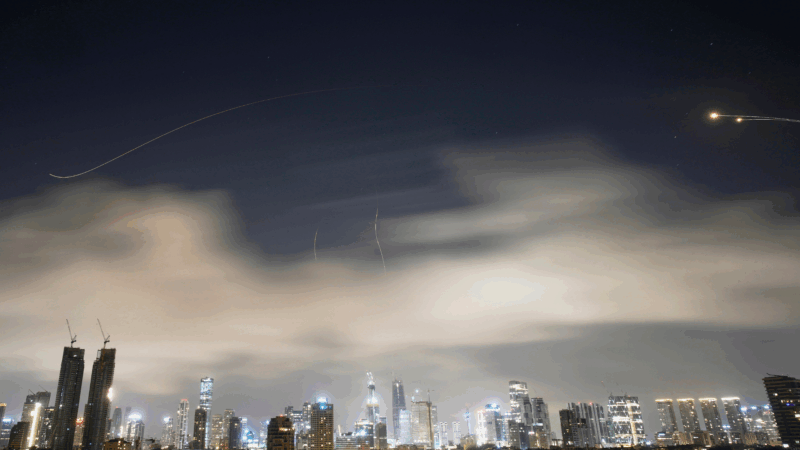
U.S. military names six killed in plane crash as Iran war enters third week
The conflict in the Middle East has entered a third week, with Israel announcing a barrage of new strikes on western Iran on Sunday, while the U.S. defense department released the names of six service members who died when their military refueling aircraft crashed.
Alabama poised to drastically overhaul utility regulation. Will it lower electric bills?
The Alabama Senate unanimously voted to expand the public service commission, and create a Secretary of Energy to address rising electricity prices. A bill in the House would go even further, requiring rate case hearings and limiting utility profits.

Sunday Puzzle: BAD!
Ayesha Rascoe plays the puzzle with KCUR listener Justin Marciniak and Weekend Edition Puzzlemaster Will Shortz.
Acclaimed 20th century philosopher Jürgen Habermas dies at 96
Associated with the Frankfurt School, Habermas was a world-renowned thinker on modernity and democracy who helped shape German post-war and post-reunification political discourse.
