
What you need to know as Russia’s full-scale war on Ukraine enters its 5th year
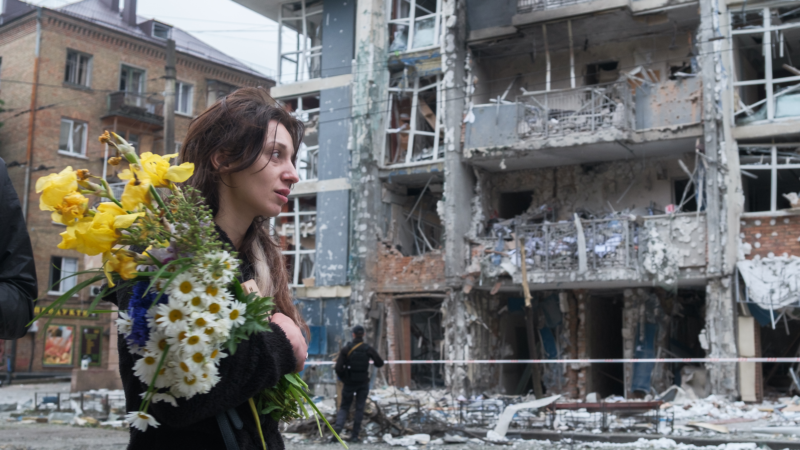
KYIV, Ukraine, and MOSCOW — When the Kremlin launched its all-out invasion of Ukraine in 2022, the assumption in Moscow, and much of the West, was that Russian forces would take the country in a matter of days.
Instead, what the Kremlin calls a “special military operation” has become the biggest land war in Europe since World War II and has lasted longer than the Soviet army’s fight against Nazi Germany. Russia’s war on Ukraine is a grinding war of attrition. Ukraine has managed to hold a much larger army to minimal gains while adjusting to a life under constant siege and grief. Both countries have suffered enormous casualties.
Efforts to find a negotiated settlement to the conflict appear largely at an impasse. During his campaign in the 2024 presidential election, Donald Trump famously claimed he could end the war in a day once he returned to the White House. A year of U.S. diplomatic efforts have brought Russian and Ukrainian envoys to the table but no closer to a consensus. Sticking points include claims over territory, reparations and security guarantees.
With the war now entering its fifth year, here is a snapshot of its key developments and where it may be headed in the future.
The battlefield picture
Loading…
Dynamic shifts on the battlefield — with large swaths of Ukrainian land changing hands in offensives and counteroffensives in the early years of the war — have since given way to a conflict of inches. At the height of Russia’s gains in 2022, its forces had seized more than 26% of Ukrainian territory, according to the U.S.-based Institute for the Study of War. Today Russia controls just over 19% of Ukraine, a figure that includes the Crimean Peninsula and parts of eastern Ukraine seized in 2014. Russia continues to have an advantage in men and matériel — factors that have led to recent territorial gains against overstretched Ukrainian defenses. Yet the Russian advance has come at a glacial pace and with enormous losses. For all the Kremlin’s claims of battlefield momentum, Russian forces have gained less than 1.5% of additional Ukrainian territory since 2023.
Drone war
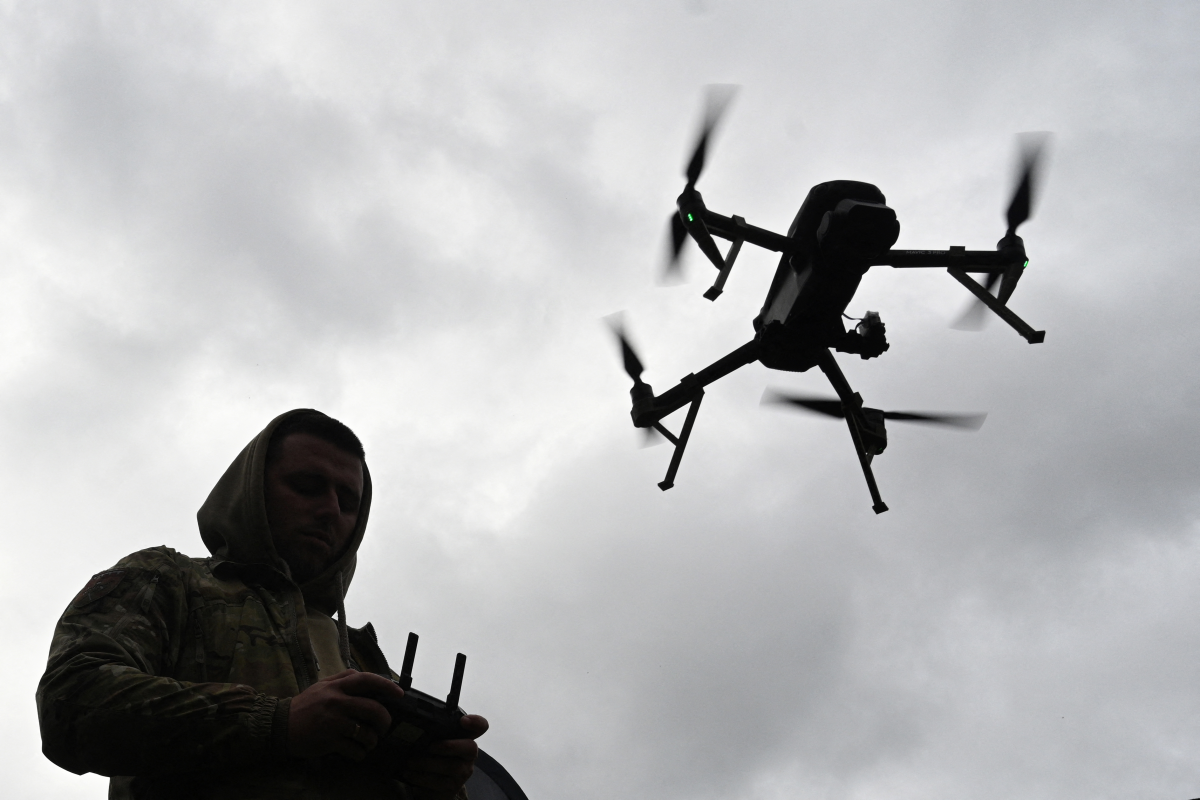
Technology has shifted the nature of the fight since 2022. Drones were initially used for reconnaissance and spotting enemy positions. Now nearly every Ukrainian and Russian unit uses drones fitted with explosives to carry out airstrikes on buildings, tanks and enemy positions — and even to chase down and kill individual soldiers. Russia regularly launches Shaheds, Iranian-designed attack drones that resemble small planes, at Ukrainian cities — often hitting homes and civilian infrastructure. Ukraine has also turned to air drones to routinely strike deep into Russian territory at the Kremlin’s war machine, including oil refineries, military airfields and ammunition depots. There are constant innovations. Russia introduced fiber-optic drones that overcome Ukrainian electronic jamming. Ukraine uses unmanned ground vehicles to evacuate the wounded, plant land mines and even launch assaults, and it has used sea drones to push Russia’s naval fleet out of the Black Sea.
Heavy military losses

Neither Russia nor Ukraine openly acknowledges the full extent of their own war casualties — those soldiers dead, wounded or missing. Meanwhile, outside analyses suggest staggering losses on both sides. Citing British and U.S. sources, the Center for Strategic and International Studies (CSIS) in Washington, D.C., puts Russia’s total losses at 1.2 million and Ukrainian ones at up to 600,000 from February 2022 to December 2025. Of those casualties, the dead are estimated at up to 325,000 for Russia and up to 140,000 for Ukraine. The CSIS study says Russia has suffered more losses than any major power in any conflict since World War II.
The toll on civilians
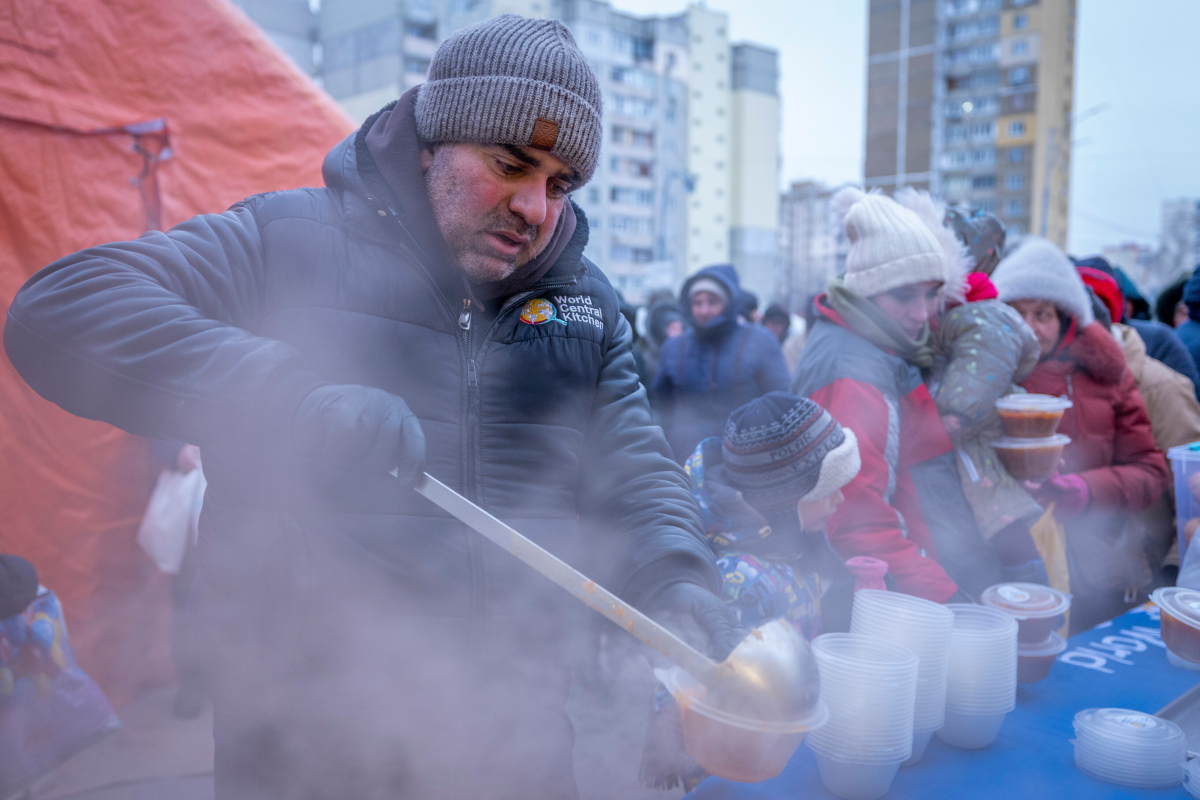
The U.N. Human Rights Monitoring Mission has confirmed through documented evidence that Russia’s war on Ukraine has killed more than 15,000 Ukrainian civilians and injured another 41,000. The real count is likely higher because U.N. human rights workers have not been able to access Russian-occupied areas like the southern port city of Mariupol, where human rights groups say thousands were killed, to independently confirm deaths.
In the year the Trump administration has sponsored talks to end the war, U.S. aid to Ukraine declined dramatically — by 99%, according to the Kiel Institute for the World Economy in Germany. Ukraine can secure U.S. weapons only by buying them from Europe. Though the Europeans have stepped up to some extent, the loss of military aid — especially air defense supplies — have affected Ukrainian life. In 2025, more Ukrainian civilians were killed and injured by Russian attacks than in 2024. Russian missile strikes have also destroyed most of Ukraine’s energy grid, leaving Ukrainian cities without electricity and heat for weeks during the coldest winter in years. Russia’s border regions have also faced hardships, as Ukrainian drone attacks knocked out heat and power for local residents in reciprocal attacks.
War refugees
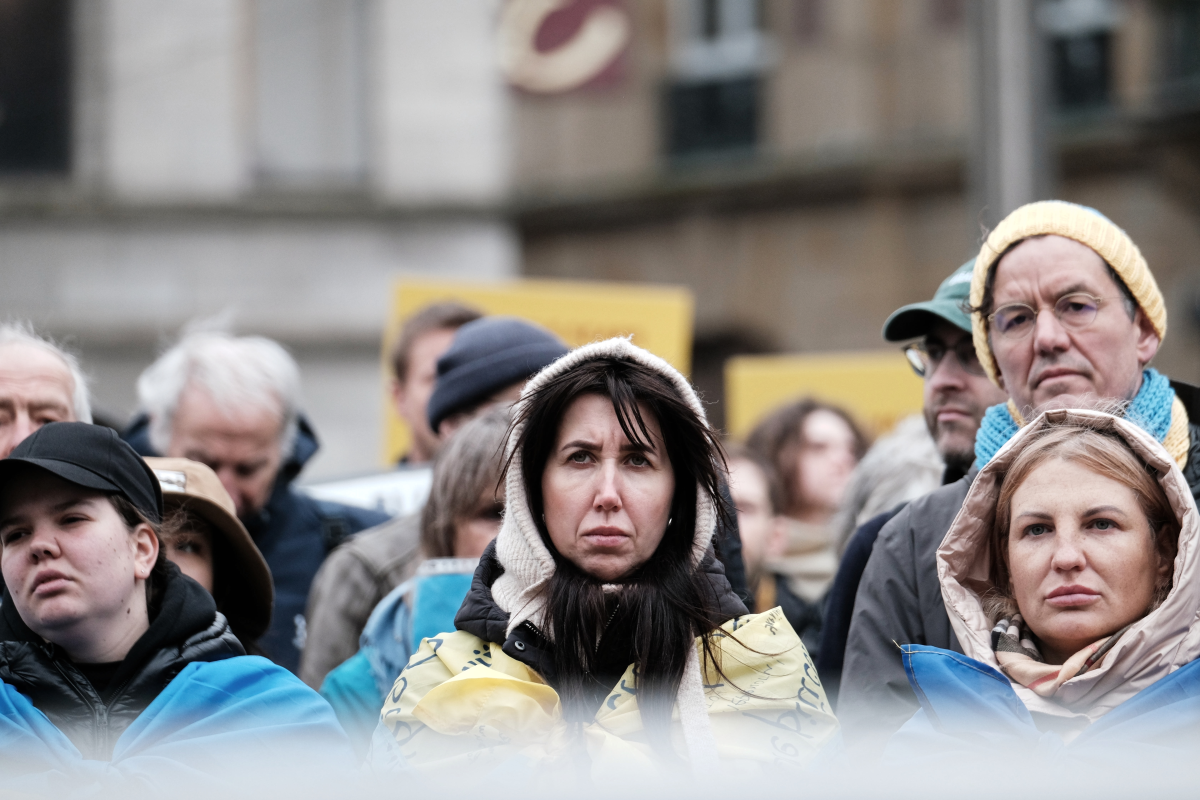
The fighting has also displaced about 3.7 million Ukrainians internally and forced more than 5.3 million to leave Ukraine as refugees, according to the International Organization for Migration. Meanwhile, Russia experienced its own exodus, with young Russian men in particular fleeing the country to avoid conscription into the war. While estimates vary, studies say between 500,000 and 1 million people have left Russia since 2022, likely the largest population migration out of the country since the Bolshevik Revolution of 1917.
The missing Ukrainian children

Ukraine says some 20,000 Ukrainian children have been deported or forcibly moved from occupied territories by Russian authorities. An initiative led by Ukrainian President Volodymyr Zelenskyy, Bring Kids Back UA, says it has managed to repatriate about 2,000 of them. Zelenskyy said late last year that Ukraine has identified 400 locations in Russia with abducted Ukrainian children.
Investigators with Yale University’s Humanitarian Research Lab revealed last September that Russia is routinely stripping these children of their Ukrainian identity and even forcing some to undergo military training. Russia has argued it merely removed children from the front lines of the war to safety. But in March 2023, the International Criminal Court (ICC) issued an arrest warrant for President Vladimir Putin and his commissioner for children’s rights, Maria Lvova-Belova, on charges of war crimes. Russia has rejected the ICC order, noting that it is not a signatory to the ICC charter and does not recognize the court’s authority.
Repression in Russia

Following the 2022 invasion, the Kremlin passed a web of repressive laws effectively outlawing criticism of the war effort or government. The laws forced the closure and exile of leading independent media outlets and have had a profound impact on what information Russians access and share online and in their daily lives. Major social media platforms, like Facebook and YouTube, are now blocked. Authorities have also tarred critical voices as “foreign agents” and civil society groups as “undesirable,” effectively criminalizing their work in Russia.
Leading opposition figures have also been detained. In a particularly searing moment, Russian opposition leader Alexei Navalny died in a remote Arctic prison under mysterious circumstances in February 2024. A recent report issued by five European countries claims that analyses of Navalny’s remains “conclusively confirmed” traces of epibatidine, a deadly frog toxin native to Latin America. The Kremlin continues to maintain that Navalny died from natural causes.
Western sanctions
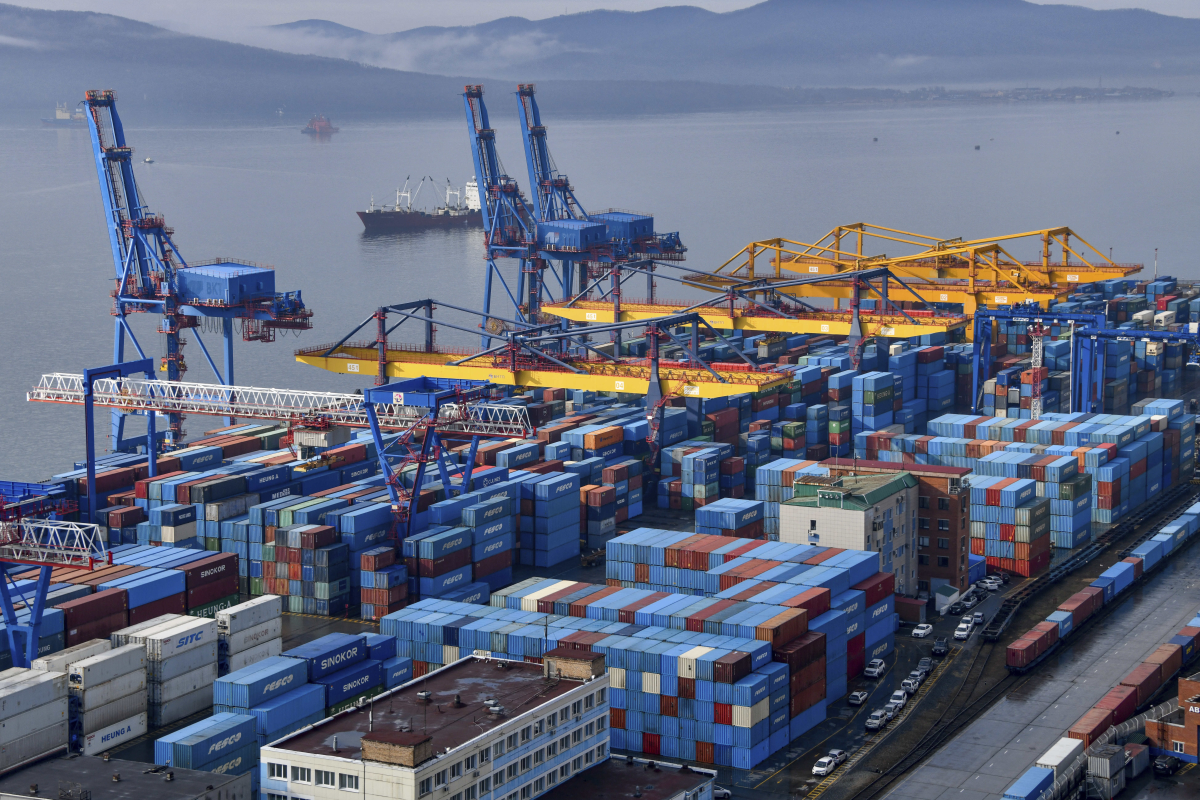
Four years of unprecedented Western sanctions have bent but not broken the Russian economy. An exodus of Western brands, including McDonald’s, Starbucks and Apple, allowed Russian companies to mop up market share. The Kremlin has pivoted its economy away from Europe and toward Asia and the Global South. Russian energy sales to China and India, in particular, have buoyed the Russian war machine. Some goods entering from neighboring states such as Kazakhstan have meant that even brands that abandoned Russia can still be found.
Yet robust growth during the early years of the war, fueled by military expenditures, looks increasingly in jeopardy. Growth dropped off significantly in 2025 to 1%, with a contraction possible this year. The Trump administration has imposed sanctions on two of Russia’s top oil exporters and threatened tariffs on Indian imports if India continues buying Russian crude.
The Trump factor
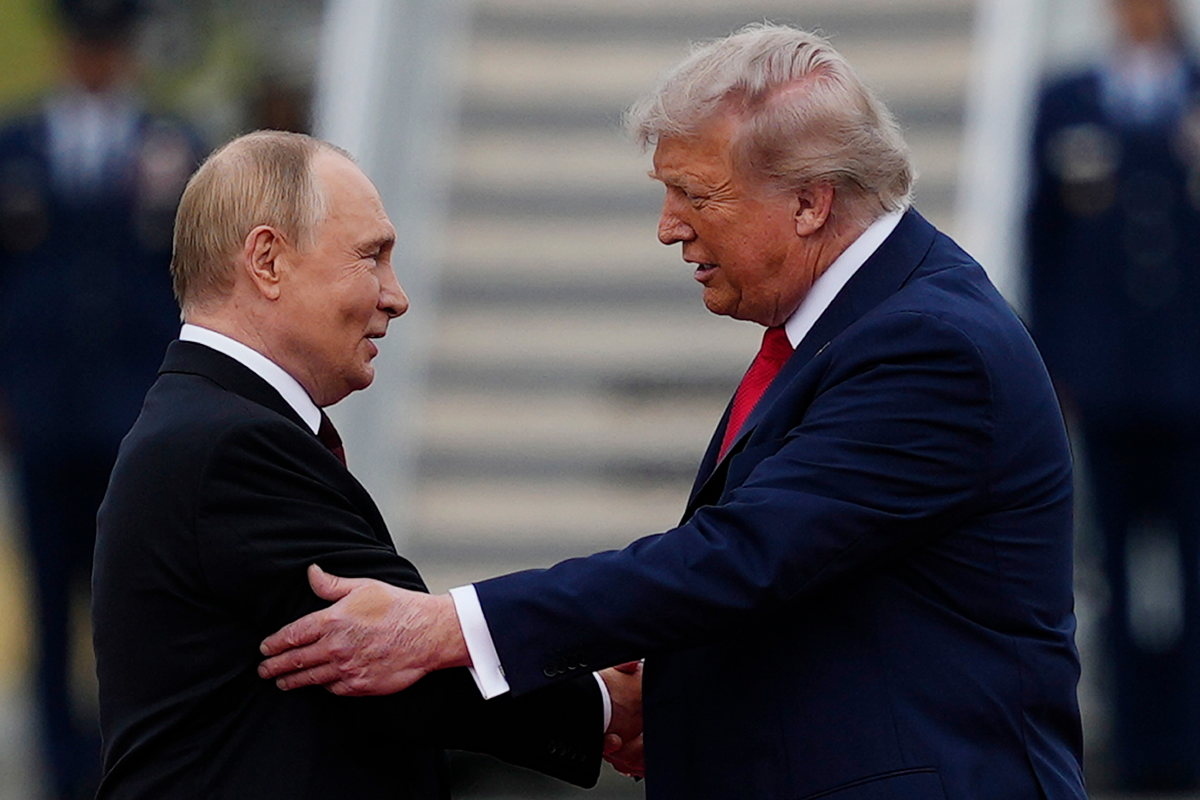
President Trump returned to office promising he could negotiate a quick end to the conflict. It has proved, by his own admission, more challenging than he expected. Trump has occasionally expressed frustration with Putin for continuing to pummel Ukrainian cities, and he also approved sanctions on Russian energy giants Lukoil and Rosneft. The U.S. president and his envoys, however, have often parroted Russian talking points while repeatedly pressuring Zelenskyy for major concessions. The Kremlin has also suggested that the U.S. stands to gain trillions of dollars in investment returns in Russia once a peace settlement is reached and Western sanctions are lifted.
Peace negotiations
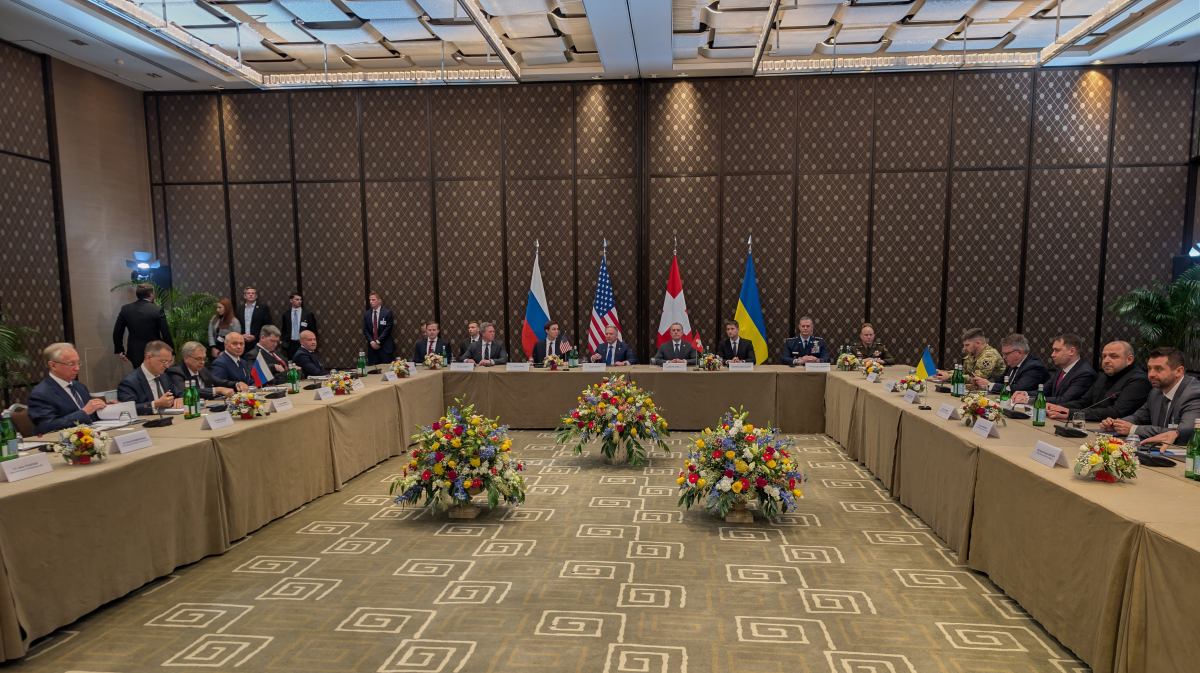
Trump has gotten the two sides to the negotiating table, but months of these U.S.-led talks have been bogged down by Kremlin ultimatums that Ukraine surrender territory, including land not controlled by Russia. Kyiv has refused those demands. Zelenskyy says he’s open to U.S. proposals to create a demilitarized zone, if Russia agrees to withdraw some forces and the U.S. and European allies offer Ukraine ironclad security guarantees. The Kremlin has equated European offers to send peacekeepers as akin to Ukraine receiving NATO-like guarantees, one of Putin’s stated justifications for launching the invasion in the first place. Kremlin negotiators routinely refer to NATO’s expansion eastward as one of the “root causes” of the conflict that must be addressed for any lasting peace to emerge.
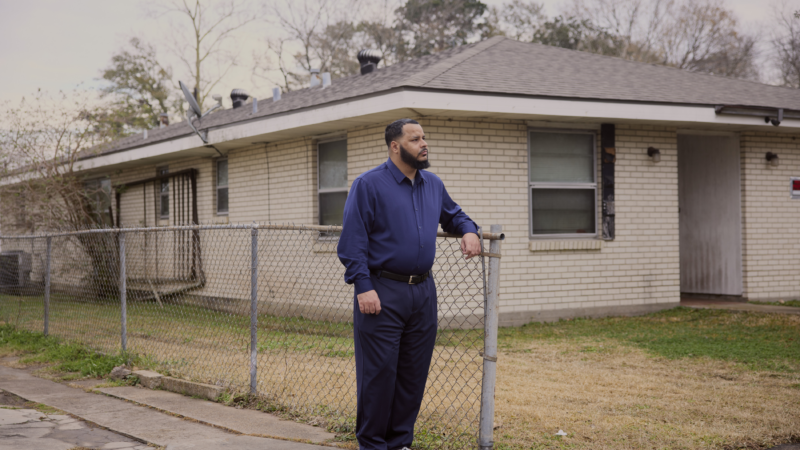
Where patients live matters for access to gene therapy
Gene therapies have the potential to cure some diseases, but they are extraordinarily expensive. Location can also be a big hurdle for patients seeking this specialized care.
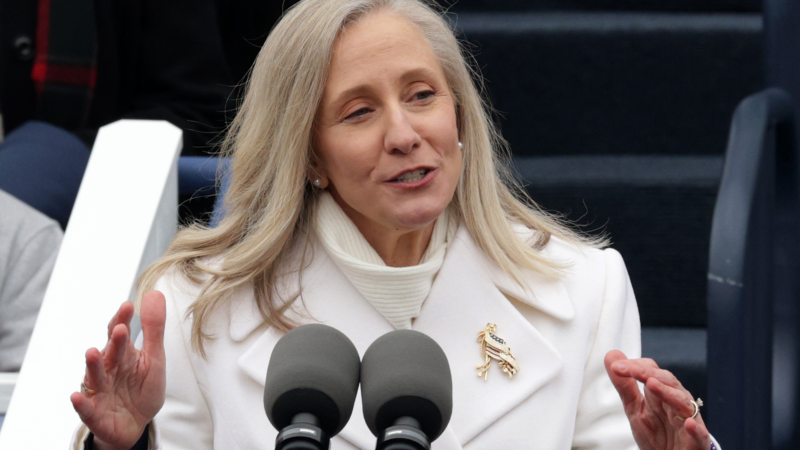
Democrats tap Spanberger and Padilla to respond to State of the Union
Virginia Gov. Abigail Spanberger will deliver Democrats' response on Tuesday following President Trump's State of the Union address.
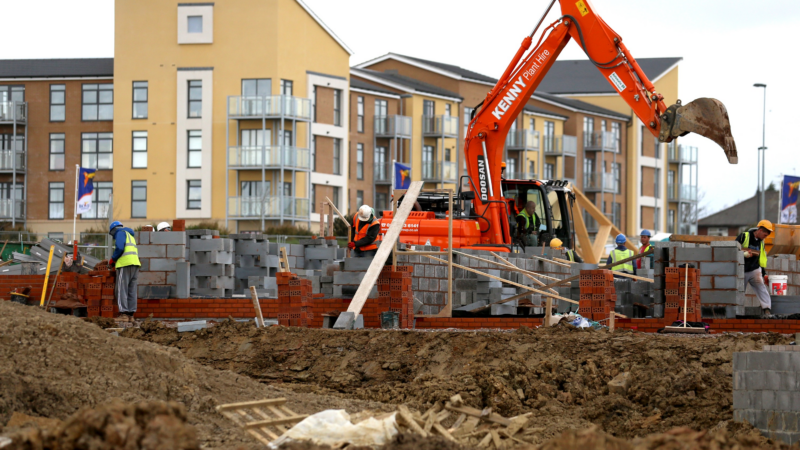
Is the YIMBY movement doomed?
For decades, rising home prices have been an engine for middle-class wealth. Now a growing movement wants to slow — or even reverse — that trend. Are the politics around new housing development inherently stacked against them?
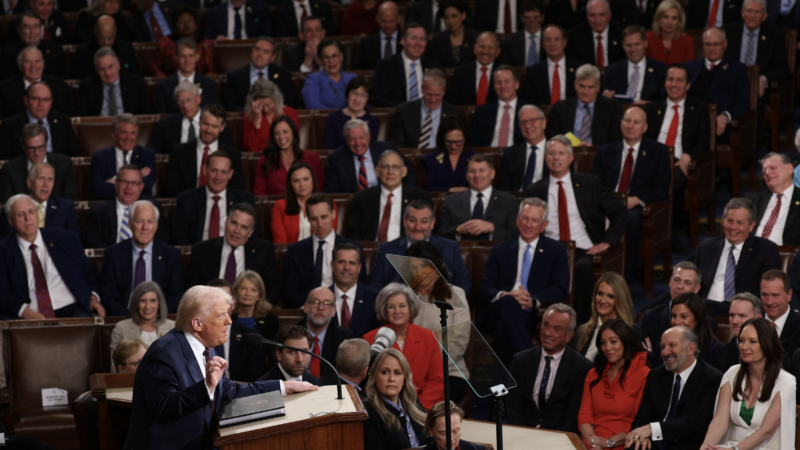
What you need to know about tonight’s State of the Union address
The prime-time address is a chance for the president to tout his record ahead of this year's midterm elections. But it comes at a moment when Trump has seen his agenda complicated on multiple fronts.
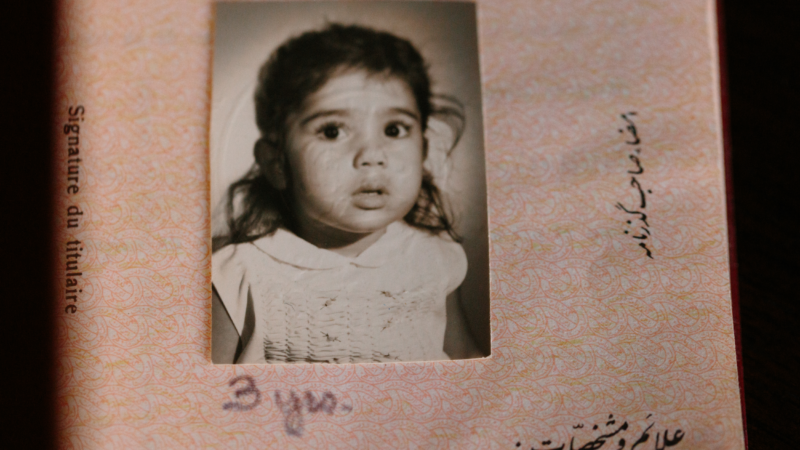
A U.S. veteran adopted an orphan from Iran. Decades later, ICE is trying to deport her
The woman has no criminal record and is unsure what prompted the threat of removal. She fears being deported to Iran given her father's military service and her Christian faith.
‘Fear of Flying Clinic’ helps anxious travelers back into the skies
For 50 years, a San Francisco-based group has created a space where fearful flyers can get supported exposure to air travel.
