
What killed Napoleon’s army? Scientists find clues in DNA from fallen soldiers’ teeth
By 1812, Napoleon was all powerful. Nearly all of Europe was under his control. He had succeeded in forbidding most of the continent from trading with Britain in an effort to bring the island nation to heel. And he was married to Marie Louise, daughter of the emperor of Austria, a major superpower at the time. (The dazzling emerald and diamond necklace that he gifted her when they were wed was one of the objects stolen in last weekend’s heist at the Louvre.)
But the Russian Empire had been resisting his efforts to cut off all trade with Britain. That summer, he ordered his army, some 600,000 strong, to invade Russia. It would prove to be a terrible decision.
“This is one of the most infamous military campaigns in the last centuries,” says Nicolás Rascovan, the head of the microbial paleogenomics unit at the Pasteur Institute in Paris. “He believed that he was going to be able to conquer the whole world, more or less. It was probably the beginning of the end.”
In October, Napoleon called his soldiers back after barely engaging the Russian army. It wasn’t a defeat, but it was no win either. And during the march home, winter arrived early.
“They started to die of cold, hunger, and also infectious diseases,” says Rascovan. All told, hundreds of thousands perished.
And in a new study published in the journal Current Biology, Rascovan and his colleagues say those diseases likely include two unexpected pathogens that would have helped hasten the soldiers’ demise.
Combined with earlier work, it’s become clear that these men were under microbial assault on all fronts.
“These wars were anything but glamorous,” says Michaela Binder, a bioarchaeologist with Novetus, an archaeology company based in Vienna, who wasn’t involved in the study. “For some of them, the death in battle would have been a relief.”
A rich and bloody history, reconstructed
Typhus and trench fever have long been thought to be among the afflictions that Napoleon’s soldiers suffered. This is based on a mix of historical accounts, the discovery of body lice on the remains of soldiers (which carried the pathogens that transmitted the ailments), and DNA analyses conducted nearly a decade ago.
But molecular techniques have improved dramatically since then.
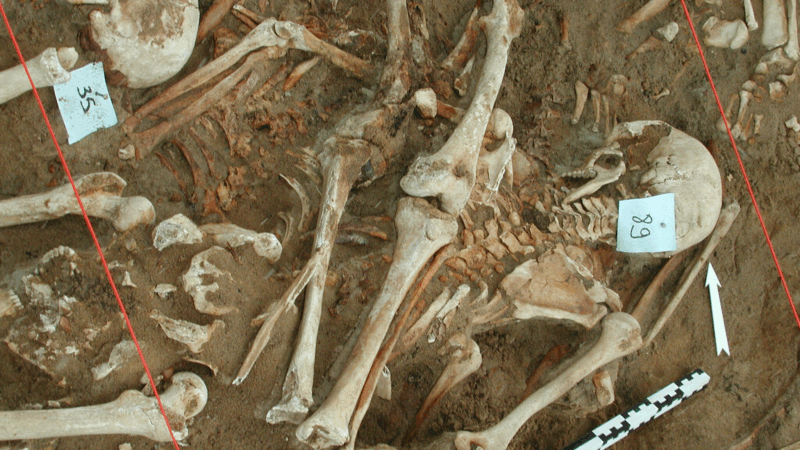
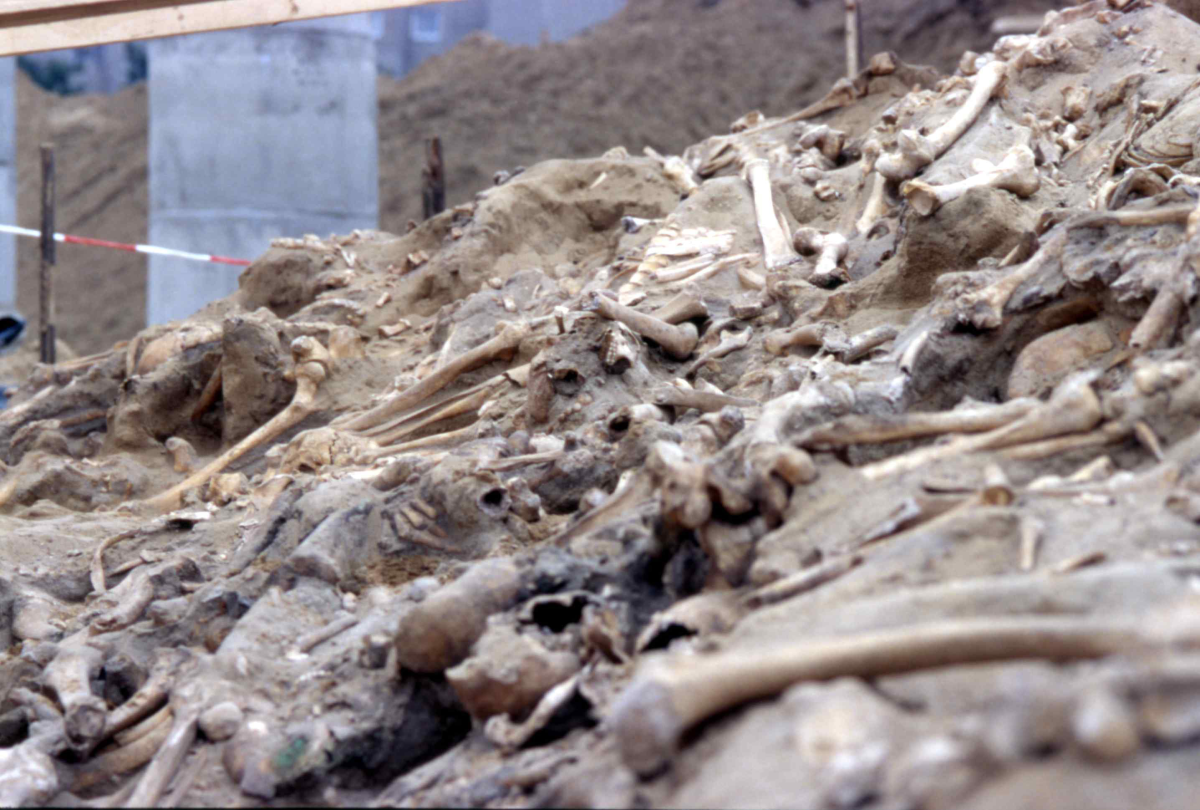
And so a pair of archaeologists asked Rascovan, who studies the DNA of ancient pathogens, to see what other afflictions he might be able to turn up in the remains of a mass grave in Lithuania. The site had been discovered accidentally during a construction project in one the northern suburbs of Vilnius in 2001. Two-to-three thousand of Napoleon’s men had been buried there soon after they died.
“Europe has such a rich history that we have archaeological sites pretty much everywhere,” says Rascovan. “So you dig a hole in the ground and then you find something.”

Among the remains that the archaeologists had unearthed were 13 teeth, each from a different soldier. These teeth would have had blood flowing through their interiors long ago.
“If you have DNA of the pathogen in the blood because you have an infection, that DNA can get into the tooth,” explains Rascovan. “So then it’s kind of a time machine in which you can really see the blood of the individual back then.”
Only after decontaminating the teeth, grinding them into a powder, and dissolving the bone dust could the ancient DNA be studied. But naturally, that genetic code was in rough shape. It consisted of super short fragments that had undergone chemical changes.
Rascovan sequenced all of it. Some of the genetic material came from the soldiers themselves. Some of it derived from organisms in the soil in which they were buried. And some of it — perhaps — was from pathogens that helped kill these men.
“Once we have a huge list of all the different things that have been detected, we try to find which are the species that match a human pathogen,” he says. “It’s like doing a puzzle.”
‘A story of hardship’
After Rascovan and his team finished that puzzle, they had two hits. Both of them were bacteria: one that caused paratyphoid fever and the other relapsing fever, a pathogen transmitted by body lice that dated back to the Iron Age.
“This paper shows clearly how complex these types of analyses are and the extreme level of skill required to work with these types of data,” says Leslie Quade, a paleopathologist at the Austrian Archaeological Institute who didn’t participate in the research.
She says that discerning the emergence, spread, and evolution of diseases in the past can also help us navigate the pathogens of today.
“Understanding how certain types of pathogens developed can give us a better chance of anticipating what a pathogen’s next step might be,” says Quade. In addition, if a certain once-widespread pathogen has become rare today, these infection-laden historical events may offer lessons to learn to keep it from returning and to contain other similar modern pathogens.
These findings are another reminder that war has always been ugly, Binder says. “We have these paintings in the museums of soldiers in shiny armors, of Napoleon on his horse, fit young men marching into battle.”
“But in the end, when we look at the human remains, we see an entirely different picture,” she says.
It’s a picture of lifelong malnutrition, broken feet from marching too far, too quickly, and bodies riddled with disease.
“Their bones tell a story of hardship,” says Binder.

Pentagon puts Scouts ‘on notice’ over DEI and girl-centered policies
After threatening to sever ties with the organization formerly known as the Boy Scouts, Defense Secretary Hegseth announced a 6-month reprieve

President Trump bans Anthropic from use in government systems
Trump called the AI lab a "RADICAL LEFT, WOKE COMPANY" in a social media post. The Pentagon also ordered all military contractors to stop doing business with Anthropic.

HUD proposes time limits and work requirements for rental aid
The rule would allow housing agencies and landlords to impose such requirements "to encourage self-sufficiency." Critics say most who can work already do, but their wages are low.
Paramount and Warner Bros’ deal is about merging studios, and a whole lot more
The nearly $111 billion marriage would unite Paramount and Warner film studios, streamers and television properties — including CNN — under the control of the wealthy Ellison family.
A new film follows Paul McCartney’s 2nd act after The Beatles’ breakup
While previous documentaries captured the frenzy of Beatlemania, Man on the Run focuses on McCartney in the years between the band's breakup and John Lennon's death.

An aspiring dancer. A wealthy benefactor. And ‘Dreams’ turned to nightmare
A new psychological drama from Mexican filmmaker Michel Franco centers on the torrid affair between a wealthy San Francisco philanthropist and an undocumented immigrant who aspires to be a dancer.
