
Welcome to summer: U.S. braces for first significant heat wave of the new season
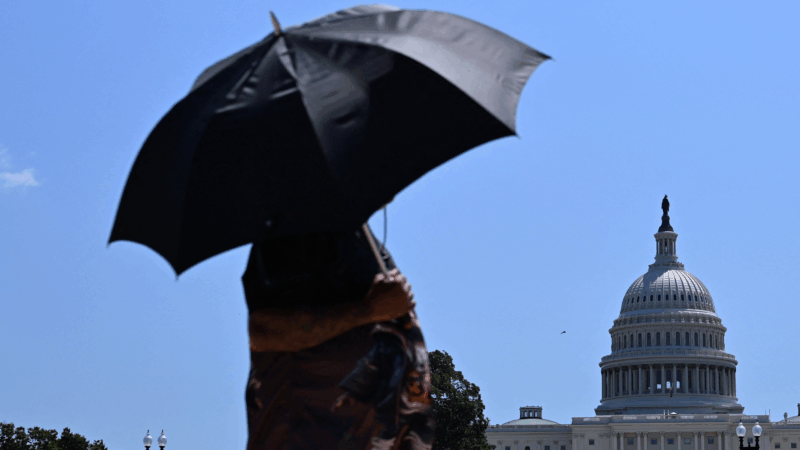
Friday marks the start of summer and the first significant heat wave of the season, according to the National Weather Service, leaving much of the country bracing for temperatures that will feel like they’re in the triple digits.
“Summer has taken its time arriving in the Northeast, but it’s coming in HOT,” the NWS wrote in a post on X. “Triple-digit heat indices will be common through next week, with oppressive humidity.”
The city of Philadelphia, for example, has issued a code red warning for its residents in order to transfer homeless people to indoor locations, member station WHYY reports. The notice is put into effect when the heat index is forecast at above 95 degrees for three or more days in a row.
Further west, St. Louis Public Radio reports that that city could go on a days-long streak of temperatures feeling like up to 108 degrees.
In Wisconsin, heat indexes could peak at between 100 to 105. NWS Meteorologist Ben Miller told Wisconsin Public Radio that since “it’s been a pretty mild spring,” people aren’t acclimated the same way they are later in the summer.
“It’s certainly going to feel like middle-of-summer humidity,” he said. “I mean, we’re talking low-to-mid 70-degree dew points, and that’s going to feel pretty uncomfortable.”
The heat index is a measure of how hot it actually feels — based on the temperature and the humidity — compared to the actual number on the thermometer.
A peak in scorching temperatures is expected to begin in the Great Plains and creep across the Midwest and Great Lakes and into the East Coast.
The heat and humidity are not expected to abate until late next week.
“Don’t wait until heat arrives to begin protecting yourself,” the NWS warned. “If the forecast calls for extreme heat, begin preparing now.”
Everyone in high heat environments is at risk of suffering from heat-related complications — including death — but pregnant people, children, those suffering from chronic illness and the elderly are at the highest risk of experiencing dangerous symptoms as a result of high temperatures.
The NWS encourages people to never leave anyone alone in a closed car, use air conditioners and the shade when possible, and drink plenty of water, even if not thirsty, as some measures to avoid falling ill as a result of the heat.
Heat waves are lasting longer and peaking at higher temperatures than in the past due to climate change. The average number of heat waves the U.S. experiences today has doubled since the 1980s, and the length of the dangerous heat wave season has increased from about 40 days to roughly 70.
The summer of 2024 was the hottest on record since countries began documenting their temperatures in the 1800s. Last year unseated 2023, the previous record holder for dangerously high temperatures.
Hotter weather can have immediate repercussions on human health, but the long-term effects of climate change also threaten the planet’s plant and animal life and natural landscapes.
In order to combat the changing climate, at a 2015 conference of the United Nations in Paris, most member countries — including the United States — agreed to try to reduce their greenhouse gas emissions in order to rein in the potential calamitous effects of climate change.
But under President Trump, the United States has withdrawn from its commitment, with Trump calling the Paris agreement “unfair” and a “rip-off.”

Pentagon shifts toward maintaining ties to Scouting
Months after NPR reported on the Pentagon's efforts to sever ties with Scouting America, efforts to maintain the partnership have new momentum
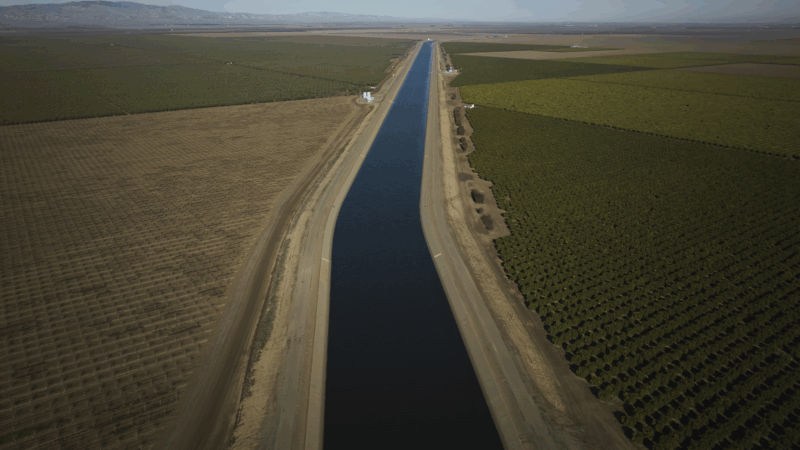
Why farmers in California are backing a giant solar farm
Many farmers have had to fallow land as a state law comes into effect limiting their access to water. There's now a push to develop some of that land… into solar farms.

Tariffs cost American shoppers. They’re unlikely to get that money back
After the Supreme Court declared the emergency tariffs illegal, the refund process will be messy and will go to businesses first.
‘Get back to integrity’: Oklahoma’s Kevin Stitt on Republicans after Trump
NPR's Steve Inskeep asks Oklahoma Gov. Kevin Stitt about his spat with President Trump, immigration and the future of the Republican Party.

Every business wants your review. What’s with the feedback frenzy?
Customers want to read reviews and businesses need reviews to attract customers. But the constant demand for reviews could be creating a feedback backlash, experts say.
Civil rights leaders say the racial progress Jesse Jackson fought for is under threat
Activists say racial progress won by the Rev. Jesse Jackson is under threat, as a new generation of leaders works to preserve hard-fought civil rights gains.
