
Walmart says tariff costs are rising ‘each week’ and will continue
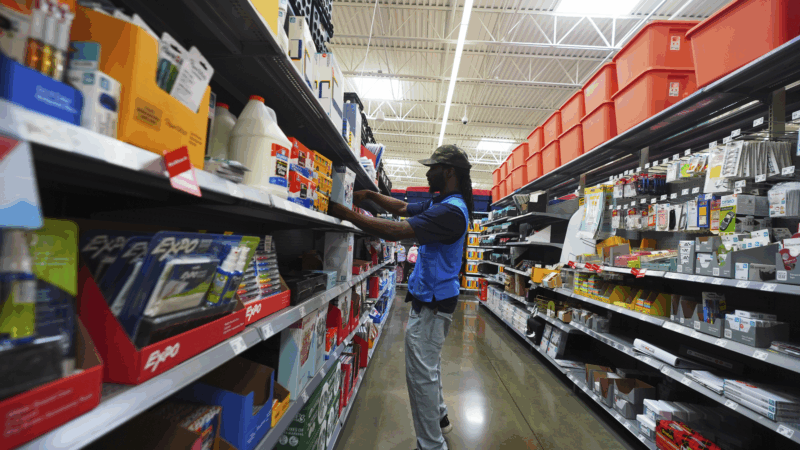
Walmart says it has been able to mitigate many of the tariff costs so far, but they are rising “each week” and will continue to do so through the rest of the year.
The world’s largest retailer — like many others, including Home Depot and Target — has had to raise prices on some items, while keeping prices down on others. Walmart says its top back-to-school products were even cheaper this year than last year.
Still, the Trump administration’s tariffs on virtually all imports loom large for all retailers who are seeing the cost of goods rise. Previously, when President Trump was threatening tariffs up to 145% on Chinese imports, Walmart drew his ire by saying that would lead to higher prices.
On Thursday, Walmart CEO Doug McMillon said his company’s costs keep climbing: “We’ve continued to see our costs increase each week, which we expect will continue into the third and fourth quarters,” he said on an earnings call.
Walmart continues to attract more higher-income shoppers looking for deals, McMillon said. And where some items did go up in price, middle- and lower-income customers in particular sometimes switched or skipped those purchases. But broadly, he said, tariffs haven’t prompted “dramatic shifts” in shopping behavior.
“The impact of tariffs has been gradual enough that any behavioral adjustments by the customer have been somewhat muted,” McMillon said.
Overall, shoppers keep spending at stores and restaurants. Walmart’s sales in the U.S. grew 4.6% in the latest quarter. Home Depot on Tuesday said its U.S. sales in the three months that ended August 3, rose 1.4%, which was much more than earlier this year. The home-improvement chain said people have moved on to smaller projects, while delaying major renovations — largely out of worry about where the economy is headed.
“The number one reason for deferring the large project,” Home Depot CEO Ted Decker told investors on an earnings call, “is general economic uncertainty that is larger than prices of projects, of labor availability, all the various things we’ve talked about in the past. By a wide margin. Economic uncertainty is number one.”
Home Depot in a call with analysts in the previous quarter assured it would avoid “broad” price increases due to tariffs, but this week explained that some prices did have to increase a bit, given tariff rates are “significantly higher” now than they were in the spring. Executives at rival Lowe’s on Wednesday said tariffs created a “dynamic environment” and “uncharted waters.”
Retailers and manufacturers have so far avoided major price increases for two main reasons: tariffs rolled out much slower than originally threatened, and companies have stockpiled goods ahead of time. This week, TJX — the parent company of discount clothing stores T.J.Maxx, Marshalls and HomeGoods — said it had bought up more inventory than usual to be well-stocked for months.

Kalshi reveals insider trading case against editor for MrBeast
With prediction markets booming, so have concerns about insider trading. Now, Kalshi has disclosed its first public actions against accounts suspected of trading on confidential information.

Greetings from Jordan’s Wadi Rum desert, where patches of green emerge after winter rains
Wadi Rum's otherworldly landscape is where Star Wars movies and The Martian were filmed. In late winter, plants emerge in this desert — but some are toxic to camels, so their herders must protect them.

Lack of transportation keeps many Alabamians from working. Rural public transit programs are trying to help
While lack of transportation is a major employment barrier in Alabama, few people take public transit to work. That dynamic is even more pronounced in rural areas.

When a horse whinnies, there’s more than meets the ear
A new study finds that horse whinnies are made of both a high and a low frequency, generated by different parts of the vocal tract. The two-tone sound may help horses convey more complex information.

Trump’s many tariff tools mean consumer prices won’t go down, analysts say
The Supreme Court struck down President Trump's signature tariffs. But the president has other tariff tools, and consumers shouldn't expect cheaper prices anytime soon, economists say.
Hundreds of American nurses choose Canada over the U.S. under Trump
More than 1,000 American nurses have successfully applied for licensure in British Columbia since April, a massive increase over prior years.
